Such A Pretty Picture: Turning Memoir Into Mission
By Andrea Leeb
 To fully explain how I turned my memoir, Such A Pretty Picture into a mission, I need to take you back in time. I was only four-and-a-half the first time my father molested me. He was giving me a bath, and although I was young, I knew there was something strange about the way he touched me. When my mother walked in to check on us, she howled and crumpled to the floor. When she came to and opened her eyes, she was blind. My mother’s hysterical blindness lasted for weeks, but her willful blindness lasted for decades. The abuse continued until I was thirteen, and I spent a childhood living with secrets I could not name.
Despite it all, I survived. Books and later writing were integral to my survival. I read obsessively throughout my childhood and adolescence. From the Secret Garden to the Outsiders to Anna Karenina, the books I read allowed me to escape from the chaos of my childhood home. A momentary reprieve from the shame and the pain.
I began to write at age ten. That year my mother bought me a diary and little gold pen. The diary was pink with a lock, and a tiny gold key. At first, I did not know what to do with such a beautiful diary. I wanted the words I wrote inside of it to be beautiful too. But when I held the delicate gold pen between my fingers and tried to write about my life, I did not have anything beautiful to say. My secrets were far too dangerous to ever put into writing. The diary needed a better owner, so I made one up: a girl named Emily. Blonde haired and light eyed, she had lots of friends, and she knew how to twirl a baton. She even sang in the school chorus with perfect pitch.
The Emily stories were the beginning of my writing life, and although I had other jobs first as a nurse and then as an attorney, I always returned to writing. Over the years I have attended workshops, extension programs, writing conferences and finally Bennington Writing Seminars. At Bennington, and after graduation, I wrote short stories about good people who sometimes did bad things. Some of them were based loosely on my experiences but never on exact facts—always fiction.
Although I loved to read memoirs, I had no desire to write one. I didn’t want to write about my childhood, the shame that I felt, or I how tried to convince myself that if I were educated enough, pretty enough, and perfect enough, I could pretend the abuse away. I didn’t want to revisit the years where I tried my best to bury my secrets, or how at age thirty-three, an unwanted grope on a New York City subway triggered my childhood abuse sending me into a sprial of shame and self-hatred. How after that grope, no matter how hard I tried, I could no longer remember how to forget and was forced to confront my past and to get help. Help that included not only therapy but also twelve days in an inpatient program.
Over the years, I had shared my story with multiple therapists, close friends, and my husband but I had no intention of sharing it beyond that, certainly not in a book that other people would read. That changed in 2017, Such A Pretty Picture was born out of the #MeToo movement. When remembering how crucial reclaiming my agency and my voice was in the process of my recovery, I began to think that sharing my story would help other survivors find their way toward telling their own stories. Two years later, I left the practice of law and committed to writing my memoir full time.
I never intended to turn my narrative into a mission. I had planned to write my book; get it published and move on, but after I finished my first draft, I realized I needed to do more than just share my story. I began to reach out to rape treatment centers to see what more I could do. Today, I split my time between writing and survivor advocacy. I have appeared on television, podcasts, moderated panels, and I am now a member of the UCLA Rape Treatment Center and Stuart House Advisory Board. I also volunteer as a playtime participant with recent victims of child sexual abuse.
It took me almost five years to write Such A Pretty Picture. In that time, I have learned that choosing to write my memoir, was an act of defiance against the legacy of silence that was forced on me and other survivors of child sexual abuse. I have turned my silence into my voice–and my shame into connection. By telling my story, I not only took another step forward to freeing myself from my past trauma but also created a bridge to help others find their own healing. I have also received the unexpected gift of advocacy that has allowed me to repurpose what was once a destructive force into something beautiful and strong.
—
Andrea Leeb has an MFA from Bennington Writing Seminars. Her work has been published in numerous journals including Litro Magazine, the Potomac Review, Text Power and Telling Magazine, and HerStry. Previously, Andrea worked as an attorney and a registered nurse. Currently, she spends her time writing, practicing yoga and volunteering with non-profits. Andrea lives in Venice Beach, California with her husband, Paul.
SUCH A PRETTY PICTURE
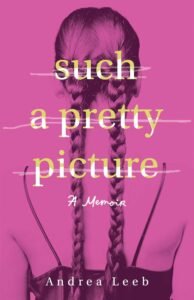 USA TODAY BESTSELLER For readers of I’m Glad My Mom Died by Jennette McCurdy and The Glass Castle by Jeanette Walls, a candid and heart-wrenching memoir about child abuse, family secrets, and the healing that begins once the truth is revealed and the past is confronted. Andrea is four and a half the first time her father, David, gives her a bath. Although she is young, she knows there is something strange about the way he is touching her. When her mother, Marlene, walks in to check on them, she howls and crumples to the floor—and when she opens her eyes, she is blind. Marlene’s hysterical blindness lasts for weeks, but her willful blindness lasts decades.
The abuse continues, and Andrea spends a childhood living with a secret she can’t tell and a shame she is too afraid to name. Despite it, she survives. She builds a life and tells herself she is fine. But at age thirty-three, an unwanted grope on a New York City subway triggers her past. Suddenly unable to remember how to forget, Andrea is forced to confront her past—and finally begin to heal. This brave debut offers honest insight into a survivor’s journey. Readers will feel Andrea’s pain, her fear, and her shame—yet they will also feel her hope. And like Andrea, they will come to understand an important truth: though healing is complicated, it is possible to find joy and even grace in the wake of the most profound betrayals.
BUY HERE
Category: On Writing
Subscribe
If you enjoyed this article, subscribe to receive more just like it.