On Writing Alive And Beating
Rebecca Wolf
My debut novel, “Alive and Beating,” follows six people from diverse backgrounds and neighborhoods in Jerusalem, all of whom are awaiting organ transplants, on the day that will forever change their lives. “Alive and Beating” is modeled on two books that deeply influenced me: “Hiroshima” by John Hersey, and “The Bridge of San Luis Rey” by Thornton Wilder. Both works look at tragic events through the narrow lens of just a few survivors. By personalizing their stories, the authors were able to weave the human impact with the factual details of the disasters (the real atomic bombing of Hiroshima, and the imagined collapse of a bridge in Peru).
I knew I wanted to write about the suicide bombing that killed my friend Alisa Flatow, and many others, in April 1995. But I didn’t want to write her true story; it wasn’t mine to tell. I also wanted to create a diverse group of characters so that I could send a message to my readers: let’s try to focus on our shared humanity. We are more alike than we are different.
My cast of characters come from all walks of life. I have: Leah, a Hasidic young woman; Yael, a daughter of Holocaust survivors; Hoda, a Palestinian hairdresser; David, an Iraqi restaurant owner; Severin, a Catholic priest; and Youssef and Yosef, two teenage boys, one a Muslim and one a Jew.
I spent a lot of time researching my characters, because I knew they needed to be fully developed even though I would only give each one about 40 pages. As a
librarian’s daughter, I find research fun, so this part of the writing process was the most enjoyable for me. The medical research was especially interesting to me, and I’m lucky to have doctor friends and relatives in almost every specialty that I needed for this book. My brother-in-law, a pediatric cardiologist, was particularly helpful for my chapter about the two teenage boys waiting for heart transplants. He not only explained in detail everything that would be happening in the hospital, but also gave me insight into the boys’ emotional states. I also read many memoirs by people with terminal or serious illness, and I spoke to as many patients as I could.
But as a first-time author, I still worried that my characters would not be authentic. I was much more comfortable in my former role as a journalist, where the “characters” in my article would speak to me directly and I would just have to transmit their words and stories to the world in a way that everyone could understand. With that in mind, any time I read a newspaper or magazine, or watched a news report online or on television, I tried to see if I could steal anything that would be relevant to my characters. Sure enough, most of my stories are based in truth, and are “ripped from the headlines.”
The other part of fiction writing that scared me was: what happens next? In journalism, we can only write what we see and hear. Opinion writers can speculate what they think might happen in the future, but regular reporters like me don’t editorialize (or at least, we didn’t use to – let’s save that for another article about
the death of true journalism). So my family and friends became very involved in plot development, until I reached the writing zone that I had only heard about but never believed truly existed: the characters took on lives of their own.
It’s hard to explain, because it makes no sense. How could a character that is a figment of my imagination lead the story line? I don’t know, but it happened. For example, I tried to give my character Hoda, who is a single mother, a nice boyfriend. I spent a lot of time developing their backstory and writing their dialogue. I loved this guy – he was sweet and caring and good-looking. But at a certain point, it became clear that Hoda didn’t want a boyfriend. She had too much going on in her life and she just needed to focus on herself and her children. So I killed the boyfriend idea, deleted all those pages, and started writing anew.
Many people have asked me why there is so much ambiguity in my book. I have two reasons: first, as a reader, I appreciate when the author gives me some agency in the book. I don’t necessarily want everything tied up in a nice bow at the end. Second, the whole process of organ transplantation is very tenuous. Too often, a patient is literally on the way to the operating table when doctors discover an issue with the donor organ, or the recipient develops an infection. It was important to me to illustrate the fragility of the transplantation journey.
But when readers ask me if I know what happened to my characters, the answer is: of course I do. I couldn’t close my computer if I didn’t know how things
would end. At this point, my characters have become so real to me that when I go to Israel, I expect to meet them in the street!
I wrote my book as a tribute to my friend Alisa. She was a 20-year-old American tourist traveling to the beach in Israel when a suicide bomber rammed his truck into her bus and exploded himself. Her family’s heroic decision to donate her organs saved six people that day, and has saved countless others since then. I’m so proud to have been her friend, and even 30 years later, I still miss her.
—
Rebecca Wolf is a former journalist whose fiction and essays have appeared in many publications, including Apricity and Tablet. She is a volunteer writing tutor for PEN America’s Prison Writing Program, and she lived in Jerusalem as a foreign student before attending Barnard College. She lives in New Jersey with her family.
Find out more about Rebecca on her website rebeccawolfauthor.com
ALIVE AND BEATING
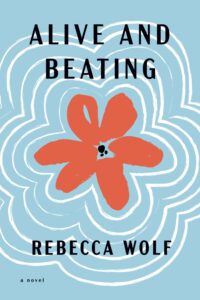 Inspired by a true story, Rebecca Wolf’s debut novel, “Alive and Beating,” follows six people from diverse backgrounds and neighborhoods throughout Jerusalem, all desperately in need of organ transplants, on the day their lives will forever be changed. In a place where ancient divides often seem insurmountable, these six characters—Leah, a Hasidic young woman; Yael, a daughter of Holocaust survivors; Hoda, a Palestinian hairdresser; David, an Iraqi restaurant owner; Severin, a Catholic priest; and Youssef and Yosef, two teenage boys whose fates are inextricably linked—are united despite their differences by a shared goal of becoming healthy and finding meaning in their lives. Wolf’s masterful storytelling is a testament to the belief that life can be renewed, faith can transcend boundaries, and that at our core, we all share a common humanity.
BUY HERE
Category: On Writing
Subscribe
If you enjoyed this article, subscribe to receive more just like it.