Crafting an Effective Atmosphere
What is ‘Atmosphere’?
According to The Novelry, ‘it’s through atmosphere that we become immersed in stories, enjoying a sensory experience that goes beyond language’. We all know our literary devices, from metaphors and similes to personification and pathetic fallacy, but there’s a fine line between using them effectively and slipping into purple prose. Everything needs a purpose and an intention, which is a lesson I had to learn when writing my first novel, Coldharbour: A Gothic Tale of Love and Death.
It’s a lesson that’s paid off, as Coldharbour only came out a matter of weeks ago, but the reviews so far have really highlighted the book’s atmosphere. But what do we as writers have to keep in mind while carefully curating our book’s ‘vibes’? Much of it is about description, which I would say can be divided into quantity and quality. I really believe the genre in which you’re writing dictates the quantity of description, while the quality (i.e. the ‘how’) is rooted in the internal and external environments, which here I categorise as seasonality, setting, and sensations.
Genre
In my opinion, genre is often the strongest indicator of what – and how – atmosphere should be cultivated in a book. For example, high fantasy is going to have a very different feel to a political thriller. Fantasy description tends to be far more detailed than that in many other genres, as the writer has to depict a world not quite like (or entirely unlike) our own, while many thrillers tend to get straight down to business.
I’ve seen this myself as an author, as I am now making the shift from a very Gothic fantasy set in a fictional town to a supernatural thriller, which takes place in well-known cities around the globe. My description in this new project is sparser and gets to the point as the world is recognisable and I’m prioritising action over mystery.
Seasonality
Most of the Coldharbour books are set in autumn or winter, which is fantastic for me as a writer. Falling leaves, drops of blood in fresh snow, and nights drawing in are all quick and easy ways to make a story seem spookier. The dark is always scarier, after all.
But we can also consider seasonality in terms of significant events rather than just the weather: for example, Stephen King’s IT takes place in the summer, which might seem strange for a spinechiller. However, the kids need to have the freedom of not being in school in order to become friends and (temporarily) defeat the eldritch terror preying on Derry.
This isn’t just the case for horror: Christmas is a fantastic time in which to set a romance when everyone’s feeling cosy and festive. And, yes, summer has its own potency (imagine a thriller set in the oppressive heat of an urban centre in July or an action adventure that takes place at the beach).
Setting
This ties into seasonality and I would argue is the most genre-dependent factor. Again, if the place is real and recognisable, you probably only need the broadest of brushstrokes – for example, we all have some idea in our heads of what New York City is like, even if it’s only from movies. Creating your own setting requires more work, but you can also really tailor it to your intentions. For me, Coldharbour is a particularly desolate seaside town, so I’ve borrowed from many places I know and love to create the spookiest, weirdest, most Gothic setting I could.
Sensations
And finally, sensations. This is more internal than the external nature of seasonality and settings. How your characters think, feel, and react to things can contribute massively to your atmosphere. For instance, the protagonist of a spy thriller might be very cool, calm, and collected, which allows a more propulsive narrative thrust focused on action rather than internal emotion. In Coldharbour, the Gothic style dictates that my main character, Alex, is always on the edge of sheer panic and she feels her environment particularly keenly (often to her detriment).
Read, Read, Read
I always recommend reading books in your genre to get a feel for what kind of atmosphere could work for your project. My picks naturally tend towards the Gothic and here are five books by women writers which I re-read whenever I need to refine my own atmospheric writing:
The Haunting of Hill House by Shirley Jackson
Jackson depicts the insidious nature of Hill House from the opening page, in which she describes the dwelling as ‘not sane’ and ‘holding darkness within’, subtly personifying it enough for the reader to understand that the house really could be preying on Eleanor Vance’s fragile state of mind.
Hungerstone by Kat Dunn
Like Hill House, Nethershaw is dark and crooked, a ‘salvage of a shipwreck’ that represents the fragility of the protagonist’s marriage and has been anticipated by the long journey from London to the North, during which the storm clouds have gathered.
Our Wives Under the Sea by Julia Armfield
Armfield’s book is an unusual addition to this list, because there are two significant settings: an ordinary urban flat and a submarine in the dark depths of the ocean. However, they share a sense of claustrophobia as the characters have to face the inexplicable, or as main character Miri puts it, ‘cavernous terror’.
Rebecca by Daphne du Maurier
To me, Rebecca is the number one for atmosphere. du Maurier uses the flora of Manderley particularly effectively: when the estate is intact, the perfume of the flowers is palpable and the rhododendrons are ‘slaughterous red, luscious and fantastic’; when it’s in ruins, dark vines encroach on Mrs de Winter’s dream.
The Woman in Black by Susan Hill
The Woman in Black is my snack-sized atmosphere recommendation – the way Hill weaves creeping dread with sheer loneliness of Crythin Grifford and especially Eel Marsh House is phenomenal. There’s ‘inchoate fog’, darkness, and a capricious causeway that untether the reader as much as poor Kipps.
A Final Note
Don’t be afraid to experiment with different iterations of atmosphere – play with tension, cut paragraphs down, and expand interesting ideas until you’re (more or less) satisfied with what you’ve created. As I said, striking the right balance is tricky but can be so rewarding once you find the right feel for your story!
—
Laura Clarke Walker is a writer, teacher, and lover of all things Gothic.
Her first novel Coldharbour: A Gothic Tale of Love and Death is available on Amazon and Waterstones.
When she’s not immersed in the world of Coldharbour, Laura can be found drinking espressos darker than the night, listening to podcasts in other languages, and running around her local lakes. In the virtual world, you can find her at lauraclarkewalker.com and on Instagram at @lauraclarkewalker.
Coldharbour: A Gothic Tale of Love and Death
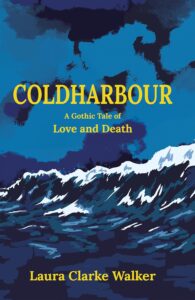 Three generations preyed upon by pure evil. Two lost souls drawn to each other in the darkness. One compelling story of love, loyalty, and betrayal.
Decades of death and deceit come to a head in a desolate Essex seaside town in October 1999.
While everyone else is worrying about the millennium bug, Alex Wilde is staring into a sea she hasn’t seen for a month. She’s finally home and it’s time to resurrect her life: get a job, get somewhere to live that isn’t her uncle’s old haunted house, and get her teenage daughter back.
But Coldharbour is a town of shadows and Power, the hereditary magic running through the veins of the blessed (or cursed) few, including Alex.
When she meets Elizabeth, the intriguing new owner of the run-down café on the promenade, she knows she is no ordinary woman. However, Alex has no idea how dangerous her new acquaintance really is.
Together, they stumble straight into a paranormal murder mystery that even the police can’t solve and, as Alex digs deeper, she starts to unravel the sinister family secrets that have stalked her since she was a child.
Battling demons and burying ghosts, Alex will need all of her Power, courage, and Wilde ingenuity to survive.
BUY HERE
Category: How To and Tips
Subscribe
If you enjoyed this article, subscribe to receive more just like it.