Movement, Still
By Tracy Smith
I don’t know the exact day I realized how much I needed to keep moving. Maybe it was the first trip to Iceland in September 2022 when I was lost in downtown Reykjavik. Or the time I was in a mosh pit in Doha, cheering with the Argentina fans during the FIFA World Cup Championship.
It’s possible it was in Vietnam when I rode a motorbike through the streets of Da Nang with my new friend Minh. We ate and went to nightclubs, and it felt like I was more than just a tourist to her.
For as far back as I could recall, I moved. Across five states in my twenties. A master’s degree, a doctorate, then another master’s degree while working full-time and being a single mom. More than thirty countries. But as the kids became independent, the degrees were finished, and I ran out of PTO, the movement stopped.
Three years after my first trip across the Atlantic, I had a collection of adventures, made friends, and found a part of me that I hadn’t known to look for. Throughout, I’d been sharing via Facebook, and my friends and family encouraged me to share my stories more widely.
TikTok was where everyone said all the content creators were, so my niece suggested I create videos while I learned to crochet. I tried it but couldn’t get the hang of crocheting. And like a lot of middle-aged women who have been through menopause, I didn’t like the extra pounds hanging below my chin or the coarse gray hairs that had been peeking through on my widow’s peak. Creating and posting videos just didn’t feel like me. Writing and reflecting on Facebook did. I quickly scrapped TikTok.
I started combing through all the material that I’d been sharing during my travels and hoped it would give me some inspiration. The more I read, the more I thought about writing a book. I had a bunch of great stories to share. A book sounded like a great path. Everyone said that, right?
To get started, I downloaded my entire Facebook feed. One hundred eighty-eight single-spaced pages. Nearly one hundred thousand words. I couldn’t believe how easy this had been. I cut, pasted, and rearranged.
I had no idea what to do next, so I did the next logical thing: I Googled. There was a plethora of information. Get an editor. Design the cover. Publish. I was moving again. I exhaled.
I sent my Facebook feed, now formatted as chapters of my life, to my dissertation editor. I only sent it to him because my LinkedIn and Facebook requests for editors went unanswered. Russ helped me immensely during the developmental stages. He asked me tough questions and had me rethinking the purpose.
In the meantime, I thought I had hit the jackpot because a publisher reached out to me. They said they would do all the editing, proofreading, marketing, publishing. All for the low price of $3000. I promptly sent them a 50% deposit and the manuscript to review. They offered great feedback and now armed with the feedback from Russ, I set about revising the book.
Later that summer, the manuscript finished, I sent it for editing—and that’s where things got both messy and expensive. I was already stressed out because I’d started a new job across the country. And even though I’d sold my house and was preparing for a move, I was having second thoughts about it. It had been so long since I’d moved.
When the manuscript came back, it was full of AI-generated content. Verb tenses were wrong; content had been added to spots where it didn’t belong and removed from others. Since signing with them earlier that summer, I had become more aware of the type of business they were, so I cancelled my contract. They hounded me for weeks afterwards, but I held my ground. They returned the money that I’d sent them. I know not everyone is so lucky.
That fall, one of my colleagues recommended a copy editor. Russ recommended a designer. We spent the fall working through drafts, developing a cover and images for the book. And soon I had a book.
Today, I read the book and think about what I would have done differently. Maybe instead of a memoir, I would’ve presented it as a book of essays. I don’t think I would’ve rushed the process. I always remind my team that it’s not a sprint, it’s a marathon. Perhaps I would have slowed down and tried to take that advice for myself.
Now I write essays. Flash non-fiction, narrative and descriptive essays about my travels and the moments I observe in my daily life. I look for behaviors and postures that suggest belonging.
Through this work, I’ve built the Geography of Connection, a project that examines what belonging looks like and how it is shaped through culture and environment. Writing the book taught me what belonging is for me. The essays are teaching me to notice what belonging looks like for others.
For the first time in my life, I feel like I’ve found something that might be enough. Enough to make me stay still. Writing has become an outlet for the movement that has been shaping my life. I’m afraid the writing will one day no longer be enough.
But until that day comes, I’ll keep writing.
—
Tracy Smith, PhD, is the author of The Purpose of Getting Lost and the creator of The Geography of Connection, a body of work that examines how belonging is expressed through posture, movement, and behavior, and how it is shaped by the environment and culture. Before focusing on this work, she spent several years traveling across five continents, documenting a personal journey of giving herself permission to say yes to herself and learning who she is.
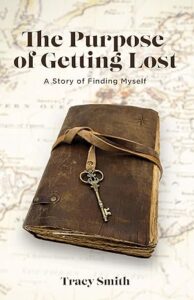 The Purpose of Getting Lost isn’t a story about travel—and it isn’t a story with a neat ending. There is no final version of the woman at the center of this book, no moment where everything clicks and stays that way.
As Tracy Smith approached fifty and her children grew up, she realized she’d spent years taking care of everyone. Everyone but herself. So she booked a trip. Then another. And another. Over time, thirty countries and five continents became less about distance traveled and more about what surfaced along the way.
In airports, alleys, homestays, temples, and the moments in between, Tracy began to see herself more clearly—her patterns, her longings, her restlessness. Some insights stayed. Others didn’t. The journeys offered perspective, not answers; movement, not resolution.
Told with humor, honesty, and attention to the moments that rarely make it into transformation stories, The Purpose of Getting Lost is a candid collection of interconnected stories about midlife, independence, and the search for belonging—not the kind you arrive at once and for all, but the kind you practice, again and again, as your life continues to unfold.
BUY HERE
Category: On Writing
Subscribe
If you enjoyed this article, subscribe to receive more just like it.