The Truth Beneath the Paint

The phrase “painting over cracks” is simple. It brings to mind the small imperfections in a wall—tiny fractures that form over time, the kind you might notice in the corner of a room or above a doorway. They’re easy to dismiss and even easier to cover. A fresh coat of paint makes everything look new again. But underneath, the crack is still there.
That image stayed with me because it reflects something many of us do far beyond our homes. We paint over cracks in our relationships, our families, and sometimes even within ourselves. We ignore warning signs because looking too closely feels dangerous. We sense something is off, but we push the feeling aside. We tell ourselves we’re overthinking. We convince ourselves it’s nothing.
I’m fascinated by the stories people tell themselves to stay comfortable. I’m not judging. I understand it. Most of us don’t live in extremes, facing obvious villains or betrayals. We live in the gray areas, where something may seem slightly off but not bad enough to confront. That instinct became the emotional foundation for Painting Over Cracks.
Beth Collins, my protagonist, built a life that looked complete from the outside. She had the kind of stability many people strive for: marriage, career, routine, and the comforting belief that she knew the person beside her. But like so many of us, she made compromises along the way. She overlooked moments that didn’t sit right, brushed aside questions she didn’t want to ask. She chose peace over confrontation and familiarity over uncertainty.
Beth isn’t alone in that. People paint over cracks because the alternative is terrifying. A crack suggests that something beneath the surface has shifted. And if you acknowledge it, you may have to accept that what you trusted is not as solid as you believed. Sometimes the truth demands change, bravery, or even the willingness to lose something you’ve spent years building.
For many people, it feels easier to live with small doubts than to face a reality that might shatter everything.
The thing about cracks is they rarely arrive in dramatic ways. They aren’t always loud or obvious. More often, they show up as subtle moments: a strange reaction to an innocent question, a detail that doesn’t quite add up, a story that changes slightly each time it’s told. They show up in silences, evasions, and unexplained absences. They show up as a gut feeling that something isn’t right, followed by the immediate urge to dismiss it.
That’s the most dangerous part of a crack—it can be small enough to ignore. It doesn’t demand immediate attention. It simply exists, waiting to deepen.
In writing this book, I kept returning to the idea that people don’t just fall in love with a person. They fall in love with the life they believe they are building, the image of their future, the identity that comes with being part of a couple, a family, a shared history. When cracks appear, they threaten not only the relationship, but the entire narrative someone has created about their own life. Acknowledging the truth would mean rewriting the past and questioning every memory that once felt secure. Sometimes, denial isn’t ignorance—it’s survival.
The moment we shine a light on it, we risk changing everything.
In Painting Over Cracks, Beth loses Danny in a car accident, and with that loss comes a new kind of silence. Grief is disorienting on its own, but grief paired with unanswered questions becomes something else entirely. Death closes the door on explanations, apologies, and second chances. It removes the opportunity to confront someone face to face and demand honesty. Danny’s death didn’t just take him away; it exposed what was hidden while he was alive.
As Beth uncovers her husband’s secrets, she is forced to confront not only who he was, but who she was in the marriage—who she chose to be. She must look back on moments she dismissed, on instincts she ignored, on truths she avoided because they felt too heavy to carry. She simply didn’t want to see them.
And yet, the unraveling of Danny’s life is not just an external mystery. For Beth it becomes an internal reckoning. The secrets she discovers are devastating, but the deeper emotional questions become: How do you move forward when the foundation of your life has been shaken? How do you forgive yourself for what you didn’t see—or what you chose not to see?
That is the moment when the title takes on its full meaning.
Painting Over Cracks is not simply a story about deception. It is about self-protection, and the stories people tell themselves in order to stay comfortable. It is about the fragile bargains we make when we sense something is wrong but decide we would rather live with uncertainty than face the possibility of truth. It is about the way we convince ourselves that love alone can hold something together, even when the structure is already weakening.
But the novel is also about awakening. As the story unfolds, my protagonist transforms from someone who avoids discomfort into someone who seeks clarity, even when it hurts. She learns that ignoring cracks does not prevent collapse—it only delays it. The secrets she uncovers don’t just shock her; they awaken her. Most importantly, she realizes that living with open eyes is not a punishment; rather, it is a form of freedom. By the end of her journey, she vows that she will never again accept half-truths in exchange for peace. She won’t settle for a life that looks perfect while hiding fractures underneath.
In many ways, that is what inspired me most: the idea that truth, while painful, can also be empowering. Sometimes the breaking point is the beginning of strength. And sometimes what feels like the end of a life can become the start of a more honest one.
We all have cracks—within our homes, our histories, our relationships. And maybe the goal shouldn’t be to pretend they don’t exist. Maybe the goal should be to stop covering them out of fear.
Because the cracks are not always the place where something ends.
Sometimes, they are the place where something finally begins.
—
Lee Bukowski is the women’s fiction author of A Week of Warm Weather and her new release Painting Over Cracks. In 2016, she left a beloved career teaching seventh grade English to pursue writing full-time. When she’s not writing, she loves reading, traveling, and trying cocktails with clever names. Lee also hosts an author panel videocast on Facebook’s Bookish Road Trip where she chats with authors whose work has a common thread. A Billy Joel superfan, her live concert count is 50 shows.
PAINTING OVER CRACKS
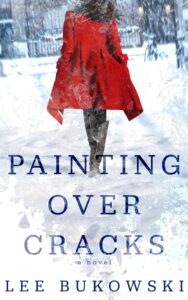 Beth Collins lives her life shadowed by a secret, one she believes she can outrun by building a perfect family of her own with her attorney husband, Danny. And for a while, it seems she has—until a freak car accident kills Danny and shatters her world in an instant.
Desperate for a fresh start, Beth quits her job as a mortgage broker and buys a café. As she settles into the rhythm of her new life, she finds unexpected friendships, a sense of purpose, and eventually, even the spark of a new romance.
But when mysterious details about the crash emerge, leading to shocking secrets about her husband, Beth sets off on a search for answers. Every revelation pulls her deeper into a world she could not have imagined and forces her to confront the unthinkable—she’s mourning a man who never existed. When the illusion she’s relied on collapses, Beth must decide what future she wants and who the woman is she’s ready to become.
BUY HERE
Category: On Writing
Subscribe
If you enjoyed this article, subscribe to receive more just like it.