From New Zealand To Perfectville: The Inspiration Behind My Novel By Yvonne Eve Walus
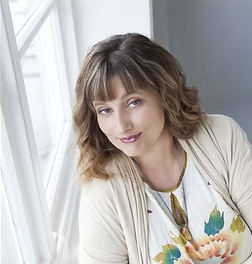 When my husband and I moved to New Zealand nearly thirty years ago, I fell in love with things that people born here often took for granted. The beaches. The green grass. The sense that children could disappear outside for hours and return muddy, tired and happy. New Zealand felt safe and orderly. It felt like a place where people could be happy without trying too hard.
For me, it was also a fresh start. I had grown up in Poland under communism, later lived in South Africa, and eventually made New Zealand my home. As an immigrant, I saw the country with fresh eyes. Places and experiences that might have seemed ordinary to people born here felt remarkable to me. And, naturally, I wanted to write about it.
My early New Zealand stories and novels were set in a recognisable world. I enjoyed taking readers into places I knew and loved, but I also discovered something important about writing about somewhere you care about: you have to resist becoming its tourism board. Beautiful landscapes are lovely, but they don’t create conflict. Neither does a friendly community where everyone gets along. And the more I thought about New Zealand as a place to raise children, the more I became interested in the idea of paradise itself.
What exactly makes somewhere a good place to live? Is it safety? Freedom? Community? Beautiful landscapes? A universal income and the opportunity to pursue your creative passion? And what happens when those things come into conflict?
The idea for Welcome to Perfectville began with a simple question: “What if we could create paradise on earth?” What if a group of people could design a community from scratch and remove all the things that make ordinary life difficult? What if there were no crime, no financial struggle, no uncertainty? What if everyone had a sense of purpose?
Wouldn’t that be wonderful? I thought so. At least initially. Then my son read the first chapter. “Perfectville sounds horrible,” he said. I was taken aback. This was my perfect community. I had spent all this time making it safe, beautiful and harmonious, and he had dismissed it in four words.
But the more I thought about it, the more I realised he had identified the problem at the heart of the entire novel. Perfectville was designed by adults. And adults who had experienced uncertainty could appreciate safety, adults who had struggled could appreciate financial security, adults who had seen the pitfalls of the Internet could understand why someone might want to create a place where spending most of your time offline was a thing.
But what about someone born there? A child who had never experienced danger might not understand why safety mattered and might wonder what they were missing beyond the perimeter of Perfectville. Children want adventure. They want to test boundaries, take risks and discover the world for themselves. A paradise built by their parents might feel less like a gift and more like a cage. That became one of the central tensions of Welcome to Perfectville: paradise means different things to different people.
It also made me think about motherhood. As parents, we spend enormous amounts of time trying to create the best possible environment for our children. We protect them from danger. We worry about their choices. We want them to be happy. But there comes a point when protection itself can become restrictive. Children need to take risks, make mistakes, and discover who they are, rather than simply inhabit the life we have designed for them.
This isn’t unique to New Zealand, of course. But living here made me think about it.
My husband and I had chosen New Zealand partly because we believed it was a wonderful place to raise children. As our children grew older, however, they didn’t necessarily see it in the same way we did. They wanted bigger cities. More excitement. More possibilities. That contrast fascinated me. It also made me realise that Welcome to Perfectville wasn’t really about creating a perfect place. It was about who gets to decide what perfect means.
And once you start looking at a community that way, you notice the invisible rules.
Every society has them. Some are written down. Others are simply understood. Who belongs? Who has power? What happens if you don’t conform? That is where my thriller began.
I wanted Perfectville to be seductive. I wanted readers to understand why someone would willingly move there. If the place were obviously terrible from page one, there would be no dilemma. The challenge was to create somewhere readers might genuinely want to live. Then I could start taking things away: choice, privacy, the very things that make us human.
In that sense, Welcome to Perfectville is a love letter to New Zealand, but a complicated one. It comes from gratitude for the country I chose as my home, and from curiosity about the assumptions we make about what constitutes a good life.
Perhaps that is what immigration has given me as a writer: the ability to look at a place I love both from the inside and from the outside. To see the beauty, but also to notice the flaws, and to keep asking questions. Because ultimately, Welcome to Perfectville grew from one question, but it led to many more: “If you could build your perfect life, what would it look like?”
My son eventually travelled overseas, as so many young New Zealanders do. Before he left, he had called New Zealand a “shithole”. I stole the word shamelessly and put it in Welcome to Perfectville, in the mouth of one of the children disillusioned with the man-made utopia. Then came the plot twist I hadn’t expected. After three and a half months abroad, my son came home declaring that New Zealand was the best country on earth. He even apologised for calling it a shithole.
I couldn’t have asked for a better demonstration of the idea behind my novel. Paradise is relative. Sometimes you don’t appreciate what you have until you’ve experienced somewhere else. The very things that can feel boring, restrictive or ordinary when you’ve grown up with them can suddenly look extraordinary when they’re taken away.
And perhaps that’s what happened to me when I first arrived in New Zealand. I had come from countries where safety, stability and freedom could not simply be taken for granted. I saw things that New Zealanders had grown accustomed to and thought: You have no idea how lucky you are. My son had to leave before he could see it too.
Welcome to Perfectville was recently named a 2026 NYC Big Book Award Distinguished Favorite in the Science Fiction category. I’m delighted that a book about paradise has ended up raising so many questions about what paradise actually means. Because perhaps the perfect place isn’t the place where everything is perfect.
Perhaps it’s the place you choose for yourself.
(When I’m not in Perfectville, you can find me here: https://www.yvonnewalus.com/)
—
Welcome to Perfectville
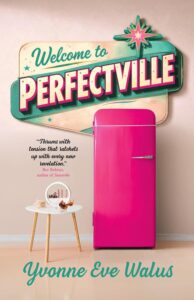 In Perfectville, secrets don’t stay buried. Someone knows.
“Thrums with tension that ratchets up with every new revelation.” Bev Robitai, author of Sunstrike
A perfect world is a controlled one.
Thirty years ago, a group of idealists built Perfectville—an isolated town with no crime, no competition, and no chaos. A generation was raised in safety, free to play before “paying their debt.”
Tisha Moore is the flaw in the system. A single mother of twins, she broke the rules—and now lives under constant scrutiny in a world designed to have none.
She dreams of escape. But Perfectville offers her children something the Outside never could: safety.
When a violent gang targets her family and forces her into a criminal network operating inside the town, Tisha becomes a threat to the very system keeping her children safe. Undercover agent Rafe Portman is sent to stop her—by gaining her trust, exposing her secrets, and bringing her down.
As pressure builds and a new generation begins to push back against the rules, Tisha faces an impossible choice: protect the system that keeps thousands safe, or destroy it and risk losing her children to the chaos beyond its walls.
WELCOME TO PERFECTVILLE is a high-concept sci-fi thriller about motherhood, control, and the dangerous illusion of safety.
BUY HERE
Category: On Writing
Subscribe
If you enjoyed this article, subscribe to receive more just like it.