What’s your Writer Identity? How Your Writing Beliefs Impact Your Writing
By Sarah E. Pearsall
What does it mean to be a writer? In my scholarly life, I study writer identity as it pertains to writing teachers, but much of what I research also applies to writers who are not teachers of writing. What the research tells us is that how you identify as a writer does impact your writing and writing life. There are several schools of thought on what identity is. Some experts believe identity is who we understand ourselves to be. Others believe identity is how we are recognized by others. Understanding your perceptions of identity and your writing identity can improve your writing and writing life. First, are you a writer? Second, what kind of writer are you?
Are you a Writer?
It surprises me how many writers out there do not identify as writers. There are several common perceptions of writers who do not consider themselves writers.
You have to be published to be a writer. Writers with this perception do not recognize people as being writers unless they are published. The term “author” is synonymous with the term writer and cannot be mutually exclusive. I have interviewed budding to well-published veteran writers who hold this belief. I have also observed this perspective expressed across various posts on writer and author social media platforms.
Within this community of thought, some also split their belief between traditionally and independently published “writers”. If you are not traditionally published, you are simply not a writer. There continues to be a stigma, though it is fading, surrounding self-publication and the mentality that “you are not a REAL writer if you published your writing independently.”
You have to earn money to be a writer. Many in the community do not identify as writers unless they have earned money for their writing. The rise of independent publication has helped more writers identify as such, but some non-writer writers do not identify as a writer or do not acknowledge writers who have not earned money from their writing. I consider this a different perception than being published because you can publish a piece of writing and never receive compensation for it (as we all know!). This belief has deeply rooted ties with professionalism and capitalism (think “American Dream”), that to be called a writer is a professional title that is tied to career aspirations.
You have to be famous to be a writer. The perception that you have to be well-known is tied to the idea that you have to be published, but many non-writer writers do not believe you can be called a writer unless people know who you are. These non-writer writers can be heard saying things like “James Patterson is a writer, not me,” or “I will never be a writer because I’m not as good as Stephen King.” In reality, the non-writer writer lacks belief in their ability to write or the quality of their writing. They cannot be a writer because, in their mind, their writing is not at the same level as others they consider to be writers.
Why Poor Writer Identity Harms Your Writing
Struggling to identify as a writer can harm your writing and writing life. My research shows that not identifying as a writer is directly related to low self-efficacy and low self-regulation, two core belief systems needed to be a successful writer. Self-efficacy is the belief in one’s ability to succeed in specific situations or accomplish a task. Self-regulation is the ability to manage your own emotions, thoughts, and behaviors to achieve goals and adapt to situations.
It’s a key factor in motivation, influencing how people approach challenges, set goals, and persevere in the face of difficulties. High self-efficacy is associated with greater effort, persistence, and a willingness to tackle challenging tasks, while low self-efficacy can lead to avoidance and a lack of motivation. It involves controlling impulses, managing reactions, and maintaining focus, and it’s crucial for success in various aspects of life.
You may not even realize how your writing identity affects your writing because you are not aware of how you perceive yourself as a writer.
You are a Writer
If you write, you are a writer, and that is not the equivalent of giving every person on a losing team a medal. Writing is an act most of us cannot escape, even if we are not writing creatively. As a professor of all genres of writing, I see my engineering students to my nursing students as writers. That does not mean you are the same as every writer.
The simple act of being aware of your writer’s identity and taking time to think about who you are as a writer can positively impact your writing and writing life, allowing you to build strong self-efficacy and self-regulation, which can improve your writing quality and help you become a successful writer.
Faking it until you make it
Amy Cuddy’s amazing TED talk “Your Body Language May Shape Who You Are” changed my life many years ago and became an adopted component in my writer identity research. How do we build a positive writer identity or a writer identity at all? We creative writers are faced with a constant barrage of negativity: negative feedback from our peers on our writing, rejections from agents and publishers, and bad reviews of our writing. When some of us encounter a confident writer, we may be inclined to judge them as being “egotistical” when we are taught by society and media that writers must be self-loathing and in constant doubt of their abilities.
The “fake it until you make it” mentality is key. We must all write on a borrowed license, meaning we pretend to be confident writers with a strong, positive writer identity until we believe it. Amy Cuddy’s TED talk shares ways to “fake it” with your body language, assuming power positions to trick your mind into being more confident. I do these power poses before every writing session, class I teach, and reading I give. I feel we can do the same with our minds by telling ourselves each day that we are writers regardless of our publication, monetary, or notary status.
So go in front of a mirror and tell yourself you are a writer because you are.
Resources:
Any Cuddy, Your Body Language May Shape Who You Are, TED Talk: https://youtu.be/Ks-_Mh1QhMc?si=gqdjW83rxM6hCp21
Sarah E. Pearsall Bio: Sarah E. Pearsall is an Assistant Professor of writing at Michigan State University. Her debut novel, The Summer Knows, from Koehler Books, launched in June of 2025. In the summers, Sarah teaches creative writing at the world-renown Interlochen Center for the Arts in Interlochen, Michigan. She is also a Writer-in-the-Schools for the National Writers Series in Traverse City, Michigan. Sarah is currently working on her second novel, Ten Thousand Islands, a fictional work set in the Florida Everglades. A native Floridian, Sarah now resides in the great northern woods of Michigan where she and her family are building a farmstead.
THE SUMMER KNOWS
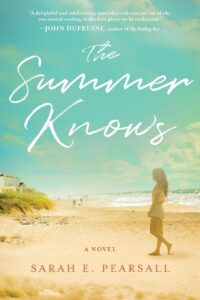 “A delightful and exhilarating novel that will remind you of why you started reading in the first place-to be enchanted.” -John Dufresne, author of My Darling Boy
“Perfect for fans of Elin Hilderbrand and the Gilmore Girls.”-Jami Denison, reviewer, Chick Lit Central
Slinging fried clams at a dumpy tourist trap in Florida’s panhandle at thirty-one and being a single mom was not the future Adrienne Harris envisioned. As a girl in Harbor Point, she dreamed of becoming a chef and spending her life with Quinn Merrit, the rich and handsome boy next door. But her dreams crumbled the summer she turned seventeen, ending with her running away pregnant, heartbroken, and notorious.
Adrienne’s world is upended again when she gets the call that her eccentric grandmother has nearly burned down the family cottage. Adrienne has no choice but to return, and the town wastes no time in thrusting her back into the harsh limelight. When local fishmonger Christopher Crane offers Adrienne a chance to be the chef at the fish market her grandfather once owned, Adrienne might just figure out how to face the past and forge a new future.
BUY HERE
Category: How To and Tips
Subscribe
If you enjoyed this article, subscribe to receive more just like it.