Some of My Best Writing Teachers Have Been People in Prison
By Joyce Hinnefeld
In the spring of 2019, near the end of my twenty-five years of teaching writing at Moravian University in Bethlehem, Pennsylvania, I decided to try something new. After participating in a Story Exchange training session with Narrative 4—a group that works on “building compassionate classrooms . . . one story at a time”—I decided to arrange story exchanges between students in my Writing as Activism class and incarcerated women at the Northampton County Jail in neighboring Easton, PA during the Fall 2019 semester.
This wasn’t easy to arrange. It helped that I had some connections in county government and at the county jail, through the Quaker community I belong to, Lehigh Valley Friends (Quaker) Meeting. Quakers have a long tradition of outreach to those who are incarcerated, maybe rooted in regret over Philadelphia Quakers’ well-intentioned but disastrous creation of solitary confinement for prisoners at the infamous Eastern State Penitentiary. I’m not exactly sure what drew me to this work, beyond a sense of despair, even horror, over the American carceral system, rooted in my own reading and research in connection with teaching Writing as Activism.
Many training sessions and rounds of required paperwork later, I had several story exchange sessions, plus jail tours, arranged for students that fall, in what turned out to be one of the most rewarding and successful classes of my teaching career. I was all set to do the work to make it happen again in Fall 2020 . . . but then Covid made that impossible. A local advocate for incarcerated women who had helped me arrange those initial story exchanges came to my rescue at that point, connecting me with an incarcerated woman at Pennsylvania’s Muncy State Correctional Institution; this woman is a tireless advocate for her fellow residents at Muncy, and within a month of my contacting her via the prison electronic communication system, she had mailed me a list of twenty-five women, herself included, who were interested in communicating with students in my Fall 2020 Writing as Activism course through letters and electronic messages.
That semester and beyond, students in a number of classes and independent studies that I taught before retiring continued communication with some of those original twenty-five women, about things like a prisoner’s limited ways of experiencing the natural world, foods they loved and missed, beloved pets from the past, and more. In doing so, my students learned how much they had in common with these women—women who, prior to these class experiences, they could only imagine as characters on Orange Is the New Black.
Since retiring I’ve continued working with incarcerated people, through editorial work and occasional program facilitating with a group called Shining Light that provides online classes (through the Shining Light Academy) and a magazine (The Loop) to people in prisons throughout the U.S. Maybe the most meaningful part of this work, for me, has been partnering with the formerly incarcerated folks who facilitate Academy classes and write for The Loop. Their commitment to those who are still in prison is so inspiring to witness, and their presence in Shining Light’s programming also clearly inspires the incarcerated students and writers we work with.
I’m aware that that pretty much everyone I meet inspires the fictional characters I create in one way or another; often that inspiration is mysterious to me, even unconscious. I do not, however, anticipate writing fiction about characters in prison, for the same reasons I did not ask my students to do so. This goes beyond the issue of appropriation for me, to the reality that none of us can truly imagine what life in prison is like, unless we have been in prison ourselves. I have come to know, and care deeply about, a number of incarcerated and formerly incarcerated people at this point. But I feel strongly that their stories are theirs to tell, not mine.
I even struggle with my plans to write a series of mysteries, “cozy mysteries” of a sort, but with real, and serious, crimes at the center of each. That struggle has to do with not wanting to create traditional villains, because of what I now know about so many so-called villains in our prisons. About the many traumas in their lives. About the role that drugs and alcohol have almost always played in their experiences. I struggle, that is, to imagine creating purely evil characters like the old couple who are the deliriously evil criminals at the center of Stephen King’s 2023 novel Holly, which I read recently
Rachel Kushner’s novel The Mars Room is a sensitive, exhaustively researched novel about a character named Romy Hall who is serving two consecutive life sentences in a California state prison, for killing a man who was stalking her. It’s a great novel, propelled by Kushner’s uniquely compelling writing, yet it is also weighed down by the endless succession of trials Romy endures. In the September 14, 2022 issue of the San Quentin News, incarcerated reviewer Juan Haines writes that “Kushner’s plot in the fictional Stanville prison simply misses what brings people together as human beings. Even in high-security prisons, with lockdowns and violence, people still look for the tenderness found in community. Such moments and situations are the ones rarely seen in literature or popular culture exploring life in prison.”
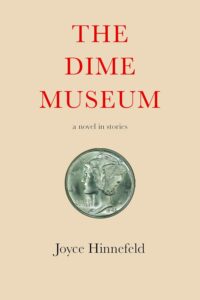
While I have no immediate plans to create a character or characters in prison, I know that characters I have created since my earliest work with incarcerated people, in 2018, have been influenced by the people I have met at the Northampton County Jail, in Muncy State Correctional Institution, and in other state prisons—as well as by the people in prisons throughout the U.S. (and beyond) who have submitted work to The Loop. In my most recent work, The Dime Museum, I see that influence in the pain and self-medicating of wealthy heiress Nina, the suffering and sensitivity of Vietnam veteran Tom, the rage and aimlessness of Charlie, the fatigue and despair of Min. Like the many transformed people I have met in, or recently released from, U.S. prisons, these characters do find things, in their surroundings and in themselves, that, in the end, give them comfort and hope.
I am grateful for the lessons taught to me by every incarcerated, and formerly incarcerated, person I’ve met in the last seven years. They have expanded my outlook on humanity, and I can’t imagine a greater gift to a writer.
–
Joyce Hinnefeld is the author of the short story collections Tell Me Everything (winner of the 1997 Bread Loaf Bakeless Prize in Fiction) and The Beauty of Their Youth (2020), the novels In Hovering Flight (2008) and Stranger Here Below (2010), the novel in stories The Dime Museum (2025), and of other short stories and essays. She is an Emeritus Professor of English at Moravian University in Bethlehem, PA, and the founder and director of the Moravian Writers’ Conference.
THE DIME MUSEUM
 “A vibrant, terrific novel” — Joan Silber
Hinnefeld’s web of characters are bound by legacies, genes, philanthropy, and chance but gravitate largely around Charlie, a rich, white, college graduate who ends up in Venice. He’s struggling to understand how his significant privilege has destroyed a romantic relationship, but he draws unwanted interest from other quarters with his interest in the writing of Ezra Pound. His Dreamer ex-girlfriend, Min, becomes a nurse and is overwhelmed by caregiving and loss, including the untimely death of a Vietnam veteran who works as a gardener for Charlie’s mother.
In this novel that spans generations, though, it is Charlie’s great-great grandmother, who cherished a forbidden love for a Vaudevillian male impersonator, that defines his life. She is the source of his wealth but also mother to his lonely great-aunt, who in the end controls how he’s raised.
Hinnefeld writes about harsh realities, the importance of connection, and tender hearts in a fragile world. Yet she also writes of the hope and healing found in planting gardens, in poetry and art, and in families forged from abiding love and respect rather than bound only by blood.
BUY HERE
Category: On Writing
Subscribe
If you enjoyed this article, subscribe to receive more just like it.