Inspired By, Not About
By Barbara Viniar
“…She opened the bag of chocolate kisses her mother had insisted on buying her…and somehow life did feel a little easier.”
That must be where I get it from, I thought as I wrote yet another scene in which Fannie indulges her sweet tooth. And then I had to laugh at myself. Because I didn’t get it from her – she got it from me! I made it up, along with almost everything else in Little Bird, which I finally learned to think of as “inspired by,” not “about” my grandmother.
I started writing Little Bird when a cousin sent me a picture of my grandparents I had never seen before. He was sitting on a park bench; she was on the ground with her head on his knee. It was such a romantic picture, I told my cousin it didn’t fit my image of our grandparents.
“That’s because the man in the picture isn’t our grandfather,” she replied.
That startling revelation led me to consult a genealogist. She was able to tell me the town in Russia where my grandmother was born, the ship she sailed on to America, and the name of the man she married shortly after arriving. It was probably an arranged marriage, the genealogist surmised. She even discovered a newspaper article about their contentious divorce.
What else did I know?
I knew from other pictures that my grandmother had been a beautiful young woman with luxurious dark hair and an upturned nose. She pampered herself. When I slept at her house as a little girl, I dressed up in her long silk robe and played with the scented powders and jeweled brushes on her dressing table.
She was always working on a piece of embroidery while she and my grandfather watched the Lawrence Welk show (the only drawback to my sleepovers). Every Friday night she lit the Sabbath candles in a pair of ornate silver candlesticks, one of which was welded in the middle. After dinner she gave my grandfather a glass of tea. When my grandfather died, she gave me the perfectly matched diamond heart he had given her when he was still traveling to Europe to buy diamonds.
These few facts and memories were all I had when I decided to write about my grandmother, so I began to imagine the rest. I gave her childhood friends she had to leave behind and new friends who were violently removed from the train to Antwerp because they didn’t have the required papers. I gave her a thwarted romance on the ship. All along, I tried to create a version of her story that might have been true.
I gave her a coldhearted husband who changed her name from Feige to Fannie (the name I knew her by) so he wouldn’t be ashamed by a “greenie” wife. In my imagination, all he wanted from her was a son; he cared nothing for her happiness or sexual satisfaction. When she finally found the courage to leave him, I allowed her to find love – and lust – with the young man from the ship.
But I worried about those scenes. How would she feel about having her sexual awakening shared with the world? Would she be embarrassed? Would she be angry at me? It was hard to let go of the idea that this was ‘about” my grandmother and I had to respect the limitations she would have imposed.
When I got divorced, my grandmother asked me why.
“Because there’s not enough love in our marriage,” I explained.
“What’s love got to do with it?” she asked, long before Tina Turner made the refrain famous. I could only assume she was talking about her own life.
And so, when I began to write, I planned to end her story with a marriage of convenience. One that would give her the children she had always wanted (or that I imagined she did) and comfort as she grew old but not love. I would write the story I suspected was true, even if it was an unsatisfactory ending.
But the more I wrote, the more I fell in love with the woman I created. I got comfortable with writing a novel, rather than a memoir. In the face of cruelty and loss, the Fannie I brought to life had courage and determination. She loved to learn. She deserved more than I had originally planned – and so did my readers.
That is why Jacob, the man she chooses to marry, wasn’t the grandfather I remembered, old, bald and hard of hearing, but the handsome young man in uniform from another old family picture. Like my grandfather, he was a learned man, but also suave, good looking and a good lover. Since he was only a supporting character, I felt less compelled to be faithful to the man I remembered. I didn’t have the same conflict between “about” and “inspired by.”
In the end, I realized inspiration was enough. I didn’t need facts to write what was true. I was able to honor my grandmother by writing a novel about a woman who finds the strength to follow her own path to happiness.
Facebook.com/barbaraviniar
Substack.com/@barbaraviniar
www.Littlebirdnovel.com
—
Barbara Viniar retired in 2018 after 40 years of leadership in public higher education, including two college presidencies. At various times in her career she taught English and Women’s Studies as an adjunct at the undergraduate and graduate levels. During COVID, she begin writing a novel inspired by her grandmother’s life as an immigrant from Russia in the early 20th century. Her debut novel, Little Bird, was released in August, 2025.
LITTLE BIRD
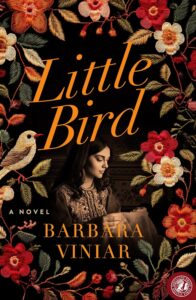 In 1910, fearing escalating violence against the Jews in Russia, Feige’s father arranges for her to marry a wealthy cousin in New York City.
She will no longer be her parents’ adored “little bird.” As she adapts to life in America, she goes from being an obedient daughter to a dutiful wife, even allowing her new husband to change her name to Fannie. Longing to make her own decisions, her husband’s cruelty finally pushes her to risk leaving him. She parlays her embroidery skills into a job and finds the man she believes is the love of her life. When he betrays her, she refuses to forgive him, disregarding advice to overlook men’s lapses. Finally, she meets a man who both loves and respects her. Can she give up her hard won independence? Little Bird is the story of a girl who finds the courage to forge her own path to womanhood.
BUY HERE
Category: Contemporary Women Writers, On Writing
Subscribe
If you enjoyed this article, subscribe to receive more just like it.