How a Short Story Became a Novel: The Making of Mercy Town
By Nancy Chadwick-Burke
The early summer morning couldn’t have been more perfect. The air was clean, with enough humidity to pull sweet and spicy scents from the tops of the trees to their footings as the sun floated just above the horizon. A walk through the woods took me to a little bridge, a spot where I’d stop to look south down the North Branch of the Chicago River. Instead of seeing kayakers slicing open the river’s middle like a zipper, I saw the sun shining on the water at just the right time. The river sparkled like diamonds. I envisioned a boy walking hand in hand with his father along a path below, the two exploring a world of connection and wonder at seeing the river pop with dots of light.
I later turned and headed home with the vision of sparkling diamonds resonating in my thoughts, hearing an imaginary child’s delightful laughter at the wonders of the natural world, and hearing rustling leaves of the tightly knit oaks surrounding me.
Later that summer, in early fall, I met a woman who was walking her dog near the little bridge. We chatted for a few minutes, noting the cooler air of the morning. Suddenly, a loud bang rattled her, and her dog became skittish. “What was that?” she asked.” I told her there was a skeet shooting facility nearby, and we were hearing the guns. She excused herself and dashed away. Though the shooting was far away and we were in no danger, it was the unsettling echo that made it sound as if it were closer than it really was.
I thought about the interplay—a young boy and his innocence, the beauty of nature in the woods, the river’s sparkle—and a single sound, the discharge of a gun, disrupting it all.
When I returned home, a short story, “When the Sun Kissed the River,” was born.
Over the years after the story was published, I never forgot about that boy and his innocence and delight in seeing a river sparkle. I wondered what had happened to him. Would he wait for spring, when the world turns green again, hoping to see the sun catch the surface of the river just as his older sister might have said it would? Would his wonder at the natural world continue? I thought about the quiet of the morning and then the alarming sound of the shotgun that sliced through the air. I recalled his laughter and shouts until suddenly, I didn’t.
When I returned home, I plotted characters—the boy, his father, a shooter. I outlined a setting and an inciting incident: a shooting. And then I considered what effect an accidental shooting would have on a family and a small town, the loss and grief, and how it is carried not only within ourselves but also within a community.
From the seeds of that short story, Mercy Town, a novel, was born.
Mercy Town takes place ten years after the time of the short story. The boy’s older sister, Margaret, “Ret,” twenty-five and married, returns on a work assignment to her rural northern Wisconsin hometown, where she discovers it is still haunted by the tragic accidental shooting of her younger brother, Bean. She sees that her mother is trapped in denial, her father is consumed by anger, and the town is bitterly divided.
Margaret must confront the past, the present, and the rising tensions, not only within her own family but also within her community. She sees how grief shaped her family and a community into silence and bitterness. Amidst the distractions of her lingering pain and recurring flashbacks to that tragic day, Margaret uncovers plans for a development on Dell Landing, a hill home on the other side of the river to generations of Native Americans—including Mr. Kipp, the reclusive man responsible for Bean’s death.
This is Ret’s story, as told in her voice, and it begins in the past, as she recalls a first day of spring when she and Bean headed out for a walk to a little bridge.
“Our lively steps across the backyard increased as we noticed when connecting with the trail how Mother Earth had budded quickly that spring. Tree stumps and broken limbs interrupted the defrosting water’s urgency to travel again. Bean’s pace exploded ahead of mine. I guess he outgrew the guiding ways of his big sister. At first, I was glad to be alone, but I missed seeing the forest through his eyes; I’d come to depend on his interpretation of the world, as if I’d grown too old and the familiar too trite. But it was the stars, and the sun kissing the river, I told him . . . And those were my last recorded thoughts of that morning before I heard the echo, the shot bleeding through the forest, jarring the birds to safety. I sprang from my spot, dropping my journal and leaving open the page of the day that had begun and ended in just one paragraph.”
Facing Mr. Kipp tests everything Margaret believes. In the end, she discovers the freeing power of unconditional forgiveness—even for her brother’s killer.
From a short story to a book-length work, Mercy Town became a life lesson in the value of mercy and the power of forgiveness. It is not only what we can give to others but also can be a freeing gift we give to ourselves.
From Mercy Town:
“I wasn’t the only one whose life changed forever the minute the echo of a loud bang sliced its way through the spines of the spruce and the arms of the tamarack. The resonance was preceded by a soft click that was the talk of neither mature red-winged blackbirds nor young crows. Some people moved on from the aftershocks of that late afternoon spring day, and some didn’t. For those who didn’t, the hate grew over the years to a seeming point of no return. It defined them as something other than what I remembered them to be—kindhearted, forgiving. For others, they held their compassion inside, close to the heart, so as not to excite the ire of those who were opposed, sending the town of Waunasha into a frenzy of disunity that couldn’t be touched because of its heat. It just wasn’t right.”
—
Nancy Chadwick is an essayist, memoirist, and fiction writer. After a decade in advertising, another decade in corporate banking, she quit and began to write full time. She is the author of Under the Birch Tree: A Memoir of Discovering Connections and Finding Home and The Wisdom of the Willow, and her essays have appeared in The Magic of Memoir: Inspiration for the Writing Journey, Adelaide Literary Magazine, Meaningful Conflicts – The Art of Friction, Writer’s Digest, and other outlets. Nancy and her husband reside in Glenview, Illinois.
MERCY TOWN
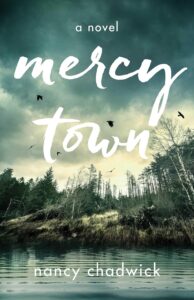 For fans of Ann Patchett and Louise Erdrich, a contemporary women’s fiction novel set in northern Wisconsin about one grief-stricken family’s journey toward redemption and forgiveness in a rural town divided by the past.
After years away, Margaret Payne returns to her rural northern Wisconsin hometown on a work assignment, only to find it still haunted by the tragic accidental shooting of her younger brother, Bean. Amidst the lingering pain, Margaret uncovers plans for a development on Dell Landing, a hill home to generations of Indigenous people—including Mr. Kipp, the reclusive man responsible for Bean’s death.
With her mother trapped in denial, her father consumed by anger, and a town bitterly divided, Margaret must confront both the past and the present, rising tensions. Facing Mr. Kipp will test everything she believes, but before it’s over, Margaret will discover the freeing power of unconditional forgiveness—even for her brother’s killer.
A poignant, redemptive tale, Mercy Town reminds us how forgiveness, even in the deepest sorrow, heals wounds, binds us as human beings, and remains truly unconditional.
BUY HERE
Category: On Writing
Subscribe
If you enjoyed this article, subscribe to receive more just like it.