The Process of Writing A Dream Life by Wendy Swift
Over twenty years ago, I had a conversation with a friend who wrote children’s books reviews for Publisher’s Weekly. I told her I would like to write a memoir. She quickly said, no one is interested in reading a memoir unless it is about a celebrity. That may have been true then, or maybe that was just her understanding, but in either case, I took it to heart and decided she was right.
Who would want to read a story about an ordinary woman, married to a lawyer, caught embezzling funds and sent to prison for over three years. Who would want to read my story about moving from our home to government-assisted housing where I would raise my three young daughters for the next thirteen years. Who would want to read about the challenges and the resilience resulting from having a world thrown upside down?
It turns out, lots of people because lots of readers can identify with a woman who wants to live a dream life and believes despite growing evidence that she cannot enact change because the stakes are too great. They want to read about a woman who finally finds her way and manages to develop her career while raising those daughters who themselves become a legal aide lawyer, a software engineer and a therapist. Everyone loves a story with a happy ending.
As it happened some years after that conversation when I was teaching at an independent day and boarding school I was asked to direct the writing center. As part of that role, I formed writing groups for students and faculty. During those two-hour meetings, we ate pizza, chatted about school and settled into sharing our writing—sometimes poetry, for another member, a screenplay and a few of us shared short stories. I had never before participated in a writing group and felt inspired by the writing of others to create short stories based on experiences with which I had some or very little connection.
One afternoon, it occurred to me to write an essay in the style of other narrative essays I had been reading in The Sun. My essay, Praying Before Idols, encapsulated the experience of our first few days moving from our home to that government-assisted housing. I hadn’t yet shared this part of my life with others, particularly in writing, and the reaction from my peer writers was shock mixed with great enthusiasm for continuing with my nonfiction narrative form of writing, exploring the events of that time in greater depth. They wanted to know what happened? How did I manage to end up teaching at this lovely school?
I submitted my first essay, Praying Before Idols, to Towson University’s press, Grub Street Review, where it was accepted and printed along with an audio file of me reading the essay: https://wp.towson.edu/grubstreetlitmag/2019/11/06/praying-before-idols-by-wendy-swift/
I was enthralled and continued to write essays based on discreet experiences and submitted those to various lit mags, fortunate to have many published. I joined numerous writing groups, including one that was part of the International Women’s Writing Guild. I took writing classes, read lots of memoirs, and reached out to writing instructors and fellow writing students for editing help. I listened to podcasts and understood the importance of a primary thread that needs to run through a memoir from beginning to end. I hired an editor who helped me see the arc of my story as I organized the essays into three folders, representing three acts.
On December 31, 2021 minutes before the deadline, I submitted my unpublished manuscript to Memoir Magazine’s contest. It won in the category: Transformation of Self. I felt validated. I was more confident than ever to go forward and hunt down an agent or small press.
I used Query Tracker and CLMP’s Directory of Publishers and the Author’s Guild to research agents and indie presses. I considered hybrid presses, reading about the pros and cons of many. After learning about the money needed to pay to publish, especially with some well-respected presses, I dismissed that route as being too pricey for me. I knew I would need to find a press that I didn’t need to pay in order to have my book published. I read articles by Jane Friedman, bought a book on how to write a proposal, read successful pitch letters and talked to others who had published before me to learn how they did it. Mostly, it was a numbers game. The more I submitted, the more likely it seemed that I would be able to eventually find a publisher.
When Vine Leaves Press accepted my manuscript, I was over the moon with joy. The process of publishing from manuscript acceptance to printed book took two years. Within that time, I worked with their developmental editor and copy editor to ensure that every page, every phrase, and every word was exactly as it should be to express my belief that we all have the capacity to fall prey to false beliefs, fearing dislocation but when forced to confront the uncomfortable, we will find strength and renewal. That is my memoir’s thread.
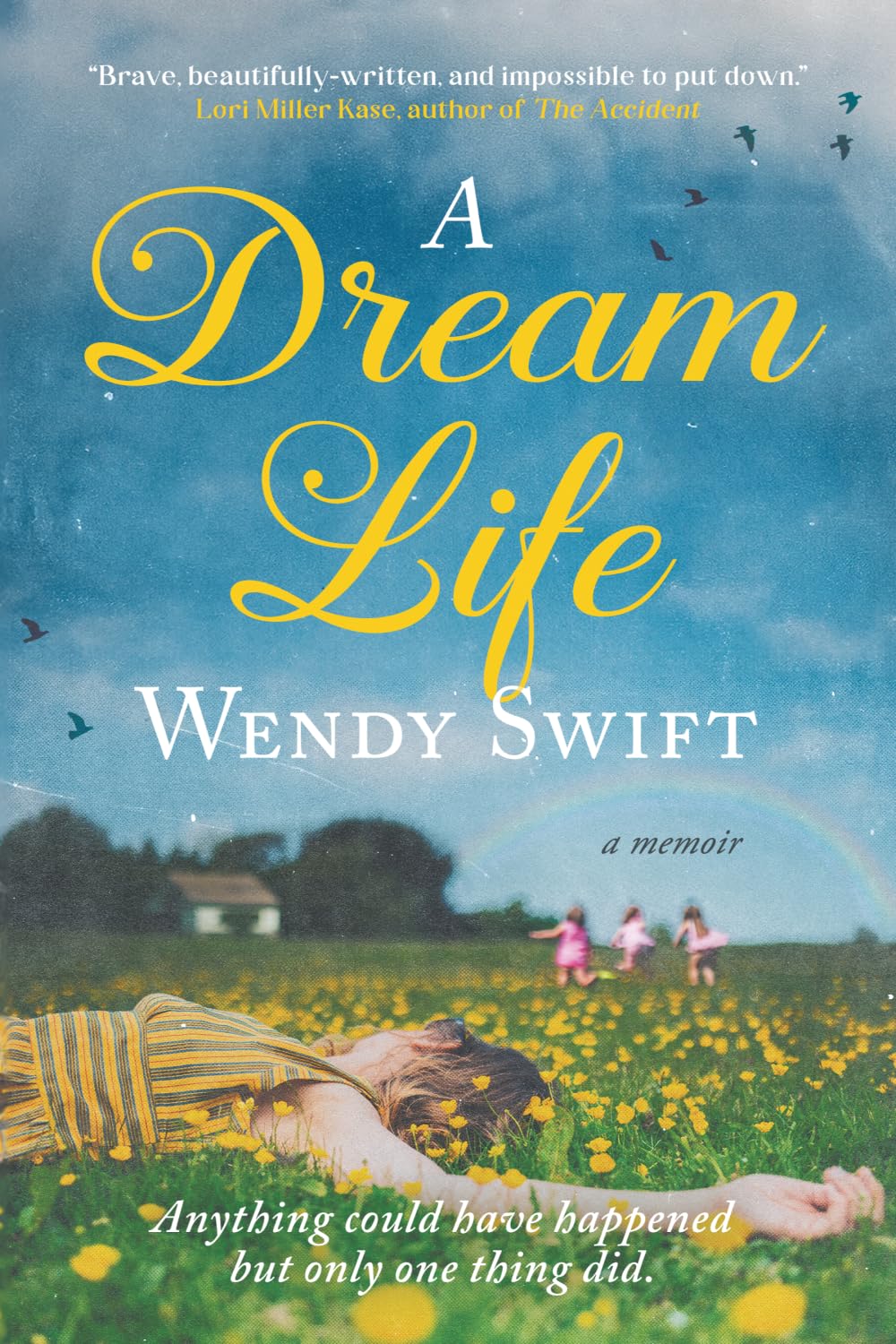
I cannot say enough good things about my experience with Vine Leaves Press. I am thrilled with the cover design, love the community of authors that they have created with the help of Facebook and the careful editing that has resulted in A Dream Life, a book that I am very proud to have written.
Don’t be discouraged by the voices of others. If you have a story to tell, tell it and see where the experience takes you. You won’t know until you try.
—
A DREAM LIFE: A MEMOIR
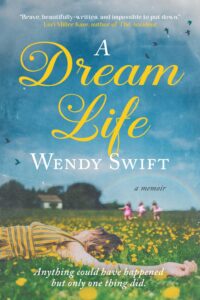 “A brutally honest portrayal of the emotional, psychological, and economic struggle to keep one’s family intact while enduring the acute financial betrayal and emotional abuse of a rogue spouse.” Lisa Lawler, Founder of The White-Collar Wives Project
When Wendy Swift discovers a letter demanding nearly two million dollars in restitution from her attorney husband, she realizes that her life as a suburban stay-at-home mother has been built on illusion. Despite mounting evidence to the contrary, she believed the quintessential dream life she shared with her husband and three daughters was secure and enduring. A Dream Life traces Swift’s search for validation through marriage, motherhood, and social mobility, and the unraveling that follows.
After her husband begins his incarceration in the 1990s, Swift becomes solely responsible for supporting her three young daughters as they navigate loss, shame, and uncertainty. Her path forward is uneven and hard-won, revealing resilience, reflection, and growth, as well as the perils of blind materialism.
This powerful memoir illuminates the complex challenges families face when confronted with addiction, mental illness, and incarceration. Swift blends unflinching truth-telling with wry self-reflection, awakening readers to the consequences of denial and the restorative power of self-possession. A Dream Life ultimately affirms that anyone can unknowingly fall prey to false beliefs, but once the truth is revealed and the fear of dislocation and upheaval is faced, renewal and strength can emerge.
BUY HERE
Wendy Swift is the author of a memoir, A Dream Life, as well as essays published in HuffPost, Memoir Magazine, Grub Street Literary Magazine, Barely South Review, Yellow Arrow Journal, Brevity Blog and Lonesome Press. In 2006, Swift earned the Press Club of Long Island Award for her essay “Ritter’s Pond,” and in 2022, she earned Honorable Mention from the Connecticut Press Club for “The Sentencing.” In addition, Swift is a mentor with We Are Not Numbers, a writing platform for Palestinian writers. Swift serves as a fiction reader for Mud Season Review. She lives in Connecticut and when she is not writing or thinking about writing, she is walking wooded trails with her hound, Lulu.
Find out more about Wendy on her website https://www.wendyswift.com/
Category: On Writing
Subscribe
If you enjoyed this article, subscribe to receive more just like it.