Building with Memories: How Writing Down My Father’s Stories Became a Bridge to History by Donna Hills Patrick
 For much of my professional life I worked in construction and space management. My work was about understanding how pieces fit together—to how take an idea, develop a plan, solve problems, and bring it all together into something that could stand on its own. I learned that building anything worthwhile takes time, and it takes more than materials.
It takes a strong foundation, careful planning, patience, an understanding of how each piece connects to the next; and, most importantly, a strong desire to see it all come together.
My dad loved nothing more than telling a seemingly endless supply of stories—tales of his childhood adventures growing up in his small hometown and through the many chapters of his adult life. Though his stories were often repeated and sometimes changed a bit with each telling, he was relentless in sharing them.
He enjoyed the repetition, adding a detail here or embellishing a moment there, always knowing how to capture the interest of his listeners. Telling his stories was part of who he was, and he never seemed to tire of bringing his memories to life for those willing to listen.
Not wanting those stories to fade, I decided to start writing them down. But before long, my notepad wasn’t big enough. I needed more space for something much larger, and I realized then that I was drawing on those same professional skills, only this time I was building with memories.
Dad had spent years telling me stories about growing up in East Millstone, New Jersey. Some were simple childhood memories from the 1930s and 40s that captured his hometown as it once was—a close-knit village where neighbors knew one another, traditions were shared, and life revolved around family and community.
Others opened a window into a time and a place that was slowly disappearing. Each memory led to another, gradually building the story of his life. Together, these memories became the building blocks for something larger: a story about family, a village, its people, and a way of life.
I became the builder of a different kind of structure. I gathered Dad’s stories, searched through photographs and historical records, connected names and dates, visited the area’s historical landmarks, and met with professors, researchers, township and county staff to fit the pieces together. Some were clear and solid; others required digging deeper to understand where they belonged. Slowly, the scattered memories began to take shape.
But this was never simply about making a book. Dad wanted his stories to live on. He wanted folks to remember what it was like to grow up in East Millstone when he was a kid, to know the people who shaped his life, and to understand why that little village meant so much to him.
In the end, I realized that I wasn’t just preserving Dad’s stories—I was constructing a way for Dad’s voice to reach people who weren’t there to hear him tell the stories himself. I wasn’t simply documenting the past, I was building a bridge between generations.
One side of that bridge were the people who came before us—the early settlers who established the village, the families who built homes and businesses, the workers who shaped its industries, and the generations who watched East Millstone grow and change. On the other side was Dad, carrying the founding stories and those from the world of his childhood into my generation.
Family was at the heart of it all. Dad’s stories were filled with his parents, grandparents, sister, aunts, uncles, neighbors, friends, and the traditions that shaped the people we became. Some were carefully documented parts of our family, while others were pieces of family lore passed down through generations, giving us a sense of where we came from and connected us to people we knew only through the memories of those who came before us.
I wanted to understand what came before Dad’s time so that his stories would have a place in the larger history of the village. His memories were not isolated moments; they were part of a much longer story. The streets he roamed, the buildings he knew, the businesses that came and went, the river, canal and the woods where he played, and the people who shaped his life all had histories of their own.
Beyond East Millstone, Dad’s adventures continued when he joined the US Navy. His stories capture the experiences as he traveled on a destroyer escort during the Korean conflict. Starting as a Seaman Apprentice and advancing through the ranks to a Machinist Mate 2nd Class, Dad not only learned a skillset that set the stage for his post-military career, he forever gained lifelong admiration and enormous pride for his country. Upon marriage and family, he dedicated ten years to his community by establishing a Boy Scout troop, further defining East Millstone’s history.
Dad spent his life telling his stories because he did not want them forgotten. I wrote them down because I realized that those stories deserve a permanent home. By placing his memories and our family lore within the larger story of East Millstone, I hope to give future generations a way to cross that bridge, to know the people that came before them, to understand the place that shaped them, and to appreciate the family stories that might otherwise disappear.
The bridge connects our family’s past with East Millstone’s history, links what came before to the present, and gives future generations a way to carry these stories—and the story of East Millstone—forward.
—
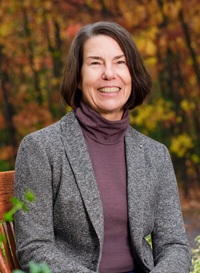
Born in New Brunswick, New Jersey, Donna Hills Patrick is the first of Raymond and Arlene Hills’s three daughters. She lived in East Millstone until she married and moved to Vermont with her husband Jon. Donna worked for over twenty years in construction and space management. The Town I Crow About is her first book.
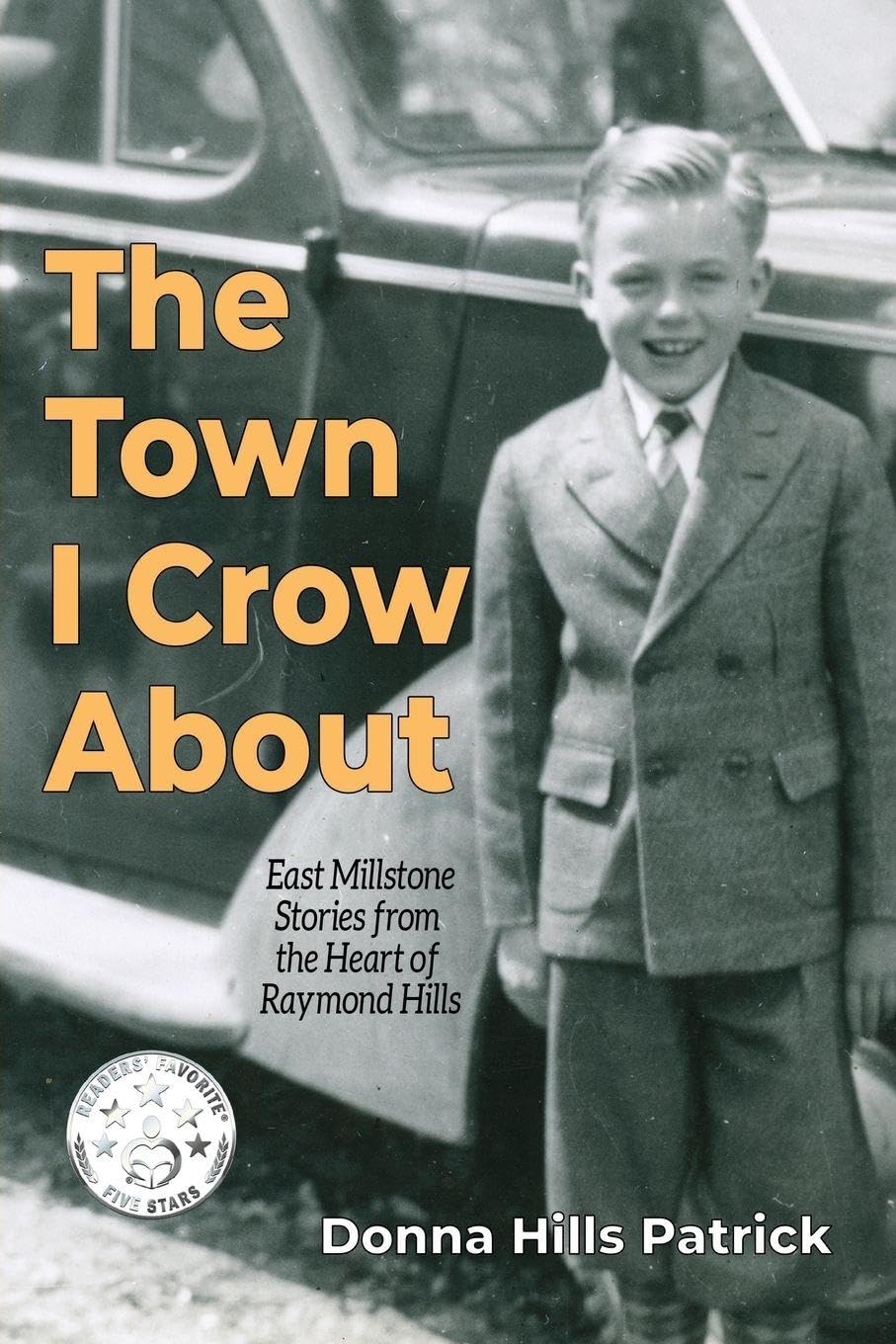
THE TOWN I CROW ABOUT
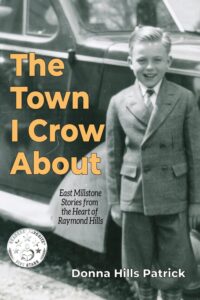 The Town I Crow About is a collection of stories that 94-year-old Raymond Hills told his daughter, Donna, as he looked back on his life growing up in East Millstone, New Jersey, a small, once industrious town with a historic district on the National Register of Historic Places.
From the schoolyard to Market Street, Raymond invites readers into personal reflections spanning the Great Depression through the World War II era and beyond, introducing them to East Millstone’s early history and explaining how the town has evolved over the years. His stories begin with childhood adventures in the Boy Scouts, follow his teenage years racing a Model A roadster, recount his service in the Navy, and conclude with the courtship of the woman who would become his wife of 63 years.
While historical photographs bring each story to life, it is the people, Raymond included, who make East Millstone–the town he crows about–special.
BUY HERE
Category: On Writing
Subscribe
If you enjoyed this article, subscribe to receive more just like it.