Hannah Sward (Strip: A Memoir) interviews Courtney Kocak on her debut memoir, Girl Gone Wild
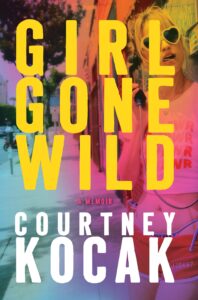 GIRL GONE WILD is a collection of exploits and delusions about chasing your dreams with reckless abandon and what happens when their pursuit becomes a new kind of trap. In this memoir-in-essays, Kocak takes readers along on her heady metamorphosis from girl to woman and from dreamer to professional artist, as she is transformed in this unwitting feminist coming-of-age. It’s a wild, cringeworthy, and often heartbreaking tale, but with Kocak’s wry wit and clear-eyed accounting, it’s nothing short of captivating.
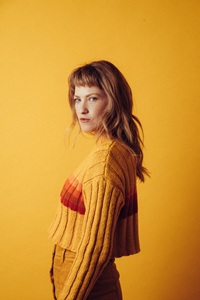
As a fellow memoirist, I know how much courage it takes to put your life on the page and then let it go. In Girl Gone Wild, Courtney Kocak does exactly that, writing into the mess, the contradictions, and the moments most of us are tempted to soften or skip. Her work is bold, unflinching, and often disarmingly funny in its honesty. As a great admirer of her work I was excited to talk with her about what it means to tell the truth as we remember it, how to shape lived experience into story, and the bravery memoir demands.
When you started Girl Gone Wild, did you know the story you wanted to tell?
No. But I started mining essays I’d already written and quickly returned to an early piece about my Girls Gone Wild experience from 2012. I realized there was a lot more to explore in that essay—things involving the company, the culture, and me personally that were begging for inclusion. At the same time, I was also writing about experiences in the entertainment industry, and an instructor and classmates pointed out that all my work was innately feminist. Strangely, I hadn’t recognized that before, so it was a revelation. That became the main theme: unpacking my encounters with misogyny.
 From childhood to adulthood, you cover a wide stretch of time in Girl Gone Wild (and you do so seamlessly). How did you decide what to include, what to leave out, and how to present the most intimate parts of your life honestly without losing narrative flow?
I cut myself off at my 40th birthday. It was a lucky coincidence that I had a draft due for an incubator that same day, so I finished the epilogue literally on my birthday. I’d been working so hard on the draft and the end of the story I’d been searching for just clicked into place: I’d just gotten my first byline in The New York Times, my mom had declined my offer to read the manuscript, and I felt like the long arc of my coming-of-age was officially over.
I already had an early essay called “Born to Be Wild” that mentions the day of my birth, so I leaned in and made that my frame—from zero to 40. Admittedly, it’s a large frame, but I narrowed down what fit inside based on theme. The spine of the memoir is an unwitting feminist coming-of-age about trying to make it in Hollywood, so that became my litmus test. I cut a bunch of eating disorder material (which I’m saving for my next memoir!) and a handful of other essays that felt outside the scope.
What was the hardest part of writing Girl Gone Wild?
Patiently waiting for a book deal to materialize. That was incredibly difficult, and I think it got in the way of my early revisions. You have to trust that publication is coming in order to truly commit to producing your best work—or at least I do. I won’t make that mistake again.
I also found the later revisions more pressure-filled than the generative stage because I knew that an audience would be reading the finished book soon, and suddenly there were a lot more voices in my head.
What, if anything, would you do differently with writing your next book (if that is in fact something you are planning on doing)?
Yes! I already have a second memoir about halfway finished. I can’t wait to return to it later this summer and fall. As you know, book promotion is a beast that can easily distract from writing. It’s necessary, so I’m trying to fully embrace this season and enjoy it, but I’m eager to dive back into my next project and apply everything I learned while finishing Girl Gone Wild.
There were so many craft lessons embedded in this process that it’s hard to articulate them all—the importance of embodiment, scene craft, and emotional specificity, among others. My next book calls for more research, so I’m excited about that challenge.
I know it’s still so early on since Girl Gone Wild came out, but what has been the most surprising aspect so far? Have readers’ reactions or interpretations of the book surprised you in any way?
It’s fascinating to start receiving external reactions. Every reader brings their own experiences to the page, so the book becomes theirs in a way, too. They start thinking about their grandmas, their mistakes, their younger selves, etc., which hues their interpretation.
I love hearing from people who aren’t necessarily the target demographic—for example, I got an email from an older male attorney from near where I grew up who seemed to thoroughly enjoy the book, which he read in one weekend. I also did a podcast interview with an Australian couple who were absolutely delighted by the reading experience. The guy said he hadn’t read a book in ages. Same with a young Canadian podcaster. Those are my favorite reactions because they illustrate the universality of the story, while also holding the potential to educate men about what it’s like to live as a woman. I can’t wait for more.
What was the process of finding an agent/publisher like for you and what made you decide on Trio House Press?
I had a fancy New York agent who took a narrative nonfiction project out on submission in 2023. We went out for one round and made it all the way to an acquisitions board but ultimately didn’t get an offer, and afterward the agent no longer wanted to pursue that project or represent my memoir because, as they put it, only celebrity memoirs sell.
I queried a handful of agents after that, but the experience made me realize I didn’t actually want another one. On the side, I’d been submitting an early draft of Girl Gone Wild to contests and getting encouraging signals: I made the longlist for Santa Fe Writers Project and became a finalist for Trio House Press. That gave me confidence that I could sell the book on my own if I kept pushing.
Ultimately, I pursued a conversation with Kris Bigalk of Trio House Press at AWP in 2025 because I wanted to thank her for sending me such a thoughtful rejection when I didn’t win the contest. We talked for maybe five or ten minutes, and while it wasn’t super strategic, that conversation planted a seed. Two weeks later, she emailed to say she couldn’t stop thinking about Girl Gone Wild and wanted to acquire it.
Luckily, I’d been deep in revisions, so the manuscript was much improved from the original contest submission. I’m so happy it worked out the way it did.
If your younger self could read Girl Gone Wild, what scene do you think she’d roll her eyes at the most? (I love you as a young girl!!)
LOL, that’s such a good question. I think she’d initially be disappointed that I didn’t stay on my acting path, so she’d probably read about my pivot to writing with a little skepticism and a dramatic eye roll. But I also think she’d be deeply curious about where life took us—and in the end, proud of where we landed.
One of my favorite chapters was “I Cum All Over My Closet Floor.” You write about sex so candidly, with humor and vulnerability. What advice do you give your students when writing about sex?
I think writing about sex is a lot like writing about anything else. It shouldn’t be there just for shock value or the sexiness of it alone (even if you’re writing Fifty Shades of Grey). Ideally, it’s integrated into the storytelling in a way that feels motivated and embodied. The why and the how should be intentional. The moment before is really important—the tension and the lead-up are kind of the whole ballgame.
I love your relationship with your grandmother. What do you think she would say if she read the book?
It was so meaningful to include both of my grandmas in Girl Gone Wild. Sadly, they aren’t alive to see the book come to life, but they were so influential that it felt right to memorialize them in my debut. The funny thing is that neither of them would’ve read the book—and they certainly wouldn’t have liked or understood most of it if they had. They lived very traditional lives, and I think they would’ve taken offense to a lot of the subject matter. I know because my mom is mad at me right now after starting to read Girl Gone Wild despite my warnings lol.
That said, I would’ve loved to share their individual essays with them. They would’ve liked those. Readers have really responded to the Grandma Betty essay, which makes me so happy.
For an aspiring memoirist, what are three tips you could give?
Take your time—be patient with the investment required to hone your craft and accumulate the life experience that lends wisdom to your work. It will be worth it. Build community: fellow writers aren’t your competition, they’re your friends, collaborators, and biggest champions. And don’t overlook small presses; some of the most interesting, exciting memoirs today are coming from independent publishers.
ABOUT:
Courtney Kocak bylines include The New York Times, The Washington Post, The Los Angeles Times, Cosmopolitan, Slate, HuffPost, The Sun, Catapult, BUST, Bustle, Business Insider, InsideHook, and more. She’s a regular contributor to Descript’s Creator HQ blog. Courtney reports on gender, sexuality, psychedelics, reproductive rights, sex work, and sustainability.
Hannah Sward is the best-selling author of STRIP: A Memoir and Summer of Men on Substack. Her bylines include LA Times, NY Times, HuffPost, and The Rumpus. hannahsward.com
Category: Interviews, On Writing
Subscribe
If you enjoyed this article, subscribe to receive more just like it.