
Why Objects Matter in Historical Fiction by Patricia Furstenberg
 A coat hanging beside a door can reveal more than a page of description. Who wore it? Who left it behind? Who still cannot bring themselves to let go?
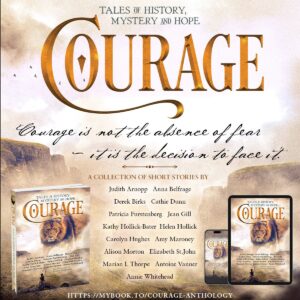
In Kate’s Letter (my historical fiction short story included in the anthology Courage: Tales of History, Mystery and Hope (out 17 June), the coat arrives before the woman fully does, It still holds the outline of a life in its seams.
An object is where historical fiction either breathes or slips into costume drama. Research alone does not create atmosphere. Readers enter the past when objects carry emotional weight because they hold what people cannot say.
A coat can hold smoke from a dead hearth; the stain of snowmelt in the hem, or the remembered shape of shoulders no longer there. These things do not decorate the past — they’ve witnessed it. Objects make history physical. More importantly, they make emotion visible. Readers believe them because they recognize the feeling.
Objects as Architects for Emotions
In historical fiction, objects become meaningful only when memory attaches itself to them. Once that happens, they begin to carry emotional weight.
This is where clothing becomes the framework supporting emotion.
A fountain pen, a cracked bowl, a stained photograph can hold meaning that comes not from value, but from attachment. These remnants make the past intimate.
In Kate’s Letter the coat matters because someone once lived inside it. The garment becomes witness rather than prop. Even absence becomes visible.
“It had hung there so long the peg seemed to know its shape.”
It carries atmosphere too: smoke, thyme, remedies absorbed into wool. The past is not explained. but sensed.
Most importantly, it preserves identity.
“It still held the shape of her shoulders. Of the girl she’d once been…”
The coat holds a version of Kate the world tried to erase — healer, survivor.
Here lies the emotional truth of historical fiction: not in declaration, but in what remains when everything else has gone.
Objects as Silent Witnesses
Objects outlive us quietly.
Letters yellow. Wool frays. Leather cracks. Yet they often survive long after the moments they once belonged to.
Historical fiction lives in these remnants. The past persists through use: repaired sleeves, soot in hems, coats left for years. A patched elbow suggests labor. Repaired hems suggest scarcity. Visible mending becomes a record of endurance.
Most importantly, it preserves identity: “It still held the shape of her shoulders. Of the girl she’d once been…” It remembers a self the world tried to erase.
While wear becomes biography and narrative: “When she took the coat down it sagged in her hands, the seams worn thin.”
In Kate’s Letter, the coat functions as a silent witness: it holds grief and survival within its fabric.
“The coat, although weathered with age, still carried the scent of smoke and thyme…”
The scent should have faded. It has not. The fabric refuses to release what it once absorbed.
This is the transformation historical fiction depends on: objects begin as matter and become emotional landscape. A coat remembers the body that wore it. A letter remembers the hand that sealed it. Objects endure because people cannot bear to let the past disappear completely.
Grief and the Physical World
Grief often begins where language fails.
People keep objects because forgetting feels like a second loss (coats left on hooks, shoes stored away, or gloves beside empty chairs). Sorrow settles into things because it resists abstraction.
Historical fiction lives inside this material memory. Readers believe the past when they can feel it — wool, wax, wood worn smooth by use.
In Kate’s Letter grief rarely speaks directly. It does so through fabric, thread, herbs, resin stains, and gesture.
“He had reached out when the world discarded her…”
The coat absorbs these moments until memory becomes sensation. It is scent that carries this weight most strongly: “The coat… still carried the scent of smoke and thyme…”
Smell collapses time. Memory is inhaled, not observed.
But with grief, even repair becomes mourning: “Along the shoulder, ran a crooked seam where she’d stitched a dried leaf…”
What is mended is never fully restored. Even the seam preserves the wound memory cannot erase. As such, a stitched initial deepens this compression of grief into matter: “Her fingers had bound it for memory, hers.”
Here, sorrow is not explained. It is contained.
Therefore objects give grief shape: a foxglove stains, or garlic braided for protection rather than food.
Objects hold what cannot be discarded because a person once mattered more than the thing itself.
Atmosphere as Material Presence
Atmosphere in historical fiction is not declared. It is built: ash in a dead hearth; damp wool near firelight; frost on glass or smoke stain in wood grain.
Even ordinary objects shift into ritual: “The woman handled it like a relic, not a root.”
Fear and folklore settle into material form without explanation. Suspense, too, is carried by objects: “The folded letter still rested in her hand.” Will the letter be opened? Discarded? Or never read at all?
Even space breathes through things: “Dust drifted… the beams groaned, old wood remembering storms…”
The setting feels alive because it is shaped by pressure, weight, and use. While a buried object intensifies this further:
“Bring me the blade you buried beneath the ash tree.”
Such an object creates atmosphere as it is not only metal, but trust, violence, exile, and survival in one.
Together, people and objects build the atmosphere becomes: what is hidden, what is kept, what refuses disappearance. Together, they make the past breathe.
Objects as Narrative Force
The coat in Kate’s Letter functions less as clothing than as a vessel for memory.
In historical fiction, the past often lingers in architecture: ruins, castles, roads worn thin by time. Here, it survives in fabric.
The coat is shaped by absence: “It still held the shape of her shoulders…”
It becomes witness, returning Kate to a version of herself she cannot escape. Clothing worn close to the body absorbs life. It retains scent. And scent compresses time into sensation.
While touch, it reinforces it: “The coarse wool rasped against Kate’s fingers…”
The fabric resists abstraction. It insists on presence.
Therefore, the coat collapses the distance between past and present. Shared winters, survival, silence, all remain embedded in its material weight.
Refusing metaphor, it does not symbolize memory. It contains it.
The Writer’s Craft: How to See Differently
Writers rarely transform stories through invention alone. More often, they change how ordinary things are seen. While fiction teaches readers to look again.
A photograph becomes priceless once grief attaches itself to it. A coat becomes survival made visible. A cracked cup holds more weight than gold because it remains when everything else has broken.
This is object-based storytelling: meaning formed through emotional residue. Nothing is only itself; cloth, steel, or ink, they exceed their material form.
In Kate’s Letter objects do not decorate the narrative; they carry it.
The water spring above Kronstadt becomes one such vessel: “Fetch water from the spring that never dries…”
Water, hands, thirst become all emotions held in physical detail.
The world does retain what people leave behind. Trees, garments, letters become archives of lived experience.
Objects can easily turn abstraction into substance. Ink becomes betrayal. Refused water becomes desire. Worn wool becomes survival.
The emotional world becomes visible through things that can be touched.
A Creative Practice for Writers
One of the most effective ways to uncover the emotional core of a story is to break it apart physically. Print it, cut it up, rearrange it without concern for order or logic.
Historical fiction often reveals itself in fragments rather than structure. Memory arrives in flashes: sensory impressions, partial scenes, emotional echoes.
In Kate’s Letter, sensation precedes explanation: “The spring whispered beneath bramble and vine…” Image arrives before meaning.
Once structure loosens, the hidden architecture appears: the recurring objects, the mirrored scenes, the emotional repetitions that reveal a deeper shape of the work.
“Her skin remembered what her mind had tried to bury.”
The aim is not chaos, but discovery. Rearrangement becomes listening. The body of the story often knows more than its outline.
Historical fiction thrives on accumulation: objects, fragments, associations. When reshuffled, they reveal deeper currents of meaning.
Why Readers Remember Objects
Readers rarely remember stories as sequences of events. What lingers is something smaller: a detail that refuses to fade.
The green light in The Great Gatsby.
A ribbon tied around a branch.
A medal worn smooth by grief.
A child’s toy left behind.
A coat hanging beside a door, waiting for someone who never returns.
Objects become emotional shorthand. They compress into something visible that what cannot be said.
Readers may forget plot. They do not forget how something made them feel.
In Kate’s Letter this is method, not decoration. Emotion is attached to substance: fabric, wax, ink, ash, blade.
When Kate holds the letter, she holds consequence: “The letter she’d lost to time…”
Even before it is opened: “Unsent. Unopened. Unknown…”
Coat and letter merge into survival made physical. So when the seal breaks: “The wax… broke with a brittle sigh…” – wax becomes bark. Reading becomes touch.
Kate’s response follows the same logic: “She read every word, touching it as one might trace a scar…”
Emotion becomes physical contact. Even absence becomes presence: “And as if it had never left, the coat: sentinel of courage…”
Objects still hold that what people cannot anymore. And what remains is not plot alone, but what endures, carrying the story further: coat, letter, blade.
Because objects do what narrative alone cannot.
They stay.
—
 Patricia Furstenberg is a Romanian-born, South Africa-based author of character-driven historical fiction set in medieval Transylvania: Transylvania’s History A to Z; Dreamland: Banat, Crisana, Maramures, Transylvania, 100-word Stories . Her novels explore women with dangerous skills as secret wielders of power. When Secrets Bloom, in the Blood of Kings, Heart of Shadows saga, reveals women’s fortitude within the turbulent world of Vlad the Impaler, weaving meticulous research with tension amid the illusion of unyielding power. Patricia blogs about overlooked corners of history and cultural heritage at https://alluringcreations.co.
Category: Interviews
Subscribe
If you enjoyed this article, subscribe to receive more just like it.



Thank you for championing books and for hosting another one of my articles on your wonderful website, and on such a memorable day 🙂