Pivoting to Writing at 70
By Patricia Grayhall
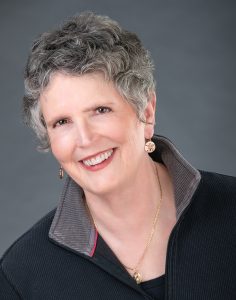 After a nearly forty-year career as a medical specialist, I retired with my partner to a beautiful log home on a mountaintop overlooking the Strait of Juan de Fuca that divides Washington and British Columbia. Then, at nearly 70 years old, when we were downsizing, I came across a stack of old journals from the early 1970s, when I was admitted to medical school before Title IX guaranteed women equal access to education and before Roe v. Wade. It was also when I discovered I was a lesbian and had to hide my true self from friends and colleagues.
I decided young people today could benefit from knowing how we survived, and even managed to thrive, leading successful lives as women and as members of a marginalized group.
My career as a medical doctor made me a keen observer of people, listening to their stories, not only what they were saying, but also what they were not saying. However, I’d never done creative writing. So I applied the same dogged perseverance that got me through medical training to learning the craft of creative writing.
When I wrote my first book, Making the Rounds, I couldn’t imagine where it would lead me. Writing a memoir is a bit like walking into the world naked. I wrote of stumbling through my twenties—the messy relationships, the brutal medical training in what was then a nearly all-male world, and some cringeworthy moments I’d rather forget. The only saving grace was that writing about the person I was fifty years ago felt almost like writing about a stranger, which made it easier to be brutally honest.
Some friends thought I shared way too much, but that’s the gamble we take when we decide to tell the truth, and telling the truth humanizes us for the reader. That memoir garnered a starred Kirkus Review and numerous awards, but what really made it all worthwhile? The incredible feedback from readers who said, “Oh my God, I thought I was the only one who experienced that or the only one who felt this way!” That validation—knowing my story helped others feel less alone—warmed my heart.
But then, readers asked, “So what happened next? Where’s the sequel?” At first, I brushed it off. Another memoir? I wasn’t sure I had it in me. Especially when dealing with more recent events, where privacy becomes a concern. But here’s the thing about being in my seventies—I’ve accumulated this incredible treasure trove of experiences, mistakes, lessons learned, and stories just begging to be told.
That’s when I discovered autofiction, which is now my writing sweet spot. The beauty of autofiction is that I get to take the emotional truth of my experience and amplify, mold it, and use it to say something larger about the world we’re all trying to navigate.
The core of my debut solo novel, A Place for Us, stems directly from my life with my British partner, Linda. Picture this: it’s 2003. We’ve found each other again after 22 years apart, and we’ve realized we’re still in love. However, neither the UK nor the US will allow us to live together legally. Canada would—but only if we could prove we’d already cohabitated for a year as conjugal partners, which was impossible in our home countries. Talk about a bureaucratic catch-22!
However, the characters in the book aren’t me and aren’t Linda, although it closely tracks our real-life immigration experiences. In the novel, I intentionally blur the lines between fact and fiction to connect our experiences to larger social and political themes.
What I love about autofiction is that it allows me to go beyond my own experience and explore the big, messy issues that affect all of us—not just the queer community. For instance, in A Place for Us, a theme I wanted to tackle was how perfectly sane, intelligent people can get trapped in abusive relationships (the exes in the novel). It’s so much more complex than people think—there’s love, good times that keep you hoping, and the belief that your partner will change. It’s a trap that slowly strips away your ability to act in your own best interest.
While A Place for Us is a romance at its core, it is also a meditation on self-acceptance and the search for a home—not just in a physical sense, but in the arms of someone who truly understands and cherishes you. And of course, it has a happy ending.
Another theme I touch on in A Place of Us is environmental justice. Jo is an attorney who battles Big Oil. She also becomes a central character in my next novel, Framed, a thriller set for release in early 2026.
In Framed, Jo builds a groundbreaking case against World Petrol, one of the nation’s largest refineries, relying on a pivotal study by Dr. Tori Nelson, a respected Houston physician—and Jo’s close friend—whose research reveals alarming cancer rates in neighborhoods surrounding the refinery. But just as Jo’s lawsuit gains momentum, Tori is shockingly arrested for bank robbery.
Was this story also inspired by an experience in my own life? Maybe. I’ll leave that open to speculation.
Pivoting to a writing career as a septuagenarian was not only possible but also enjoyable. It opened up a whole new world of creativity, purpose, and fulfillment. I get to share my insights, lessons, and stories with others, potentially changing lives and extending my influence beyond my medical career.
—
Patricia Grayhall is a retired medical doctor and author of the memoir Making the Rounds: Defying Norms in Love and Medicine, which garnered a starred Kirkus Review and was named one of Kirkus Reviews Best 100 Indie Books of 2022. Among its awards were the 2024 National Indie Excellence Award for LGBTQIA Non-fiction and Memoir and the 2023 Best Indie Book Award Winner for LGBTQ Memoir.
Patricia published a romance novel, Golden Years and Silver Linings, with her wife in 2023.
A Place for Us: A Novel, published in June 2025, is a romance inspired by her experience of immigrating to Canada with her partner.
Her fourth book, Framed, a thriller, is scheduled for publication in January 2026.
Patricia’s interviews, published articles, podcasts, and links to retailers for her print, audio, and eBooks are on her website at www.PatriciaGrayhalll.com.
Patricia lives with the love of her life, splitting her time between Seattle and Vancouver Island, where she enjoys other people’s dogs and occasional sightings of orca, eagles, otters, and black bears.
A PLACE FOR US
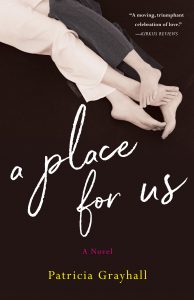 For fans of Taylor Jenkins Reid and Harper Bliss, a thrilling tale of two women who find each other irresistible but struggle for a second chance for love, redemption, and sanctuary when the world is against them.
Jo, a driven environmental attorney based in Washington, DC, and Lauren, a spirited young woman from Britain on a journey of self-discovery, find themselves in a serendipitous encounter at a lively London pub in 1981. Their brief yet profound connection generates a whirlwind of emotions, but the vast ocean, Jo’s career aspirations, and immigration hurdles thwart their burgeoning romance.
Fast forward twenty-two years, and both Jo and Lauren are unhappy in their current relationships. Fate intervenes when Lauren and her partner travel from Europe to visit Jo in her San Francisco home. The reunion is electric, rekindling a storm of emotions that neither can suppress, despite their efforts to honor their existing commitments.
Amid the majestic backdrops of Yosemite National Park and the Pacific Northwest, old passions can’t be denied, leading to dramatic confrontations and painful revelations. Jo and Lauren finally realize they must admit the truth: they are irresistibly drawn to each other. But there is no country in which they can legally live together.
A Place for Us is a poignant narrative of profound emotional depth. Will this second chance lead to happiness, or will the same forces that once drove them apart prevail again?
BUY HERE
Category: Contemporary Women Writers
Subscribe
If you enjoyed this article, subscribe to receive more just like it.