Have Attitudes Towards Women Really Changed Since 1900?
Journalist Caroline McGhie got to explore Victorian attitudes to women’s rights, sexual freedom, religion, art and pornography when writing her debut novel The Sitter. But has anything changed since 1900?
 How a woman copes after she has been taken advantage of has long been a subject of interest for writers of women’s fiction. More recently it has become a global phenomenon, thanks to the #MeToo campaign. Thousands of women are now able to voice their experiences, expose male perpetrators and demand a fair hearing.
From Charlotte Bronte’s Jane Eyre to Pat Barker’s The Silence Of The Girls and Eimear McBride’s A Girl Is A Half-Formed Thing, women in literature turn catastrophes into journeys and find ways of dealing with the unbearable. I am particularly interested in the grey zone surrounding sexual abuse, the area where both sexes feel something for each other but may not express it, and the imbalance of power between them isn’t recognised. Each risks being damaged, but then, as we know, love always involves an element of risk.
The world of art creates perfect conditions for abuse. Clothes come off, fantasies are visualised, rules are broken, all for the sake of art. The Pre-Raphaelite and Arts and Crafts movements hummed with liaisons between artists and their models (or sitters) in this grey zone. The women, all from humble backgrounds, were chosen for their looks, luxurious hair and trademark curling lips. Lizzie Siddal worked in a hat shop, Fanny Cornforth was a servant and Annie Miller pulled pints in a pub. William Morris was on the look-out for the next “stunner” and when he found Jane, daughter of a stableman, he quickly painted her and married her. The women, however, tended to suffer from ill-health, melancholy and a tendency to swap partners.
What choice did a woman have in 1900? For those who didn’t marry there were few. Working in a shop, going into service, taking in washing, were all ways to earn a living and avoid the workhouse. Middle-class women on the other hand had to choose between marriage, which meant becoming the property of a man; or spinsterhood, which meant depending on the kindness of relatives. Women who possessed a talent had little chance of it ever being recognised. Lizzie Siddall became an artist and poet in her own right but this was highly unusual.
It wasn’t until 1928 that the female right to be creative got real attention. Virginia Woolf stated in her book A Room Of One’s Own that “a woman must have money and a room of her own if she is to write fiction”, effectively pointing out that most women had neither. It is no coincidence that this is the same year in which all women finally got the vote.
Seamstresses, often overlooked, suffered more than other women in employment. Dr Chloe Ward, senior lecturer in the History of British Art at Queen Mary, University of London, writing about the Watt’s Gallery exhibition on Art And The Plight Of The Victorian Seamstress in 2021, said: “In 1843, the Children’s Employment Commission led a government investigation into the millinery and dressmaking trade, and concluded that ‘there is no class of persons in this country, living by their labour, whose happiness, health, and lives, are so unscrupulously sacrificed as those of the young dressmakers. Recruited at around fourteen years old, seamstresses often worked twenty-two-hour workdays, and during the busy season when dresses were most in demand, it was not uncommon for them to work for three days straight without sleep.”
The Ghost In The Looking Glass by Christina Walkley (Peter Owen 1978) summons an image of the rich woman admiring herself in the mirror in her latest fashionable dress, seeing the emaciated seamstress who made it hovering like a ghost in the glass behind her. When my seamstress-turned-artist’s model finally poses nude in my novel The Sitter, she thinks, “I am no longer an invisible woman in a looking glass or the unknown maker of an exquisite gown. I am at the centre of the picture. I no longer hold the pencil making the drawing. I am being treated like a goddess.”
One institution at the time which positively encouraged women to study, paint and draw, was Toynbee Hall in London’s East End. It was opened in 1884 by Samuel and Henrietta Barnett to bring wealthy and poor together. It ran enlightened projects and inspired politicians like Clement Attlee to bring about social change. Meetings of the Union of Women’s Suffrage Societies (forerunner of the Suffragettes), led by Millicent Fawcett, were held here. In 1908 theses women began to tie themselves to the railings outside the House of Commons and in 1918 they had won the vote for propertied women over thirty. Only in 1928 were all women enfranchised.
Housework has always played a huge part in the lives of women. As a journalist on The Sunday Times, I canvassed wives, mothers and grandmothers for memories of housework that had been passed down through the generations. I received extraordinarily detailed letters from women all over the country. They were experts on how to preserve eggs, how to make soap, how to make a rag rug, how to starch, use a mangle, scrub a doorstep, gather dust, make a meat joint last half a week. I was invited to speak at the Essex Women’s Institute about my findings and their response was very moving. This formed a wonderful resource for The Sitter, ironically set in the year the vacuum cleaner arrived. In the century to come servants, would vanish, women writers and artists would fly, contraception would allow us to decide when we wanted to conceive, and careers would be forged. Sexual abuse carries on but is, at last, being flushed into the open.
—
Caroline McGhie is a multi-award-winning journalist who has written for The Sunday Times, The Sunday Times Magazine, The Sunday Telegraph, and was part of the launch team for The Independent on Sunday. She has written columns for The Financial Times, The Standard and Country Living.
The Sitter by Caroline McGhie (Waterland Books, £12.99) is available from all good book retailers. www.waterlandbooks.co.uk/
THE SITTER
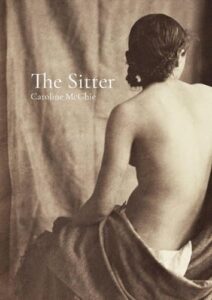 Adolescent baker’s boy Jack catches sight of a beautiful woman alighting from a train at dusk. His remote Norfolk village is built around a railway maintenance hub known as The Works which is ruled by ritual, hierarchy and God.
Newcomer Rosie is escaping a secret past involving a well-known London cartoonist who is a proponent of early photographic pornography.
A beguiling tale of love and learning unfolds against the backdrop of the hardships faced by the railwaymen and fishermen of the time.
Poignant and moving, this literary novel weaves the key themes of women’s rights, childhood memories, sexual freedom, religion, art and pornography around it’s compelling cast of characters. Based on extensive research in and around Melton Constable and Cromer, The Sitter exudes the charms of Victorian Norfolk and a nostalgia for the steam railways.
An historical novel of richness and depth, The Sitter is a remarkable, engaging and deeply atmospheric debut.
BUY HERE
Category: Contemporary Women Writers, On Writing
Subscribe
If you enjoyed this article, subscribe to receive more just like it.