How Writing a Coming-of-Age Thriller about College Graduates as a Mother of Young Adults Healed This Writer’s Heart
By Christina Kovac
 When I began writing my second novel, Watch Us Fall, I thought I wanted to write a coming-of-age thriller about college-aged women. I was dreaming of characters cocooned in a world of dorms and class schedules and dining halls, paid for by parents or put off with student loans, the first taste of freedom constrained only by rules of the university.
I loved the idea of starting anew, walking onto campus showing yourself as anyone you wanted to be, and living closely and sleeping dorm-style, headboard to headboard with strangers you think maybe you could love—this seemed to me perfect for the world of a psychological thriller. So too is that particular time in a woman’s life, the cusp between childhood and adulthood, an emotionally fraught time.
That was my beginning point. A few months into the first draft, I ran into trouble. The problem? I was too close. My daughter was mirroring in her life what I was writing on the page, and my feelings as a mother of a young adult kept getting in the way.
Some background: my oldest daughter had just left home for college three-hundred miles north in Ithaca, New York, and I was honestly terrified. This was in the age of pre-vaccine COVID. I kept worrying, what if she gets sick? What if she needs me, and I can’t get to her, because of the pandemic? Why does my heart hurt like this?
Taking a kid to college move-in during the pandemic was wild. I joke with my friends that I’m still traumatized by it. Per New York mandate (at the time), my daughter and I quarantined in a crappy hotel room for two weeks, fed by Door Dash, before she could step foot onto campus. I remember coming out of that hotel on day fourteen, like a vampire stumbling in the sun. We had to mail ahead her dorm room necessities—bedding and pillows and lamps. My daughter was allowed to bring only two suitcases and a backpack—that’s it. Parents were barred from the inside of any university building, including the dorms. We weren’t allowed to help our kids move in.
I remember dropping my daughter off at the staging area at the agricultural school, where university health officials were funneling all the new students in through an actual cattle chute for COVID testing before they were allowed to move in. This was to ensure all the students stayed healthy, I understood this. Still, after I hugged her and said, “Have fun, be good, stay safe,” I watched with dismay as she walked across the parking lot. So young, she seemed to me, and so alone, struggling with her two suitcases, as her backpack bounced off her shoulder. Then she disappeared into the chute.
That was it, my goodbye. I drove home, crying all the way to the Pennsylvania line. When I got home, I went to my office and lost myself in my college novel. But right away I hit a wall. Something was wrong. I couldn’t figure it out.
In the months that followed, my daughter FaceTimed often, and I’d listen to stories of the friends she made, of her dorm situation—a suite with three other girls she loved. She described campus explorations and outings in the gorges that surrounded her university. I parsed her words for any loneliness she might be hiding. This was the danger I worried most about.
My novel draft began centering around a young woman narrator, far from home, lonely until she found three great friends who were loyal to a fault, fearless in their protection of each other, and loved each other—almost obsessively.
This was my secret hope for my daughter—though without the recklessness or the obsession. (It was a psychological thriller I was writing, after all).
The early character sketches soothed my aching heart.
Then my daughter came home for Thanksgiving break. One look at her face, and I knew she was doing well. Many of my fears melted away. We watched old movies from when I was a kid that she thought would make me happy—Sixteen Candles and Breakfast Club and then oh, St. Elmo’s Fire.
I gaped at the screen transfixed. St. Elmo’s Fire was a revelation. My daughter laughed and gave me the teenage eyeroll, saying this movie doesn’t really hold up. I didn’t care. It was the movie’s premise that got me so revved to write.
For those who haven’t seen the 1985 movie, St. Elmo’s Fire is about a group of recent graduates navigating that messy, dangerous transition from the cocoon of campus life into the real world.
That was the coming-of-age situation my novel wanted. I grew Watch Us Fall’s four best friends four years older and made them post-grads renting a house in Georgetown, a stone’s throw from their university. They hadn’t moved on from college life exactly—but they couldn’t go back. They had their first jobs and first heartbreaks; that is to say, their first adult relationships. Their future is bright, but their present is a struggle.
That situation felt clearer, stronger. It gave me the distance I needed from sad-Mom-feelings interfering with what would make the novel most thrilling. My four best friends—Lucy and Addie and Penelope and Estella—stepped off the page for me then. It was almost like, hey, what took you so long to realize who we were?
Bonus: they felt more real to me because I’d spent months sketching their college lives where they’d first fallen into such deep friendship with each other. I knew they’d do anything for each other, because they’d already gotten each other through those scary first months of college.
And I loved them all the more for helping me get through my kid leaving home.
—
WATCH US FALL
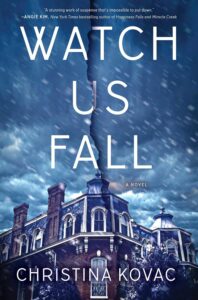 “A stunning work of suspense that’s impossible to put down. Christina Kovac masterfully combines a twisty missing person mystery, a heartbreaking love story, and an insightful exploration of the nature of obsession and trauma. I loved this novel.” —Angie Kim, New York Times bestselling author of Happiness Falls and Miracle Creek
Lucy and her three best friends share a glamorous but decaying house in the heart of Georgetown. They call themselves “the Sweeties” and live an idyllic post-grad lifestyle complete with exciting jobs, dramatic love lives, and, most importantly, each other.
But when Addie, the group’s queen bee, discovers that her ex-boyfriend Josh has gone missing, the Sweeties’ worlds are turned upside down. In the days leading up to his disappearance, Josh, a star investigative journalist from a prominent political family, was behaving erratically—and Lucy is determined to find out why. All four friends upend their lives to search for him, but detectives begin to suspect that the Sweeties might know more than they’re letting on.
As the investigation unfolds, Lucy’s obsession with the case reaches a boiling point, and with it, her own troubling secrets begin bubbling to the surface of her carefully curated life. A thrilling account of the lies and delusions that lurk beneath cloistered groups of female friends and the sinister realities of celebrity, Watch Us Fall is a gripping mystery and an examination of the things we tell ourselves when we can’t face the truth.
BUY HERE
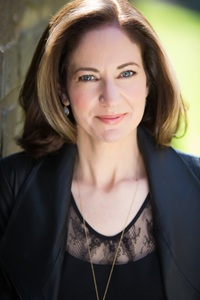
Christina Kovac is the author of The Cutaway. She worked for seventeen years managing Washington, DC, newsrooms and producing crime and political stories in the District. Her career as a television journalist began with Fox Five’s Ten O’Clock News, and after that, the ABC affiliate in Washington and then at NBC news. She lives with her family outside of Washington, DC.
Category: On Writing
Subscribe
If you enjoyed this article, subscribe to receive more just like it.