I Picked the Best and Worst Time to Write a Book
When I first woke with the vision for this book, it felt like someone had slipped a film reel into my head and started the projector.
I could see the places, hear the music that follows my main character when she time-travels through the woods, and feel the small, stubborn hope that kept knitting the scenes together. I’d always been intrigued by time travel, but this story arrived not from theory but from necessity. It was the thing I needed to hold onto.
It’s funny how signs come. The same day I woke up with my vision, a Sunday, my pastor mentioned the time-travel movie Back to the Future as his favorite film, maybe a silly coincidence to you, but I took it as a sign to begin writing my debut novel. That was years ago. The exact time, I don’t remember. Time is funny like that; it slips from our fingers.
When I first began to write my debut novel, I had one kid. I think it was right before I got pregnant with my second. Now, I have two, the youngest being five years old.
Yes, it’s been that long.
You have no idea how hard it is to start a book and get it published when you are doing it solo with a whole life swirling around you, until you have done it too.
At first, I spent very little time writing. Maybe an hour a month. But I started. I expected it to be a long process; what I didn’t expect was how this book would become less a project and more a refuge. I wrote while my life was changing faster than any manuscript could keep up. I had to do e-learning with my oldest child during the last few months of kindergarten (he was and still is very energetic) while working full-time and pregnant, then had my other child during the summer that COVID hit. I held a full-time job from home during COVID; I navigated a divorce when my youngest was a toddler and the exhaustion of finding a place and new rhythms for my family.
I was so stressed to the point where I kept getting sick and, eventually (because I wasn’t taking care of myself), my sister had to wheelchair me into the hospital. I didn’t write much during this time, even less than an hour a month, probably never (it’s hard to remember) but I did read more. Specifically, more poetry.
As time does, it went on. I began healing and writing again. Then I wrote more and started dating post-divorce. Fast way forward, I met someone, got engaged, moved out of the first place I had on my own, and the book launched at the very moment my life rearranged, yet again.
It was, by most measures, the worst possible time to write a book. It was also the best. The timing forced me to write around my life when I felt like I didn’t have enough time for everyone to begin with, but the project became therapy: a place to process grief, map out courage, and reframe hope.
My protagonist, Iris, carries pieces of me, not a mirror, never that literal, but echoes of myself: a generosity of spirit that sometimes gets taken advantage of, the slow, clumsy work of setting boundaries, and a faith that grows through trial rather than comfort.
My mom, when she began reading Lost Time, told me how she could see myself in the book, and how she understood why writing it was therapy for me. She knows me more than most people, and that was the confirmation I needed that it was the best therapy for me. Although not the only.
Iris’s name has its own pull: the flower’s symbolism; hope, wisdom, faith, and courage threaded themselves into the story even when I didn’t notice until it was done.
Writing this book during the busiest, messiest season of my life taught me something I didn’t know I needed to learn: creativity doesn’t wait for ideal conditions. In fact, my most creative sentences stemmed from the deepest turmoil and darkest moments, and it sneaks in between boxes and first dates.
Creativity insists we be present for both the worst chapters and the ones that surprise us with joy.
—
Holly Trost is a passionate writer who draws on her life experiences. She started as an Instagram influencer who spoke on introversion, and later found a love for sharing poetry and writing stories. With a BA in social science, Holly works from home, juggling deadlines and two kids like a pro. When she’s not writing, Holly is usually getting lost on a trail, reading, or hanging out with her close-knit family and friends. Her Christian faith is a big part of her life and shows up in her writing, especially in the pieces that reflect the messy, beautiful realities of life.
Find out more about Holly on her website https://hollytrostwrites.wordpress.com/
LOST TIME
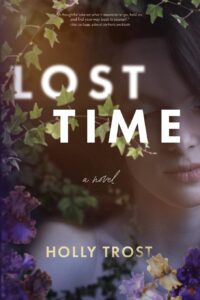 Sometimes the only way to find your future is to face your past.
Iris has always carried the heavy weight of disappointment, most of all in herself. Haunted by the death of her mother and her own insecurity, she’s convinced she’s unworthy of love and pushes away the one person who’s stood by her through everything: Billy.
One lonely night, overwhelmed and aimless, Iris wanders into the woods with no destination and even less hope. But just as she’s on the brink of a drastic decision, the world shifts. Time itself unravels, and Iris is thrown into a series of alternate realities, each more unexpected than the last.
As she stumbles through these fractured versions of her life-encountering strangers who feel like home-Iris must confront the truth she’s always avoided. If she wants to make it back to her own time, to the person who matters most, she’ll have to stop running from who she was . . . and start becoming who she’s meant to be.
Lost Time is a romantic journey through memory, regret, and redemption-a reminder that even when the past feels impossible to escape, it’s never too late to change your future and find your faith.
Order Lost Time today to support a debut indie author: Lost Time On Amazon
Category: On Writing
Subscribe
If you enjoyed this article, subscribe to receive more just like it.