Apocalypse Now? Dystopian World-Building in the Age of…Whatever the Hell this Is
By E.A. Smiroldo
A funny thing happened on my way to writing a novel about life in the dystopian future. Surprise! The climate change Armageddon of my imagination turned out to be far better than what we were experiencing in reality. Even after finding a publisher for my climate fiction novel, The Silent Count, I found myself editing the story up to its publication date to resonate with the times, or, at least, prevent embarrassing anachronisms.
Before I go on, yes, I know that some will take issue with me, to the point of, say, repealing the 2009 Greenhouse Gas Endangerment Finding. Fine! We’ll agree to disagree and refrain from calling each other mean names such as “dumb-ass climate denier” or “idiot luddite tree-hugger” in the comments. In the meantime, pick your poisonous dystopia (doesn’t have to be cli-fi-related, there are so many to choose from!), and let’s consider the real world through the eyes of the novelist, challenged with world-building.
I’ll start, using an example from my novel, the aforementioned The Silent Count. My protagonist’s tragic backstory, ostensibly set in the near future, is that she loses her mother and childhood home in Colorado due to a wildfire. Severe droughts only exacerbate the problem, leading to mass migration from the American West to literal greener pastures back East. My imaginary world also includes green Christmases, unseasonal storms, and a couple of 100-year floods happening in back-to-back years for good measure.
Sad? Sure. But, meanwhile, reality was biting, hard:
- From 15 June to October 2022, monsoon floods in Pakistan killed 1,739 people, causing around $40 billion in damage. As well, the floods displaced approximately 7.6 to 8 million people. The immediate causes of the floods were heavier-than-usual monsoon rains and melting glaciers that followed a severe heat wave, both of which were linked to climate change.
- The historical of town Lahaina, considered glittering jewel of the Hawaiian island of Maui, was incinerated due to wildfires fanned by climate factors, unlikely to ever be restored to its former glory.
- In Surfside, Florida, an apartment building collapsed, killing 98 people. One of the deadliest structural failures in U.S. history, experts have suggested that rising sea levels, seawater intrusion, and climate-induced corrosion of steel-reinforced concrete weakened the structure.
- Australia was hit with so-called “megafires,” which burned over 59 million acres and destroyed 3,000 buildings. Moreover, over 60,000 koalas were injured or killed, with the media featuring story after story of orphaned koalas, crying for their dead mothers. Baby koalas, people!
I could go on, but you see my point. This begs the question, what’s an aspiring novelist to do? I suppose one could world-build for broke and create a lurid hellscape littered with social ills and death/mayhem/destruction at every turn. However, this approach carries risks, such as reducing one’s story to parody.
A hellscape is fine, and authors should feel free to magnify their woe(s) of choice. Current or past realities remain excellent sources of inspiration, with readers relating to stories that echo what has actually happened. That said, to avoid caricature and potential anachronism, why not focus on character?
Consider this: dystopian novels generally turn on a “rupture” event, where the world falls apart. Would you rather read a novel that’s mainly an expository dump of bleakness with a few battles thrown in? Or are you more interested in how the characters deal with the end of the world as they know it? They might mourn the world they’ve lost; they might feel completely alone and hopeless. Or they might find the courage to rise up and fight, or even turn evil and seek revenge.
To illustrate, let’s say the megafire-surviving koalas evolved into sentient overlords who – rupture event imminent! – decided to enslave humans. Are readers more interested in the steady supply of eucalyptus, or in the lives and emotions of the slaves forced to farm said eucalyptus (or of the sentient koalas for that matter!)?
Characters should feel like people we know, i.e., fully realized human beings. Yes, the dystopian backdrop has a role in driving the action. But authors should keep in mind that, for maximum effect, the external world they’ve built must be balanced with each character’s inner world. A character’s humanity, moral conflicts, and relationships present stakes that ultimately matter the most and keep readers interested. As a bonus, inner struggles stand the test of time, which is why we still read Shakespeare.
But please, show don’t tell. Soliloquies are best left to the Bard. The last thing readers want is reams of preachy dialogue where characters talk about the dystopia and its horrors. Ditto for a narrator telling readers what to think about the grim circumstances. Instead, demonstrate the dread, misery, and hardships through action. Give readers something they can see, taste, smell, feel, or otherwise sense. Spray it, don’t say it!
So, have at it, fellow authors. Scorch the Earth. Install that one-world government you’ve had your eye on. Sic a virus on the population that makes the covid pandemic look like a blip. Just make sure you focus on the characters living under these brave new regimes. They could, say, fall in love under monstrously oppressive conditions and ultimately die for their doomed relationship, ala Romeo and Juliet. Starring koalas! (N.B.: My koala overlords made me say that…help!).
E. A. Smiroldo is a nuclear engineer with a creative streak. She’s a Washington Area Music Association Award-nominated singer-songwriter and award-winning screenwriter and author. Premised on real science, The Silent Count, a climate change thriller out now on Solstice Publishing, is her debut novel.
THE SILENT COUNT, E.A. Smiroldo
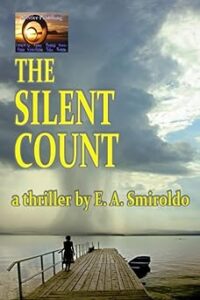 Nuclear engineer Dara Bouldin’s life is a mess. She’s paying off her dad’s gambling debts, reeling from a broken engagement, and practically invisible at the energy research agency where she works. Meanwhile, her ex Jericho’s latest single is racing up the charts and her handsome new colleague Dmitri is friendly with everyone but her.
All around them, wildfires, floods, and other natural disasters have become the norm. But Dara has an audacious plan to reverse climate change, if only someone would listen.
Little does she know, someone at the CIA has been paying attention. And when the public demands action, Dara gets the chance to turn her dream into reality, with the blessings of Congress and the President. Things are looking up.
That is until she discovers a secret that thrusts her into the center of a global conflict that could rewrite history, in dire ways she never intended. Things are going to change, big time. And the countdown has already begun.
Be careful what you wish for, Dara.
BUY HERE
Category: How To and Tips, On Writing
Subscribe
If you enjoyed this article, subscribe to receive more just like it.