History is Often too Good to be True. Especially When it is True
By Jean Baveystock
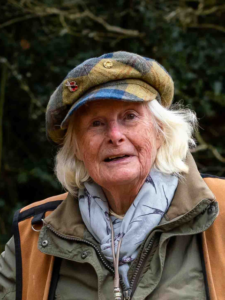 Writing historical novels should come with a health warning. It becomes a selfish solitary occupation and research becomes addictive. Fate has an unexpected habit of intervening too.
My own exciting journey began some thirty years ago when I happened to pick up a second-hand book about French Marshal Ney. The book looked interesting. He looked interesting with his glittering career and subsequent downfall, together with his undoubted sex appeal. Little did I know that simple impulse would lead me down a three decades-long path of research, discovery and storytelling.
A couple of weeks later, at a lunch party, I found myself seated next to a gentleman named David Chandler – who, as it turned out, was the world’s leading authority on Napoleon at the time. It was David who introduced me to another fascinating historical figure: the eccentric English General, Sir Robet Wilson.
Wilson proved to be just as compelling, and – luckily for me- he was also an extraordinarily prolific writer. His books and journals are rich with stories, including his many encounters with Ney, and another curious character: Michael Bruce, a dissolute and hedonistic young Englishman, quite unlike the other two. I became engrossed with these three men and their intertwined lives across Europe during the Napoleonic Wars. It was the beginning of a story I just had to write!
It has taken me three decades of research and keyboard bashing to publish the two books in the “Three Men in a War” series, Glory Beckons and the sequel Fleeting Glory. Set against the dramatic backdrop of Napoleon’s coronation to the decisive Battle of Waterloo and beyond. Could be described as Battles, Boudoirs and Bedsports. As luck would have it, I did not have to invent characters, including, unusually, the named servants, they all lived. Or the plots, so I never suffered from writer’s block, quite the reverse.
The original book turned into another overly long “War and Peace”. My editor suggested I split it into two, which did work well as there was an obvious event: Napoleon poised to cross into Russia on the start of his disastrous invasion. This meant that, when writing the sequel, I had to make sure a reader who had not read Glory Beckons would be able to follow the story. For example, Ney’s famous horse was called Concorde. At the beginning I did introduce him as Concorde the horse. Not just Ney’s horse.
Although I already knew the plots, I still wrote a book-plan with Part plans and then Chapter plans. I didn’t always write in order either, so, if one morning I felt like tackling a battle scene or a seduction, I would go for that. Thank goodness for Word, which of course stores Chapters in sequence, even if the input is at different times. How I tackled erotic scenes proved interesting. Where such scenes were part of the story, I tried to keep them as tasteful as possible. But apparently, someone is always offended.
As every historical fiction author knows, research becomes addictive. I was lucky to find so many documents, books and letters in the public domain, especially those by Sir Robert. Rich with stories, his prolific writing made me wonder if he ever slept during campaigns! So, I was able to tell this extraordinary story with historical accuracy, depth, romance, and more than a little irreverence.
How did I go about the research? Three decades ago, there was no Google, so I spent a considerable sum on books from the USA with extremely expensive postage! Over the years I have built up my extensive Napoleonic library with some very rare volumes. Including all Sir Robert’s books in the original. Serendipitously I found a 2nd. edition (1803) of his famous “Expedition to Egypt” in Winchester. It weighs a massive 1.25 kilos & it was circulated throughout Europe, including to Czar Alexander & Queen Louise of Prussia…. Best seller those days…Napoleon was thus made aware of his anti-Napoleonic views, so Wilson was on his hit list. Yes, the Net goes so far, no matter what the period is, but for me it did not go into enough detail. I had assistance from the British Library, the London Library and various translated Russian and French sources. And, as a Wine Merchant, I have travelled widely through Europe – visiting many of the same places where my characters once walked, fought and loved.
“Golden Nuggets”: exciting, very obscure or little-known facts. I discovered Napoleon suffered from epileptic seizures, I have never read this in any official, even modern, biographies. A very well-kept secret at the time. What if he had one while commanding a battle? In winter 1807, Sir Robert saved the life of a toddler stuck with his family in the Polish snows, Ferdinand de Lesseps. He grew up to develop the Suez Canal, opened to shipping in 1869. He was also in charge of transporting the Statue of Liberty, a gift from the French people to the Americans, to New York in 1884.
I did enjoy the writing part. It was as if I had known Ney, Wilson and Bruce personally and I miss them! My next book, set in the same period, is about three Duchesses. No battles, more bedsports.
Believe you me, there is no other feeling like holding YOUR book in YOUR hand.
—
Jean Baveystock brings a wealth of historical insight to her fiction. A seasoned vintner with years spent traversing France and Spain—the very landscapes of her novel—her inspiration stemmed from a rare bookshop find and a serendipitous meeting with the world’s foremost authority on Napoleon. Today, she resides in Hampshire with her extensive Napoleonic library and three working Golden Retrievers. Find out more via her website jeanbaveystock.com
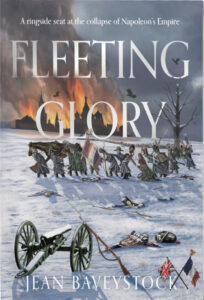 More Battles, Boudoirs and Bedsports. In the gripping sequel to Glory Beckons, three very different men find themselves in the collapse of Napoleon’s empire.
Marshal Ney, Napoleon’s famous ‘Bravest of the Brave’, at the height of his illustrious career, with a secret that could destroy the Emperor’s infallible reputation. Sir Robert Wilson, an English general and diplomat, harbouring a hatred of Bonaparte, determined to be the man who assassinates him. Michael Bruce, young hedonistic Etonian with little interest in Napoleon’s ambitions, apart from when they interrupt his travels and erotic adventures. The exciting, dangerous and intertwining lives of these three men give them ringside seats to the end of a conflict that tore Europe apart and defined the shape of the world for the next century.
Opening with Napoleon’s fateful entry into Russia and his advance towards Moscow, following the famous retreat through a Russian winter, and ending in the aftermath of Waterloo, Fleeting Glory is a non-stop page turner. Its racy depiction of gory battles, immoral court life and elegant lifestyles tells what it was really like for those caught in the finale of an empire.
BUY HERE
Category: On Writing
Subscribe
If you enjoyed this article, subscribe to receive more just like it.