Why Fantasy Can Reveal Human Truths by Alison Levy
How does fantasy reveal human truths? It might seem counterintuitive to look for truth in a genre dependent on magic and the supernatural but fantasy lovers know better. Fantasy weaves tales of impossibility but this is just a means to explore the human condition. Realistic fiction might contain truth, but fantasy allows us to experience it.
In realistic fiction, we expect the protagonist to be human, but the same is often true in fantasy. Fantasy authors frequently write from the point of view of a human because readers find it easier to connect with protagonists who resemble themselves. Even fantasy books written from the point of view of a non-human will often give that character human attributes for the reader to identify with.
In my own books, I chose a witch, a human woman, as the main character. While she is immersed in a magical world full of inhuman beings, the problems she wrestles with, while laced with fantastical elements, are entirely grounded in the human experience which, hopefully, makes her relatable to readers.
Heroes of the fantasy genre are renowned facing massive challenges, far greater than those the typical person faces in everyday life. When the reader picks up a book, they stand in the hero’s shoes and take on those challenges first hand.
In Stephen King’s Dark Tower Series, the reader joins the gunslinger Roland Deschain as he travels across Mid-World, a wasteland perforated with interdimensional doorways, to reach the Dark Tower, linchpin of all existence.
At a glance, such a story appears too grandiose to teach a reader anything about human truth, but is that really the case? The fantasy hero’s circumstances may be extreme but their morality and the core values they must weigh are entirely human. When Roland must decide whether to continue the quest to which he has pledged himself or save the life of a boy he loves like a son, the reader can see the double-edged nature of blind devotion to a cause.
Likewise, I hope the fantastical elements of my book encourage those recovering from a toxic family to see that no matter how isolated they feel, they are stronger than they think and they are never truly alone. The choices made by a fantasy protagonist, however extreme the setting, provide a lens through which readers can reflect on their own values.
Another way in which fantasy excels in revealing human truths is by giving physical form to emotional states. In J.R.R. Tolkien’s The Hobbit, the dragon Smaug is a fearsome obstacle barring the dwarves from reclaiming their ancestral home but he’s also a physical manifestation of greed. Smaug sits atop a mountain of gold and jewels, knowing it in such detail that he can sense the loss of a single cup and brutally attacking those he holds responsible for the theft.
He hoards the wealth not for a purpose but only for the sake of having it—the very essence of greed. Seeing this undiluted embodiment of a common human emotion gives the reader insight into how wasteful and destructive greed can be, not just for the miser but for everyone in their path.
In a similar vein, in my book Wild Hunt I’ve framed the Vampire Kazimiera as a physical manifestation of addiction. Though she limited her consumption of blood for many years, when her usual routine is disrupted, she finds that he has to drink more and more just to get through the days until she has lost control of herself and endangered everyone in her care. By seeing how Kazimiera’s life disintegrates bit by bit, I hope to show readers the hazards of relying on a quick fix rather than confronting the root of a problem.
My favorite way in which fantasy reveals human truth is in how it illustrates social divisions. The real world is peppered with prejudices—ethnic, religious, political—and because emotions run high with regards to these things, they can be difficult to examine directly.
In Frank Herbert’s Dune series, the Fremen are a marginalized people routinely abused by powerful groups that mine their lands for spice. While the main character, Paul Atreides, expresses sympathy for their plight, he also exploits their religious beliefs for his own benefit.
My own series, The Witch’s Odyssey, involves a divide between witches and Fae. Both groups live in a world of magic but witches have built a social structure that places them in a superior position in relation to the Fae, allowing them to exploit the inhuman creatures by draining them of their power.
My main character, Georgette, rejects the prejudice attitudes of her family but struggles to come to grips with the privilege she was born into. Processing social issues can be challenging under the best of circumstances but examining them through a fantasy lens places us at a distance from the real-world emotions associated with them. This distance provides a safe space needed for self-reflection and empathy.
The human truths we learn from fantasy, while not necessarily laid out in a straightforward manner, are extraordinarily more adaptable to our personal experiences. Accompanying a fantasy hero on their journey teaches readers how different types of people approach epic problems, overpowering emotions, and social stratification. The adversity in a reader’s life becomes less daunting once they have walked in the footsteps of a fantasy protagonist and collected the truths that their story has left for all to gather.
—
Alison Levy has been writing since childhood as a means of coping with undiagnosed anxiety and ADHD. The first book in The Witch’s Odyssey series, “Magic by Any Other Name” is the fantasy winner of the Indie Discovery Reader Award and Maxy Awards. Levy’s powerful and inventive continuation, “Wild Hunt” (SparkPress) is set to release June 9, 2026.
WILD HUNT
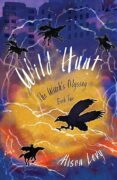 For fans of urban fantasy and tales of found family, the second installment of The Witch’s Odyssey—the story of a young witch breaking free from generational abuse and finding her purpose in life with the help of her friends, magical and otherwise.
Georgette Delaney’s emotional well-being has improved dramatically since she fled from her abusive, manipulative family. She is surrounded by friends and chosen family, however, the young witch’s life is still challenging. She’s in a loving relationship with her boyfriend, Neil, but his workplace drama is intruding on their lives. Her job at Club Nocturne is fulfilling but her boss, the Vampire Kazimiera, is growing erratic and endangering every magical being in her care. Her best friend, Mei-Xing, is sinking into depression. And on top of it all, her narcissistic mother, Hazel, continues to try to control her from the opposite side of the country.
Georgette is dealing with all of this and more already when her friends Delia and Senji visit from Valhalla with the report that a Wild Hunt is imminent. Weathering the storm feels like challenge enough—but then the Valkyries, Delia included, mysteriously lose their grip on reality and stop performing their duties. Abandoned by his Valkyrie partner, Senji pleads for Georgette’s help before the destructive forces Valhalla keeps at bay break through its weakened defenses and make their way to Earth.
With no one else to turn to, Georgette must look within herself for the strength to prevent the coming apocalypse.
BUY HERE
Category: Contemporary Women Writers
Subscribe
If you enjoyed this article, subscribe to receive more just like it.