Why I Couldn’t Stick to One Genre by Irene Wittig
For me, writing started with ceramics. I lived in Naples and loved the hand-painted ceramics I found all along the Amalfi Coast. I learned how to do it, and thought other people might like to learn too. So I wrote a how-to book with illustrations, instructions and projects. Chilton Books liked the idea and published it as The Clay Canvas: Creative Painting on Functional Ceramics.
I loved the writing part of that book and wanted another project—something with a story. I aimed high and decided to write a novel. The topic would be World War II. I was born near the end of the war, though luckily ten days after the liberation of Rome. Stories I grew up with, first in Europe and later New York, were all about the war. And most of the storytellers were somehow connected to Vienna. So that would be the setting.
The novel didn’t happen overnight. The characters came first – and there were many – then the research, then the plot. Then the rewriting, early rejections, and more rewriting; then editorial critiques by my newly created neighborhood writing group, and later by a professional. I even experimented with changing point of view from third person to first person and back to third. From beginning to end, thirty years passed!
With little chance of finding an agent at my age, I self-published All That Lingers in every format possible, including a professionally narrated audiobook. The reviews were good. Kirkus praised it. Book clubs liked it. Libraries carried it. The book was firmly in the historical fiction genre.
During the many years I worked on the novel, I also developed designs based on my ceramics. One group was based on the alphabet, with each letter accompanied by a short alliterative phrase. This led to my writing articles for ceramics magazines, where each letter was on a different ceramic piece. Later, I lengthened the phrases, created watercolor illustrations, and self-published An Amusing Alphabet in hardcover, paperback and ebook. Was I now a writer in the children’s literature genre, or was it a picture book?
Agents and publishers expect you to know your genre.
I set out to write another novel. My imagination had already given birth to the main character. Her name was Bennett, and she was a lonely, isolated, middle-aged American woman living in Delaware who loses her job and slowly discovers that a different life may still be possible. It wasn’t historical fiction, but I was inspired by something else in my life. I had accompanied my husband to Uganda when he went there for work and found a way to use my experience there to show Bennett that the world is much bigger than Delaware, that she has courage she never knew she had, and that new friends can open up her life to love, family and even adventure. I self-published The Best Thing About Bennett in paperback, hardcover, large-print, ebook and even an AI generated audiobook. What genre had I written now? Contemporary? Women’s lit?
One night I had a very vivid dream that led to a short story about a phone that could call the past. Memories of Naples, and a post-war true story led to other stories, and an event once cut from All That Lingers became yet another. A couple were funny, others not. Genre unknown. I self-published Short Tales and Ruminations in paperback, ebook and AI narrated audiobook.
Then it was time to update the ceramic book. I added many illustrations, and published it in paperback as Creative Painting on Everyday Ceramics and as an ebook, The Clay Canvas: Revised Edition, Creative Painting on Functional Ceramics. Genre: arts and crafts.
When my youngest granddaughter learned “see you later, alligator; after a while, crocodile” it led to many new variations of the idea of two animals talking to each other in rhyme. My friend, Dennis Kendrick, a well-known illustrator, provided the humorous illustrations, and a new activity book for children was born. “Let’s Play See You Later, Alligator.” Again self-published, though only as paperback.
Most recently, I returned to World War II and gathered all the documents, letters, research and photographs that I had on my uncle. I published it in paperback and hardcover as Almost Home: The Story of Otto Gruenbaum, Pianist and Ritchie Boy.
I did it for my family, and donated it to the Holocaust Museum, World War II Museum, Ritchie Boy Museum, and West Point Holocaust Studies.
After lecturing on it at the Ritchie Boy Museum, I thought an ebook of just the narrative portion (without all the letters, documents, research etc) might be of interest to the general public interested in World War II, so I published the ebook version on Kindle as Almost Home: the Narrative. Both book and ebook are firmly in the non-fiction genre.
Agents and publishers want you to choose a genre, and when your first story or novel succeeds, they’ll expect you to continue in that same genre so that your readers can follow you. It makes marketing so much easier. But what if you are inspired by a variety of things? Isn’t it liberating to write without tying yourself to one genre?
The peril of writing in a variety of genres is that each one has to find its own readership. That makes marketing a challenge. The challenges of marketing self-published books are even greater, but that is an article for another day.
My website https://all-that-lingers.com describes all my books, provides reviews, and historical, and cultural information, videos and photographs of the Vienna of my novel.
—
Irene Wittig was born in Rome to a half-Jewish mother who’d escaped Vienna just in time. She was educated in New York from grade school through college, studying languages and art. She studied in Germany on a Fulbright, worked in Washington, and returned to Italy in her 20s, where she met her American husband. Together they returned to the States and Irene worked as a ceramic painter for twenty years before discovering her love of writing. In recent years she has returned to painting, but this time on paper.
—
THE BEST THING ABOUT BENNET
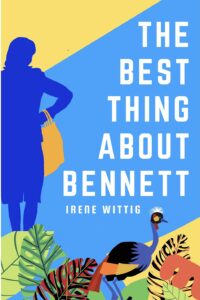 A tender story of a middle-aged woman’s journey out of self-doubt and resigned isolation into emotional renewal.
After Bennett’s unplanned retirement, unexpected encounters and a new job widen her world. The arrival of Joe Muir, a widower with two adopted Ugandan children, awaken Bennett’s long-ignored desires. Inspired by love, she is determined to fly to Uganda to search for the children’s missing sister, challenging the idea that it is ever too late to trust oneself and find courage.
BUY HERE
Category: How To and Tips
Subscribe
If you enjoyed this article, subscribe to receive more just like it.