My Writing Journey by F. F. Mormanni
I recently had dinner with a screenwriting friend and we started talking about our earliest memories working on writing projects. As usual, I recounted writing my first fantasy novel as a teenager, in between practice sessions for concerts at Juilliard Pre-college and conservatory auditions. He reminisced about taking long walks as a child while listening to music and coming up with story concepts. This conversation inspired me to reflect on how my interest in writing began.
During my childhood, I played outside several times a week with my neighbors and classmates, acting out scenes from Harry Potter, Lord of the Rings, and Warrior Cats. I often brought ideas for the day’s “plot,” which we would treat like a live-action roleplay. Sometimes, these storylines would last multiple play sessions. Even then, I would think about complicated narratives, character motivations, and world-building.
In elementary school, I did the same thing for online role-playing games. My friends and I would talk on the phone as we played, sometimes ignoring the actual structure of the game to follow a story or challenge I had invented. At one point, when I got really interested in game development, I made a basic website using HTML where users could create their own characters and write stories together, one person picking up where the other left off.
This was around the time when I wrote my first short stories. My teacher gave weekly journal assignments, though I didn’t have much interest in documenting my personal activities. Instead, I wrote fantasy stories about dragons, magicians, and kingdoms, even trying to invent my own language like Tolkien’s Quenya and Sindarin. Eragon was also becoming popular, and I remembered reading that the author had gotten a book deal at a young age. That inspired me. I started working on a series of short stories and illustrated them with colored sketches.
At fourteen, I started my first official high fantasy series. I wrote impulsively, sometimes taking ideas from my dreams or reworking concepts from those earlier short stories. The first book was around 150,000 words and needed serious editing. I wrote a sequel that was even more convoluted and started outlining a third. I submitted to major literary agencies in New York and received a few manuscript requests, but nothing came of it. At the time, I didn’t fully understand how much work a polished novel required, but I certainly learned a lot from practicing.
I took two gap years in between high school and college, so I had a lot more time to focus on writing. I was preparing to audition as a double major in flute and harp at Juilliard, which was stressful and required hours of daily practice. Writing gave me a creative outlet that I could do just for fun. I occasionally revisited my fantasy series, jotted down ideas for other novels, and wrote standalone scenes.
After beginning my undergraduate degree at Juilliard, I started to question whether classical music was the right career path for me. The conservatory environment was intense and discouraging, and I struggled to fit in. Almost as a distraction, I started working on Double Crossed, my medical technothriller. It was the first project that required significant research and outlining. I started Mind the Gap, my drama novel about the NYC daredevil photography community, during my sophomore year.
Over time, I began thinking more seriously about adapting my novels into screenplays. I’m a huge film buff and had always thought in a visual way when I was writing my novels, so it made sense. In 2020, I had more time to write uninterrupted, so I focused more on screenwriting. Within a few years, I had built a strong portfolio across multiple genres, and some of my scripts started gaining attention from notable producers and actors.
Discipline, curiosity, and a desire to experiment have kept my interest in writing fresh over the years. I thrive on variety and I travel often, which sparks new ideas for my work. Travel, in particular, is the perfect opportunity to reflect and absorb new environments. Sometimes, I’ll visit a place, jot down a few details, and not think much of it—only for the memory to resurface years later. For instance, during a music tour in Germany at age 12, I visited a church with an intriguing history which I thought might make a good story. I didn’t know what to do with this idea at the time, but it later became the basis for a horror novel I started working on in my mid-20s.
Currently, I’m writing a psychological horror feature script with a production company while working on other spec scripts and novels. My goal is to publish my third book, Whispered, a political thriller, sometime next year and also complete a biopic feature script I’m outlining.
I enjoy the flexibility of writing in different formats. If a story is best told in novel form, that’s how I’ll begin, then usually adapt it into a script later. If it’s a leaner, more visual story from the start, I’ll only write a script. Regardless, the core of my process is the same: I develop an idea until I figure out the best way to tell it, then get straight to work.
—
DOUBLE CROSSED
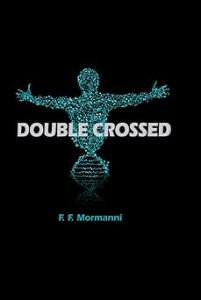 After reading about unusual autopsy findings of a recently deceased senator, President Jeremy Lewis opens an investigation into what is soon revealed to be an apparent foiled attempt to infiltrate the administration at the highest level through the use of medical and technological capabilities far beyond what is known to exist. President Lewis then enlists his childhood best friend and tech-savvy entrepreneur, Ian Richards, to assist him in the endeavor.
This same death arouses the suspicions of Ross Blanchard, a relentless reporter for The New York Times, who avails himself of equally sophisticated technology in his own investigation. The intelligence community and Blanchard ultimately cooperate, culminating in a daring raid on a clandestine laboratory in the most unlikely of locations. But is this really the end of it?
Double Crossed recounts the intersection of cutting-edge military technology, genetics, and neurophysiology as it gradually exposes a plot of startling complexity and ambition.
Category: On Writing
Subscribe
If you enjoyed this article, subscribe to receive more just like it.