More Than Sales: How My Memoir Made Dreams Come True
By Debbie Russell
 I’ll always remember the not-so-sensitive comment the CEO of my hybrid publisher made when we were discussing which BISAC (Book Industry Standards and Communications) codes to assign to my book.
“Memoir is the sludge circling the toilet bowl of book publishing.”
A bit harsh for sure, but I’d received the same message a year prior—in a much gentler way—after attending a webinar where I paid to have an agent provide feedback on my query letter. To my surprise and delight, not only did she give it high praise, she asked to see my first five pages! Typically, when querying an agent, the author attaches the first five pages of the manuscript as part of the submission. The timing of her request wasn’t ideal, as I was in the middle of revisions, one of which involved writing an entirely new first chapter.
The excitement from reading her email almost rendered me immobile, but I sent what I’d come up with. Her rejection plunged me back into the land of disappointment, despite the kindness in which it was wrapped:
“I do think you’re really talented and I’m excited for you as you take next steps. I have just had so much trouble placing memoirs these days that I’m being highly selective. I did think the scene was strong…”
Because I’m no spring chicken and writing books is a second career for me, I did not have time to hold out for an agent and a traditional book deal. The entire process could take as long as five years, and I had a story to get out. A year after querying and submitting to small and hybrid publishers, I settled on one that produced lovely books at a cost I could afford. The publisher also offered marketing support, in the form of a pocket guide that I tabbed in numerous places while also making copious notes.
The year of my book launch went by in a blur, as I tried mightily to get every single person I knew to buy my book. (Spoiler alert: they didn’t, and your folks won’t either.) I prepared library and workshop presentations and sought out book clubs for stimulating discussion.
That, Dear Reader, is when the bits of magic began to emerge.
The first glimmer came through reviews—from friends and strangers alike. A constant theme was that the reader of my book came away thinking about their own life. In the beginning, that reaction surprised me. After all, wasn’t my story entirely unique? As I considered this and engaged in more conversations with readers of my book, I learned that, while all pain is personal, the personal is universal. Everyone has a story, and while the details may be very different, each life journey carries threads that, when stitched together, create a fabric called humanity.
My book has provided the tool for me to stitch my own threads into that fabric. It’s a gift that I don’t take for granted. In fact, for too many of us, our pain remains hidden on the inside—festering and promoting further isolation. Books, especially memoir, have the capacity to pull us out of that isolation and help us understand that others are experiencing similar, if not identical, situations.
But I digress…
Memoir only really sells if you’re a celebrity or somehow connected to the publishing industry. I know this, because I’ve done my research. You can find clues in the acknowledgement sections of those written by non-celebrities. One author of a recent bestselling memoir likely benefited from connections to certain writing circles that also serve as pipelines to book publishers.
In the five years since I first sat down to write my “not quite a memoir,” I’ve reevaluated what it means to have a dream come true. The feat of having finished the manuscript could have counted as one. I was recently asked how I celebrated when I’d finished it, and I honestly don’t think I did. Because I was driven to make it the best it could be, I immediately sought out a professional editor to work with my ugly first draft.
When I signed with my hybrid publisher almost two years after completing that first draft, I only celebrated half-heartedly, because I’d also given up the dream of being a best-selling author with a six-figure book deal. However, since then, I’ve learned that the stress I felt on my smallish book tour with its smallish events was quite manageable, compared to what can happen in bigger arenas with traditionally published authors. I celebrate every lovely encounter I have with a book buyer or reader and recognize that this is actually the dream I was aiming for in the first place.
My “not quite a memoir” is also my grandfather’s story. He was a well-respected doctor who became addicted to Demerol and, at age fifty-one, voluntarily spent four months in a locked federal “Narcotic Farm” in Fort Worth, Texas. This coming September, along with the author of Rehab on the Range—which is about the facility itself, I will present my book at the Fort Worth History Center. This has been brewing in my head and heart since I first made her acquaintance, four years ago, while doing research for my own book.
I can’t think of a better example of a dream come true!
—
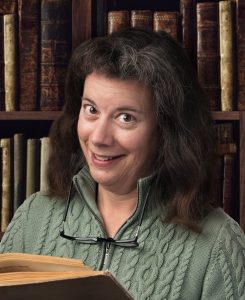
Debbie Russell is a lawyer turned award winning author. She spent twenty-five years as an Assistant County Attorney in Minneapolis, prosecuting numerous high-profile cases—specializing in those involving domestic and child abuse. At age fifty-five, Debbie took early retirement, giving up a full pension for the freedom of time. She now spends that precious time writing, restoring her property to native prairie and wetlands, and training her rambunctious retrievers. Debbie’s award-winning book, Crossing Fifty-One: Not Quite a Memoir, was released in June of 2023. In 2024, she became a regular contributor to the Minnesota Star Tribune, writing about criminal justice and adjacent issues.
Crossing Fifty-One: Not Quite a Memoir
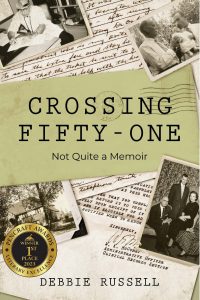 Three Generations of Family Secrets and Midlife Crises All Set the Stage for One Dream to Come True.
A week before Christmas 1951, Dr. Ralph Russell risked everything to voluntarily enter a locked federal drug-treatment facility known as a “narcotic farm.”
Sixty-five years later, Dr. Russell’s granddaughter Debbie suffers a debilitating crisis of identity when her father (Dr. Russell’s oldest son), always her biggest fan, is accepted into hospice.
Debbie’s investigation into her paternal lineage reveals family secrets and ignites her mother’s volatile outbursts, propelling her into therapy.
When therapy fails her, the grandfather Debbie never knew saves her, and she collaborates with her dying father one last time to make her biggest dream come true.
Crossing Fifty-One pulls back the curtain on the internal struggles of midlife and provides a blueprint for redefining one’s self beyond the constraints of addiction and dysfunctional family dynamics.
BUY HERE
Category: On Writing
Subscribe
If you enjoyed this article, subscribe to receive more just like it.