Authors Interviewing Characters: Gabriella Saab
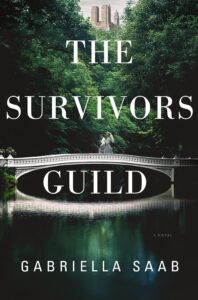 In 1912 aboard the RMS Titanic, Nabiha “Bea” Nohra is traveling to America to find work, eager to earn the funds necessary to afford passage for the family she left in Lebanon. On the same ship, heiress Marguerite Ashby sails home to celebrate her engagement to a dull British lord, a marriage that will secure her new-money family’s place in old New York society. But when the Titanic sinks, the two women’s paths are fused together when Bea saves Marguerite’s life and they are unexpectedly charged with the smallest survivor—a baby boy.
No one claims the infant, so the women form a committee to aid survivors and locate the baby’s next of kin. Bea works as the child’s nanny, desperate to bring her family to America before the difficulties in Lebanon overwhelm them. Meanwhile Marguerite hopes the committee’s charitable efforts will win society’s respect and render an advantageous marriage unnecessary, sparing her from marrying a man she does not love—unless her parents force her to fulfill the obligation no matter what society says. And when finding the child’s relatives proves to be no simple task, the women are soon enmeshed in deception and uncertainty as they seek to determine where the baby truly belongs.
The committee might grant the acceptance Marguerite craves, connect Bea with the stability she needs, and lead them to the baby’s relatives. But a committee helmed by an American heiress and a Lebanese nanny is hardly customary. Surviving a shipwreck is only the start. As Marguerite’s wedding looms nearer and Bea faces the increasing hardships of adjusting to her new country, they must fight for survival once more. This time, to survive New York society.
An interview between author Gabriella Saab and The Survivors Guild characters Marguerite Ashby and Nabiha “Bea” Nohra
GS: Miss Ashby, Miss Nohra, thank you for agreeing to speak with me today. (BN, frowning, responds in Arabic) I’m sorry, what was that?
BN: A proverb—which you should know, being half Lebanese yourself: “He who gossips to you will gossip about you.”
MA (sighing): It’s an interview, Bea, not gossip. It’s to help people get to know us.
BN: Your life is yours, and mine is mine. Why share with strangers what does not belong to them?
MA: What Miss Nohra means is we’re delighted to speak with you.
GS: Then let’s get started. You met following the Titanic shipwreck, correct? (They nod) Nabiha—may I call you Bea? (She nods) You came to America from Lebanon to establish a better life for your family. Can you describe the experience? It can’t have be easy—leaving home, adjusting to a new country, finding work.
BN: Easy or difficult, my responsibilities are mine to bear.
MA (whispers): The purpose of an interview is to answer the questions, not avoid them.
BN: Were you not listening? I gave my answer. (To GS): Your surname—Saab—means “difficult” in Arabic. Difficulty builds resilience.
GS: I guess that means my ancestors were resilient.
MA: As is Miss Nohra. While her journey might not have been easy, I’ve never known anyone with more dedication to a task.
GS: Speaking of dedication, Marguerite—do you mind if I call you Marguerite?
MA: Well, it’s not exactly proper… but I’ll allow it, if you promise not to tell Maman that we permitted our manners to slip.
GS: Promise. As I was saying, dedication seems to be a trait you two share. You formed a charitable committee together, right?
MA (smiling): Yes, the Survivors Guild—so you’ve heard of our cause? All good things, I hope… Do you know of our efforts to help Titanic survivors, including Lebanese ones, thanks to Bea? And to place an unclaimed infant survivor with any remaining family?
BN (gesturing between GS and MA): Trade places, if you are the interviewer now, or let the interviewer ask the questions.
MA: I only wanted to ensure that Miss Saab has been properly informed.
GS: I have, I assure you, and I commend your efforts. If you’ll tell me—
MA: Pardon the interruption, Miss Saab, but before we let the matter go: Have the Ralstons been speaking negatively about our committee? Is that how you heard about it?
GS: Who are the Ralstons?
BN: She hates them. It is too senseless to explain.
MA: Senseless? It is not senseless. (To GS). The Ralstons are nouveau riche—new money, like my family, and they publish a society newspaper. There’s Mr. and Mrs. Ralston, and their daughter, Sally, who hardly says a word without her mother’s approval, and Andrew—well, he’s the most insufferable of all. That family is always trying to undermine me and my parents. If my family intends to be accepted by old New York society before theirs, we can’t befriend our rivals, can we?
GS: I guess I don’t know enough about New York society to say one way or the other.
BN: You see? Senseless.
GS: All right, you two can agree to disagree here, but let’s get back to the interview. Marguerite, I hear congratulations are in order. My sources tell me you’re engaged to a British earl.
MA (hesitates): Yes, well… thank you. The earl is titled, so the marriage will encourage old New York’s respect, and it’s my responsibility to marry well for my family’s sake.
BN: And Bea, what are your future plans?
BN: To help my family, of course, and to find Rémy’s, if God says the same.
GS: Yes, Rémy… he’s the infant you’ve cared for since the Titanic shipwreck, right?
BN: And we will care for him until he has found his home.
MA: I don’t know much about children—that’s Bea’s area of expertise—but he is the sweetest little thing. Did I tell you she’s working as his nanny?
GS: I’m sure you two are taking excellent care of him.
NB (standing): Yallah, I have been away from him long enough. Mrs. McKane will be tired of watching him.
MA: Tired of watching him? As if Mrs. McKane would ever tire of him. (To GS): She’s my family’s housekeeper, and she adores the baby. But Bea is right, I’m afraid we must be off. Maman wishes to discuss my wedding plans, so I shouldn’t keep her waiting.
GS: One last question before you go. I don’t want to dredge up painful memories, but if you’ll forgive me, I have to ask: Was the ship as magnificent as it seemed? And was the shipwreck as terrible as it seemed?
MA (soberly): More so—on both counts.
BN: You use these words—magnificent, terrible. But you cannot understand what they mean unless you were there.
GS: I know no one can fully comprehend what it was like, which is why I appreciate survivors like you telling your stories. Thank you for taking the time to speak with me today.
MA: Of course, Miss Saab, and if we can help with anything else, please don’t hesitate to ask—isn’t that right, Bea?
BN: Do not ask me anything more. Put your time to better use and study Arabic.
GS: I should learn, shouldn’t I? Will you help me? And maybe we could make some Lebanese food together? I can make my Siti’s kibbeh and tabbouleh.
BN: And I will make my mother’s maamoul.
MA: And I will taste everything, because I’ve never had Lebanese food, and all of this sounds exciting.
BN: Yallah, and now I must go to Rémy.
GS: Thank you for your time, ladies.
MA: Certainly—and please come to the next Survivors Guild meeting, Miss Saab. We’ll never turn away a volunteer.
GS: I’ll be there.
BUY HERE
Category: Interviews, On Writing
Subscribe
If you enjoyed this article, subscribe to receive more just like it.