ARIADNE SPEAKS BEYOND THE LABYRINTH By Sophia Kouidou-Giles
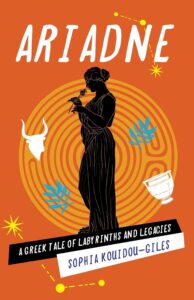
Ariadne: A Greek Tale of Labyrinths and Legacies
For fans of Madeline Miller, a retelling of the tale of a bold, resilient woman from Greek myth who transforms heartbreak into fierce strength, weaving a new legend where sanctuary rises from betrayal and the Labyrinth is reborn.
In a world shaped by gods, kings, and ancient grudges, Ariadne finds herself at the heart of a legacy soaked in both glory and grief. As the daughter of Pasiphae, a powerful sorceress, and King Minos of Crete, she has grown up within palace walls, shadowed by the secrets of the Labyrinth and the terrible fate of the Minotaur.
When her beloved brother Androgeus is lost to Athenian treachery, tensions between two great powers threaten to erupt into war. Ariadne is expected to uphold her father’s thirst for vengeance, but her heart begins to pull her in a different direction. Through encounters with goddesses, and as a result of her own awakening resolve, she dares to imagine a world where the past does not dictate the future.
This is not the story of a girl betrayed and abandoned. This is the story of a young woman who dares to act—who reaches for hope in a world ruled by fear. Through love, loss, and courageous defiance, Ariadne learns to turn the Labyrinth’s twisted path into a way forward. Epic yet intimate, mythic yet urgently modern, this Greek tale reimagines the power of one voice to challenge a fate written in stone.
Sophia Kouidou-Giles interviews Ariadne
Who are you beyond the familiar story of the princess who helped Theseus escape the Labyrinth?
ARIADNE: Born to Pasiphae and King Minos of Crete, I was raised in the magnificent palace of Knossos. From my early years, I understood that my heritage demanded discretion about family secrets about my brother, the Minotaur. I thought that I was obliged to protect my family at any cost, even when it meant silence about painful truths.
Growing up I realized that it was important to listen and question what others regarded as true. I met Theseus in Athens when I was sent there to represent Crete and lived through my brother, Androgeus’ tragic death. Eventually, I realized that honoring my family did not mean agreeing with every decision they made. I want to be remembered as the one that decided to help Theseus escape the Labyrinth, but beyond that, daring to question the legacy I inherited.
What was it like to be the daughter of Pasiphae and King Minos, and the sister of the Minotaur?
ARIADNE: My parents were extraordinary people. My mother, Pasifae, was surrounded by mystery, and my brother, the Minotaur, was dangerous and feared as a danger to humans. My father, ruled with authority and expected obedience from his family. Appearances mattered because my family had a powerful influence over the Region.
I struggled to cope with the existence of my brother, the Minotaur, whom I loved and yet recognized that he cast a veil of shame and fear to others; I understood that I needed to respect the secrecy about him even though he represented suffering.
The death of my brother, Androgeus, was another wound. I loved him; I loved my father, and understood his grief, but I could not reconcile myself with his plan to avenge his death by wanting to start another war. This required me to disagree with my family’s position.
When did you begin to understand that your family’s choices did not have to determine your own point of view?
ARIADNE: My father’s demand for Athenian blood after Androgeus tragic death was not acceptable to me. I understood that family honor was at stake, but loyalty to my father did not require unquestioning agreement and obedience. Revenge was not how I would choose to grieve.
My time in Athens taught me that Athenians were people like Cretans, not simply enemies. I could not ignore that Minos’ demands would condemn young, innocent people to become victims of the Minotaur.
I admired Theseus for facing the Minotaur by joining his fellow Athenians. I decided to help him, though I realized the risks of disobeying my father. I could not predict the outcome, but I had to act according to my own conscience. Each of us is accountable for our choices and I could no longer allow my father’s choices to become mine.
What did you see in Theseus that made you decide to help him confront the Labyrinth?
ARIADNE: I first met Theseus at the palace in Athens, a promising young leader. I admired his courage in choosing to join fellow Athenian youths on their very dangerous mission to Crete. I was also curious and wanted to better understand the man behind this bold decision.
Theseus offered me an opportunity to end the cycle of retaliation the King had started. I knew the dangers of the Labyrinth and admired him for his ability to overcome his fears. He needed an ally and I gave him the thread that would guide him out. That is what I am best known for.
It was a calculated risk. I trusted my judgement, hoping that one courageous decision might change the eventual outcome.
What does the Labyrinth mean to you beyond the story of Theseus and the Minotaur?
ARIADNE: For many, the Labyrinth represents fear, confusion, and the terrible fate awaiting those who enter it. For me, it reflects the secrets and suffering hidden within my family, the consequences of my father’s decisions, and the difficult choices I faced as I questioned my family’s expectations.
I came to understand that the Labyrinth was more than a place designed to imprison my brother and condemn the Athenians. It represented a way of thinking that trapped us all in a cycle of shame, fear, and revenge. I began to imagine its meaning could be changed. A place associated with suffering might become a sanctuary, offering refuge rather than punishment.
Perhaps the greatest challenge is not finding one’s way through the Labyrinth but finding the courage to change what it represents. I wanted to believe that even the darkest places could offer the possibility of a different future.
How would you like to be remembered?
ARIADNE: Most people know my story as the princess that helped Theseus, who had killed the Minotaur. escape the Labyrinth. That is part of my legacy and I accept it, but there is more to my story. I hope that I will be remembered for being a daughter that listened to her own conscience, helped a hero accomplish his deed, and gave a new meaning to the Labyrinth.
I hope the future generations will recognize that I turned the Labyrinth from a place of danger and confusion to a place that is offering us the choice to reach clarity of mind, as we rewind the spool of thread and exit that fog that life’s challenges present us. I envision the fog that once obscured our paths lifting, allowing us to see the path with greater clarity. To me, exiting the Labyrinth represents meeting the challenges we undertake in life. Its passages may seem endless, but they need not lead to despair. With foresight, experience, courage and patience, as we rewind the spool of thread, we can find our way toward clarity, and a future shaped by our own positive choices.
PREORDER HERE
—
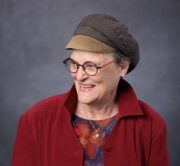 Sophia Kouidou-Giles is a Greek-born author, poet, and translator whose work explores family history, Greek mythology, and women’s resilience. She is the author of the award-winning memoir Sophia’s Return: Uncovering My Mother’s Past and the Greek Tales series: An Unexpected Ally, Circle of Peace, and Ariadne: A Greek Tale of Labyrinths and Legacies. Born in Thessaloniki, Greece, she now lives in Seattle, Washington, where she continues to write, teach memoir, and share her love of storytelling. More on her website: https://sophiakouidougiles.com
Category: Interviews, On Writing
Subscribe
If you enjoyed this article, subscribe to receive more just like it.