The Land as Character by Victoria Tatum
By Victoria Tatum
My mother instilled in all six of her children a love of reading. She recommended books and had shelves of them for us to draw from. After she died I thought of that source of books as gone, but it wasn’t. Since then my brother Tim, my sister Shelley, and I have been sharing books or the names of them regularly.
My friend Wendy says she gets depressed if she doesn’t have a good book to read. I’d say I need a whole pile near my bedside table to keep my spirit up.
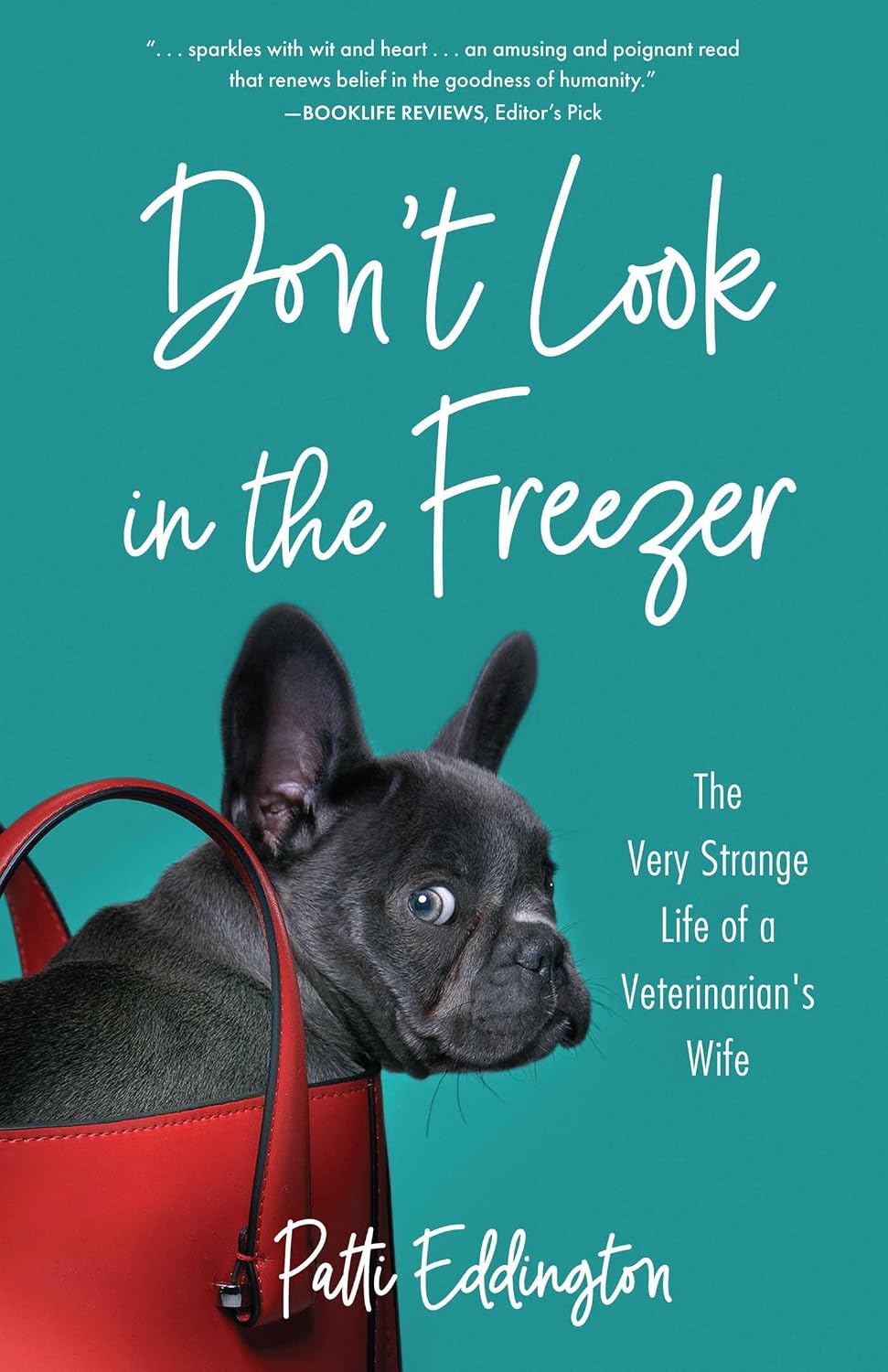
With a novel of my own coming out in March 2026, my husband Blue and I copiously support our local bookstore, and he picks up armloads at the library’s dollar outlet. Blue was searching the outlet tables when he came across the novel Horse. He brought it home and gave it to me to build up what was a severely reduced pile. Three years before Shelley had texted me and Tim about Horse and Geraldine Brooks’s memoir. Somehow I’d missed both. I have an imperfect method for choosing when I browse the bookstore: if the first page grabs me, I flip to the middle, and if that grabs me I buy the book. I miss a lot of good ones that way.
Horse has everything the best ones do: a compelling story, and history that reminds us what we are experiencing now is not unique. Reading the novel three years after it was published restored my faith in the concept of an infinite supply of good books on the market at any given time. Those of us who read or write them count on that being true.
I admire the authors of compelling stories because I see that as the greatest challenge. My novel More Than Any River tells the story of California’s Sacramento Delta farmers facing off against agribusiness owners over the massive water tunnel(s) the state plans to build under hundreds of thousands of acres of prime Delta farmland. In the American West from the Oregon border to Mexico, some years we’re inundated with snow and rain, but more often we’re left parched. And in California the biggest battle for water takes place in the Great Central Valley, where south-of-delta agribusiness controls every stream feeding into the Sacramento and San Joaquin Rivers.
The Sacramento Delta first captured my heart in high school, when each year in May my best friend sailed with her family on their 28-foot sloop north from San Francisco to an island where they docked for the summer. I was invited to spend weekends with them sleeping under the stars on the deck of the boat, and cooking outdoors over coals in the communal kitchen. We would jump into the water for relief from the summer heat, and when decades later I found out the delta was no longer the safest for swimming, I wanted to know why. In reading about the prospective tunnels in the San Francisco Chronicle, I found my answer.
I spent ten years researching and writing the novel, delving into stories like the Round Valley Tribes’ fight to save the Eel River from drowning their homes. I woke from dreams and wrote them down. I wrote long historical accounts of California’s water infrastructure, which my agent Liz slogged through, then told me to take out.
Blue, who devours plot-driven novels, read an early version and told me I needed to emphasize the rivalry of the warring water factions. While that rivalry is real, I’d gotten bogged down in the nuances. In my rewrite I drew out the conflict without sacrificing the complexity, and while it hurt to do so, cut out the Eel River story. The result was a better novel.
With more of the wild disappearing from our planet every day, I am drawn to the land whenever I sit down to write. And living on the California coast gives me an intimate view of the laborers who work the land. Our many days of sun afford me access to fresh produce, even in winter, and as a regular customer at the Farmer’s Market, I have plenty of inspiration for the protagonists in my novel, namely Sacramento and San Joaquin River farmers.
It is the spectrum of color in asparagus, pears, nectarines, and cherries that attracts people to delta farmers’ stalls. And the taste? It’s honey from the pollinating bees, carried from laborers’ hands directly to those stalls. Writers like me aim to bring the pain of the labor and the sweetness of the taste to your own hands and mouth, carried from our nightly dreams to our words on the page.
—
Victoria Tatum received her MFA in Creative Writing from San Francisco State and her MA in Education from UC Santa Cruz. Her first novel, The Virgin’s Children, was released by a Canadian publisher, formerly known as Rain Publishing, in 2006. She and her husband have two adult children and live in Central California.
MORE THAN ANY RIVER
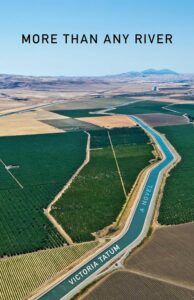 For those tied to the western landscape who wonder whether we might find redemption in the story of its water during a time of increasing climate extremes, a based-on-true-events tale of family farmers fighting to save the land they steward.
Inspired by true events, this Chinatown-meets–The Grapes of Wrath novel tells the story of California’s Sacramento Delta farmers facing off against agribusiness owners over the massive water tunnel(s) the state plans to build under hundreds of thousands of acres of prime Delta farmland.
Winter 2022-’23 inundated California with as much as three times the average rain and snowfall and pulled the state out of one of its biggest droughts in recorded history. But the truth is that the American West, from the Oregon border down to Mexico, is prone to drought—and in California, the biggest battle for water takes place in the Great Central Valley, where south-of-Delta agribusiness controls every stream feeding into the Sacramento and San Joaquin Rivers. The protagonists of More Than Any River are the family farmers fighting for the Delta, and the antagonist is the big agribusiness controlling its water—but ultimately, the Great Central Valley itself emerges as the central character in this gripping tale of divisive land politics and high stakes.
BUY HERE
Category: On Writing
Subscribe
If you enjoyed this article, subscribe to receive more just like it.