The Transition from Wildlife Biology to Debut Novelist
by Laura Frost
 In my closet sits a box of adorable, misspelled stories written in the haphazard hand of six-year-old Laura. Although hidden away for decades, storytelling has always lived within me; it just took a twisty road that included hawks, sparrows, and wildflowers to find my way back to it.
As a kid, I disappeared into writing stories regularly, and in school, I excelled at assignments geared toward the creative and literary. One story earned me admission to a young writers’ conference, and a poem won first place in a local contest, but as years passed, the school curriculum became more academic and less artistic. I became adept at writing lab reports and essays, and when it was time to decide what to do after high school, ecology was an easy choice. I loved biology classes, and as my family were outdoor enthusiasts who camped and hiked, environmental studies was a good fit.
In university, technical writing continued, but I was delighted when a professor assigned a project using whatever creative means we chose to convey the information. I wrote The Diary of Jerome the Rock, detailing thousands of years of Jerome’s life as he experienced landscape transformations and became smooth because of his turbulent lifestyle. I received top marks.
Another professor assigned a reflection on the natural world. I received AA+ and the professor read my paper to a packed lecture hall. Although I was earning a science degree, my love for writing was right there beside me.
Every year was a new adventure in field research—nest surveys, bird point-counts, vegetation surveys, and tree sap flow dynamics. I would chase endangered piping plovers on a beach to attach a tiny band around a tiny leg, or I would shield my head as a harrier dive-bombed me while I counted how many of its eggs had hatched. After a day in the forest or on the prairie, I’d head back to my motel room, turn to my journal, and write. I filled books describing the wonders of nature, birds I saw, weather I experienced, and emotions they conjured.
I accepted a job at a botanic garden where I wrote a guidebook for the tour guides, as well as educational signage for the greenhouses. I adored my garden job as it provided the perfect opportunity to weave my two passions together, but life had a new adventure in store for me.
My husband was accepted into the Royal Canadian Mounted Police, and we set our sights on our new home in the Rocky Mountains near Banff National Park where he was stationed. I said goodbye to the garden, and as my husband started his new career, we started a family.
Although I adored nature and writing, I always wanted to be a stay-at-home mom. We raised three beautiful children in the Rockies, and I shared my love of nature with them as they grew. My daughter’s first word was “owl.” My son could identify birds before he could speak: We would open to a random page in a field guide, say the name of one of the birds, and he’d point to it.
Although I was no longer working, I stayed in the loop with the birding community by volunteering for research projects such as the Christmas Bird Count and Great Canadian Birdathon. Through it all, I continued to fill journals with my thoughts, emotions, and experiences. As writing always “made sense” to me and helped me focus my ever-spinning mind, I wanted to write a book, but I didn’t know what to write about. I had no ideas for characters, plot, genre, or audience. This idea remained merely a thought in the back of my head until an incident threw me into the depths of novel writing.
One day while I was baking cookies with our kids, my husband called from work. “I’m safe,” he said. “I can’t talk now but please know that everyone is safe.”
My husband had experienced a life-threatening situation that day. He took a few weeks off to decompress, and once he was ready to head back to work, I was left at home with my thoughts. What if things had turned out differently? What if he had not come home that day? What if he doesn’t come home today? I began to imagine scenarios of what life would look like as a young widow with three kids. Would I move back to my hometown where my family and childhood friends were, or stay in our community where my kids were settled in a good school with close friends?
These thoughts stayed with me twenty-four-seven, and as a way to navigate the heavy questions, my mind created a fictional character who was in a similar situation, but whose husband did not make it home. Her story played through my head on repeat and layers were added daily. My character became all-consuming and I needed to release the pressure—I had to get her out of my head. I sat down at my computer, opened a fresh page, and began to write Karina’s story.
I wrote for five months, adding words and chapters every spare moment I had. I was addicted to Karina’s story and to the process of writing her book. While writing, I worked through my thoughts and emotions regarding my husband’s experience. Not only that, but demons I had buried years prior surfaced, and I worked through them all. When I closed the page on Karina’s completed book, I was a new woman. I was lighter, more confident, and more me than I had ever been. And I was addicted to writing in a way I had never been before.
I dove straight into my next novel, having been hit with inspiration while on a writing getaway. That novel is my debut, Seeking Sasha. Whereas Karina’s story was written for therapeutic reasons (and still sits on my desktop awaiting massive revisions), Seeking Sasha was my first novel that I wrote simply because I adore the craft. Readers will see pieces of my botanic garden days in Sasha, as well as a nod to that time a birding job went south and I needed to get out of a toxic environment. (Check out Trailer 13, published in Transition Magazine and available on my website.)
Since writing Seeking Sasha, I have written two other novels, both in various stages of revisions. I write short stories between novel drafts, and I often lean on my years in the field for inspiration. I also have plans for a novel with a main character who is a field biologist.
Although my wildlife biology days are behind me and I am now a career novelist, I still volunteer for the Christmas Bird Count, I keep tabs on the wildlife cameras I have set up throughout my backyard forest, and I teach my teenagers how to identify frogs by call.
My laptop sits beside my binoculars, and I reach for both daily. Although I am a suspense writer, nature with all its fur, feathers, and fronds will remain an important part of me, and Mother Nature continues to whisper parts of herself into my work.
—
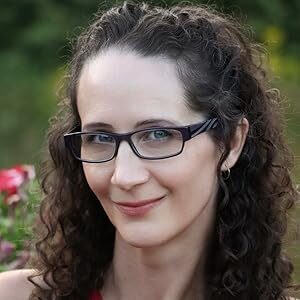
Laura Frost is an award-winning author of novels and short stories. She has been published in numerous journals and collections, and is a returning judge for an international short story competition. An avid baker and former wildlife biologist from northern Canada, Laura explores the world with her family, seeking out adventure to both calm and stir her writing muse. Seeking Sasha is Laura’s first novel.
Find out more about Laura on her website https://laurafrostwrites.com/
SEEKING SASHA
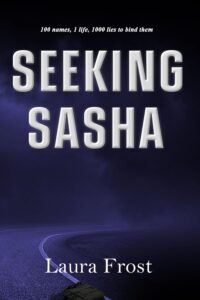 For fans of The Girl on the Train, Luckiest Girl Alive, and Pieces of Her, Seeking Sasha is a twisty, emotionally charged debut about identity, survival, and the cost of reinventing yourself to outrun the past.
Sasha lives off the grid—new name, new town, same story. Haunted by a traumatic childhood and the mistakes that followed, she scrapes by with odd jobs. The only rule? Never go home. But when she runs into Cole, her childhood best friend turned cop, the persona she’s carefully crafted begins to unravel.
As Sasha and Cole rekindle their friendship, Sasha spirals—fleeing from the one person who might actually see her. What follows is a razor-edged journey across city streets, vineyards, and forest cabins, as Sasha’s fractured identities collapse under the weight of who she really is. Seeking Sasha is a poignant, suspenseful portrait of a woman on the run—from her past, from the truth, and from herself.
BUY HERE
Category: On Writing
Subscribe
If you enjoyed this article, subscribe to receive more just like it.