Feng Shui of the Soul
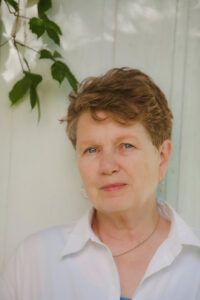
By Alexandra Grabbe
This morning, I stuck a Free-Stuff sign in our front yard. I was carrying my second load of miscellaneous items out of the house when a car pulled up. “Are you really giving away that beautiful quilt?” the neighbor asked.
“I am. It needs a new home. Would you like it?”
Hormonal cells signal to young women that they should settle down. The impulse, called “nesting,” causes twenty-somethings to surround themselves with objects of comfort in an attempt to control their immediate environment. The goal is to feel secure and prepare for whatever comes next—often a baby. I’ve done plenty of nesting in my life and even left one nest behind after my divorce in 1997. I’m entering my eighth decade, that period of life Gail Sheeny of Passages fame refers to as the “Sage Seventies.” Now my hormonal cells broadcast a new message. They want me to get rid of everything I’ve accumulated over the years. Go for it, they say. Throw things out.
We all keep extraneous stuff. That stunning evening dress that no longer fits? The Calendula-Rosemary Foot Bath Crystals, forgotten at the back of a closet? The polka-dot cashmere sweater purchased in a sale? Everyone has more than one item they no longer use. Take my foot massager, still in its box. At 70, I wonder what inspired me to buy it. Not that I don’t love a good foot massage. Since the electric foot massager never sees any action, out it goes. May someone else’s feet find pain relief.
I like to think of this cleansing of my physical environment as a type of Feng Shui. May the wind and water do their work and bring harmony as I live out my final ambulant decade in glorious open space. From this day forward, I will only hold on to what matters.
The boxes of #10 envelopes, stored in a file cabinet? Donated to town hall.
The letters from college roommates and former boyfriends that I intended to re-read in old age? Tossed, every single one.
Copies of tax returns filed before 2016? Shredded.
My bookshelf of bestsellers? Boxed up for the next book sale at the local library.
This weeding of life’s accumulations makes me feel incredibly alive. The endorphin rush is like returning home after a pleasant jog on a sun-kissed morning.
The seventy-year-old me intends to leave only the straightest blades of grass in her private garden. I will make my surroundings as pristine as a Mondrian painting, reduced to the simplest of rectilinear forms.
Estate sales no longer titillate. I used to jump in the car at dawn, hoping to be first in line. No longer. At seventy, the desire to acquire is gone.
There’s too much junk in the basement already: a favorite armchair that waited for me to be able to afford an upholsterer, the spice rack received at Christmas and never installed on the kitchen wall, the gold-rimmed plates from Mom’s forty-two piece set of China that are too elegant for modern-day potluck dinners, her teak nesting tables, stored “just in case” I decide to go mid-century modern, the oak slab used as a desk by my son and abandoned when he moved out. All sold on Craigslist last winter.
I’m not sick, nor ailing. I don’t have a debilitating disease. No cancer that I know of. But at seventy, I find myself swept up by this feeling that my existence needs to be stripped clean, whitewashed, purified. I’ve become convinced that only with more elbow room will I be able to breathe.
My new motto is Shed Stuff. Consumer goods that are not consumed should not clog corridors. Jettison whatever serves no purpose.
Here’s what I choose to keep: a photo of my first granddaughter as a baby, that piece of sea glass my husband picked up on a beach and gave me years ago, my iPhone to stay in touch with my children.
A lifetime of possessions feels wrong when so many people have nothing.
On the roadmap of life, expect to be assaulted by this impulse to de-clutter as you approach your eighties. I think of it as accumulation release. Yank, tug, wrench away the non-essential.
Already I feel lighter. Once down to basics, maybe I’ll add a water element?
—
Alexandra Grabbe began her career in Paris, greeting listeners each evening with her signature line, “Good Evening, Paris!”. As one of the most popular FM hosts in the city, she connected French audiences to the latest American music while honing her lifelong love of writing. Even as a child, Alexandra wrote and staged skits with her brother – an early sign of the creative spirit that would define her life. That same storytelling passion shines through in her memoir Seeing Joy (March 17, 2026).
After marrying a Frenchman, Alexandra’s career path shifted from broadcasting to writing. When she was passed over for a management position at the radio station because she was “a woman, and American”, she turned to the written word as an outlet, becoming editor of the newsletter for the American Section of the International Lycée while raising three bilingual children.
Over the next 25 years, Alexandra built a thriving freelance career. A regular contributor to France Today, she also published work in US Airways Attaché and American Profile, to name a few. Once her children were grown – two attending Ivy League universities, and one working as a chief sound engineer for Babyface – Alexandra returned to the United States to begin a new chapter.
In 2004, she founded and managed Chez Sven, an eco-friendly bed-and-breakfast in Wellfleet, Massachusetts, which received praise from guests and was featured in The Guardian and The Boston Globe. For twelve years, she also wrote Wellfleet Today, a blog about sustainable living on Cape Cod.
A graduate of Vassar College, Alexandra continues to blend creativity, insight and a deep appreciation for both French and American culture in her work.
SEEING JOY
 Beatrice, one of America’s first career women, is still feisty at ninety-six. She lives with her daughter Alexandra, who has moved to Cape Cod to care for Bea while running a bed-and-breakfast out of their beloved old house. Like so many adult children caring for elderly parents, Alexandra must balance her new job as caregiver with her role as daughter-and it isn’t easy. Bea is demanding and very verbal. Her mind is like a fireworks display on a drizzly Fourth of July-some shots fizzle out, but there are still bits of brilliance. After a knee ailment confines Bea to bed, it becomes clear her life will soon end. Convinced nothing comes next, Bea declares she doesn’t want to die. When deceased friends and family start “visiting” Bea’s bedroom, Alexandra wonders if her mom is hallucinating. Or could these visits have deeper meaning? Bea entertains her “guests” by hosting tea parties and reliving treasured memories. She reveals an unexpected kind of joy to Alexandra-a joy that brings peace and chases away the fear of death as they experience their final days together.
BUY HERE
Category: How To and Tips
Subscribe
If you enjoyed this article, subscribe to receive more just like it.