How I Became a Writer in Japan By Suzanne Kamata
I have wanted to be a writer since I was a little girl in Michigan. As a kid, I wrote stories on demand for my classmates, and produced and distributed what we would now call a zine to the people in my neighborhood. Later, I wrote features on topics as diverse as shoplifting and the school musical for my high school newspaper. When I was a university student, I didn’t have much time for creative writing. Back then, we had to read actual books in their entirety, and write many papers without the temptation of ChatGPT. But I always figured that I would one day go to New York City and get a job in journalism, while writing novels on the side.
After I graduated from the University of South Carolina, I decided to go to Japan for one year to work as an assistant English teacher. I was assigned to a school on the island of Shikoku, a quiet, conservative part of Japan, far from the flashing neon and high-speed trains of Tokyo. Living in Tokushima, while teaching English to junior high school students in quaint fishing villages and mountain burgs, I finally had time to write.
At that time, there were numerous print publications in English including three newspapers, regional magazines, and a handful of literary journals. Because many English-speaking foreigners came to Japan to experience the culture for a couple of years and then went back to their countries, the turnover in foreign population was high. The magazines and newspapers sometimes published notices inviting new writers to submit articles or ideas. Of course, I jumped on these opportunities.
Meanwhile, I fell in love with a Japanese high school P.E. teacher. I wrote about my destination wedding in Hawaii for one magazine, and about how to stay cool in Japan’s hot, humid summers for another. Later, when I became the mother of twins, I wrote about birth experiences in Japan for a magazine, and how Disney characters had taken over my life for an English-language newspaper. I wrote about my son’s obsession with beetle-themed trading cards, and about Japanese Sign Language.
I reviewed books for Kansai Time Out, a magazine aimed at foreigners in Western Japan, and interviewed Japanese singer songwriter, Angela Aki, for another. I even interviewed Korean American author Min Jin Lee when she was in Tokyo conducting research for her bestselling novel Pachinko.
When I was first finding my feet as a fiction writer, All Nippon Airway’s inflight magazine, Wingspan, published a short story every month, and held an annual short th fiction contest. After having one story accepted for publication in its glossy pages, alongside an illustration by a professional, I worked up the confidence to submit to the contest. I was informed that I was a finalist, and the airline paid for my plane ticket to Tokyo, and one night’s stay at the ANA Hotel, so that I could take part in the awards ceremony.
My story, “The Snow Woman,” won second place! (For the record, the story appears in my collection River of Dolls and Other Stories.) A photograph of the other winners and me appeared in The Japan Times. My prize was a pair of business class tickets to anywhere in the world that ANA serviced. (My husband and I took a trip to Australia, during which I came up with the idea for another short story.) To celebrate my win, I decided to splurge and order banana pancakes from room service the next morning before flying back home. When I went to the front desk to pay for my treat, I was told that they were covered. Those were the days!
Eventually, using the clips that I had amassed in Japan, I branched out to publications in the United States and other countries. I became co-fiction editor of literarymama.com, an online literary journal, and published many essays, articles, and stories abroad. Thus, although I never made it to New York City (except as a tourist), I was able to fulfill my writerly dreams from amidst the rice paddies and sweet potato fields of rural Japan. Well, at least some of them.
Now, most of the magazines, journals, and newspapers in which I initially published my work are out of print. Wingspan canceled the Fiction Contest, stopped publishing fiction at all, and then stopped hiring non-Japanese writers. Websites abound, of course, and it is still possible to write about Japan and make a little money.
I have now lived in Japan, on the island of Shikoku, for well over half of my life. While I sometimes worry that the millions of tourists pouring into Japan every year will use up all of the material at my disposal, I continue to be surprised and inspired every day. Honestly, I doubt that I will ever run out of things to write about. The trick is to pay attention, take advantage of even small opportunities, and leave yourself open to wonder.
—
Most recently from South Carolina, American Suzanne Kamata is a permanent resident of Japan. She is the author or editor of many books including the anthology Love You to Pieces: Creative Writers on Raising a Child with Special Needs (Beacon Press, 2008), the novel Cinnamon Beach (Wyatt-Mackenzie Publishing, 2024), the short fiction collection River of Dolls and Other Stories (Penguin Random House SEA, 2025), and, most recently, the memoir-in-essays Owls in the Ginza (and other stories from a life in Japan) (ThingsAsian Press, 2026). Her work has also appeared in numerous journals, magazines, newspapers, and anthologies including Real Simple, The Japan Times and Signed, Sealed, Delivered: A Motown Revue (Madville Publishing, 2025).
OWLS IN THE GINZA
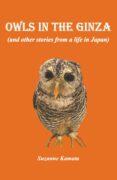 Thinking of leaving the country? Does the life of a digital nomad beckon to you? Suzanne Kamata has been there, done that, and is still doing it. Living in Japan for most of her adult life, she has a husband, two children, and a string of books to her credit.
Her latest, Owls in the Ginza, is as close to a memoir as this private lady will probably ever write—and it makes for enthralling reading. Essays about her travels in her chosen country, often alone, occasionally with her daughter, give insights into Japanese culture, its island countryside, and its domestic landscape. With humor and the observation skills of an artist, Kamata hints at the challenges and the deep joy that comes with the expat life.
BUY HERE
Category: On Writing
Subscribe
If you enjoyed this article, subscribe to receive more just like it.