I’m Jealous of Pamela Anderson, But Not for the Reasons You Might Think
A Memoirist Shares
by Renee Gilmore
The other night, I found myself watching a Netflix documentary about Pamela Anderson. Why? I’m not exactly sure. I’ll admit—I had my own assumptions about her. I imagined her life, filled with wealth and ease, sunshine and fresh-squeezed juices. Maybe that’s true, maybe not. It makes me wince, saying this about another woman, but to be honest, she never struck me as being particularly deep. I remembered, vaguely, her love for animals, her work with PETA—some substance in what I saw as her glittery life. But mostly, I assumed she had coasted through life on her beauty, unimpeded by the weight the rest of us carry. My dismissiveness kept any jealousy regarding her, well, attributes, at bay.
Yes, she’s beautiful—still radiant, luminous even—as she approaches sixty. Her refusal to wear makeup feels like quiet defiance – her bare face a rebellion against our society’s ridiculous standards on aging. She’s kept her figure, as my grandmother might’ve said. I’m a Gen X woman, shaped in the ’80s—post–Brooke Shields in her Calvin Klein jeans, pre–Kate Moss and heroin chic. I survived an eating disorder back then, and though I try—honestly try—to embrace body positivity, the truth is, it’s fragile acceptance. A small truce I try to keep.
But there I was—alone in the house, a plate of black diamond watermelon at my side, ready to watch the Baywatch icon, the Playboy muse, the rockstar’s ex-wife step back into the spotlight in all her blonde glory.
And I discovered that by any standard, Pamela Anderson is stunning. And highly literate. Well spoken. Earnest.
Pamela Anderson and I are nearly the same age. As I watched the documentary and her life story unfold on the screen—the ease with which she seemed to drift into the world of modeling, acting, fame—I admit I felt a spark of envy. While her star was rising in her teens and early twenties, I was stumbling in the shadows, hazed by pain, trying to find firm footing. I couldn’t help but hold our lives side by side, measuring the years like twin rulers.
But what caught me off guard was the realization that we had so many parallels. We were both the product of small towns, roughly shaped by the same winds: the alcoholic parents, the betrayals of trust, early violations, the assaults, the violence. And we both somehow knew it was essential to weave these experiences into silence. We never told. We just survived.
In that mirroring, I felt a tug of connection. I was fascinated by how the men in our lives were such lightning rods for our most impulsive acts, both to our great joy and to our detriment. Those men changed us. I wanted to tell her, “I understand: Those men convinced us they were our saviors, but they were frauds. And yet, we loved them.”
I kept watching.
And—there it was.
The visceral, sharp ache when she walked into her parents’ home in Canada and opened a door to a forgotten corner of her past. A storage space. A time capsule. Waiting for her, patiently.
There they were: plastic bins brimming with stacks upon stacks of yellow legal pads, soft pink and powder-blue journals, floral-covered diaries, folded notes, old letters—her entire existence, documented in her looping, girlish handwriting Her whole life was waiting for her, ready to be lived again—for reference, for proof, for clarity, for truth.
She surveyed the motherlode, then reached in and pulled a few legal pads at random, delighted, as if plucking prizes from a game. She read aloud small excerpts of a life, at once private and public—old lovers, moves, quiet triumphs, pain. Her life was tucked between the lines and margins, and her fingertips traced the paper. Her face betrayed the words before her voice did: a smirk here, the pull of a frown there. At times she burst out in laughter—it was sudden, unguarded. Genuine. At times, she lowered the notepad, protective, the words hidden, the contents unshared.
As I watched her, a heaviness settled deep into my jaw, pushing my molars together. I sat with the sensation, feeling for its name. Then, it came to me—I was jealous. I mean, really jealous. And I was angry. These feelings, raw and quick, left me shaken. I felt embarrassed and confused. What was happening?
Suddenly, I knew.
When I recently wrote my memoir, Wayfinding, I had none of those resources, those gifts that Pamela Anderson seemed to be taking for granted. My memories, my secrets were so numerous, so terrifying, so foul, I never took a chance on them being discovered. I never documented the torment on paper. It was too risky. All I have are boxes of family photos, some letters, and a half dozen poems from 1986. When I wrote Wayfinding, I had to scrape and excavate, navigate to shadowy sections of my shaky memory, places I never, ever wanted to return to. I had to dig with bare hands—poke at buried things, throw light into the dim corners. I had to ask questions of strangers, of friends, that filled my mouth with guilt, with shame. I had to cross-check, validate with my brother, with old friends; I had to unearth dates and places from newspapers and websites. It was excruciating. I extracted every last detail I could, like DNA from a bone, every name, every place, every feeling, every trip. I had to face the secrets. All to piece myself together.
But Pamela? Pamela just opened a goddamn bin. Picked up a yellow legal pad. Read a page filled with her lovely handwriting. She looked at the camera. She smirked. Frowned. Smiled. She moved on.
I think what felt the worst wasn’t just that I never documented the trauma—it was that I never captured the joy either. There wasn’t a trace of the road trips that made me feel free, the awards that proved I was there and I was seen, the birthdays that marked another year survived, the boyfriends whose names now blur at the ragged edge of memory. Nothing was written down. Nothing held.
My blaze of jealousy and resentment dulled, giving way to something heavier—a quiet, thunderous sadness. Sitting alone on the sofa, I was mourning all I had lived through and somehow had left unremembered. But. That was not wholly true. Not anymore. There are still holes and gray areas, of course, dark shadows of time that pretend to be years. But I reminded myself that through the process of writing Wayfinding, this had become a life reclaimed on my own terms.
I still have some feelings of envy, but watching that documentary made me realize that no matter who made you, or what shaped you–in the end, no one else can claim ownership of your story. It doesn’t matter how much of it is known or unknown. Remembered or not. Written or not.
I realized that I’m more powerful since remembering, since reclaiming my words, and letting go of those I will never find. As I opened myself up to experiencing Pamela Anderson and unexpectedly discovered her insights, courage, and wisdom, I recognized that she has become the protagonist in her own life story. And I realized that I now have that “main character energy” as well.
# # #
Renee Gilmore is the author of WAYFINDING: A Memoir (October 1, 2025; Trio House Press) as well as an essayist and poet whose work has been published in Hippocampus, The Louisville Review, Fatal Flaw, and Pink Panther Magazine, and other literary journals. She earned a BA at the University of New Mexico and a Master of Arts from Hamline University.
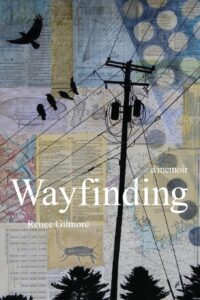 Throughout her life, Renee Gilmore has been in love with the open road. Her passion for exploration has taken her across all seven continents—but the real journey has been much more personal. In Wayfinding, she confronts the impetus behind her wanderlust: a lifetime shaped by loss, betrayal, and sexual violence. Told through a series of car trips and postcards from the road, this powerful memoir maps a route toward healing, acceptance, and hope, with stops at Waffle House and the Monaco Grand Prix along the way. Narrated with unflinching honesty and flashes of humor, Wayfinding is the story of a fiercely resilient woman determined not only to survive but to remap a new life filled with freedom, connection, and joy.
Category: On Writing
Subscribe
If you enjoyed this article, subscribe to receive more just like it.