Interview with Brionni Nwosu
Interview with Brionni Nwosu author of THE WONDROUS LIFE AND LOVES OF NELLA CARTER
 Can you tell us a little bit about your writing journey?
I started trying to write seriously in 2018. At the time, I was working as a graduate professor and advisor, and during fall break, I finally had a week off. My second child had been born the year before, and I was just starting to feel like myself again. That week, I dropped my kids off at daycare and decided to write an epic middle-grade fantasy—very Harry Potter-esque—about a boy who could do portal magic. I had color-coded outlines and very detailed plans, but I quickly realized I had no idea how actually to tell a story sentence by sentence.
Soon after, I discovered Charlie Holmberg and her recommendation to read Save the Cat! which was the start of my writing education.
I devoured the canonical craft books—Story Genius, Save the Cat, On Writing, and Bird by Bird, amongst others, in a quest to “master” the art of writing (insert hard laugh). They helped me with mindset, but the books that changed everything were the ones that taught me to think about writing at the sentence level—how to evoke emotion and intention through language. One of my favorite resources is First Line Frenzy with Rebecca Heyman—it taught me the power of an incredible first sentence and to follow it up with an even better one. I also love Don and Jenny Killgallon’s work on sentence study. I’ve always adored sentence diagramming, and I enjoy seeing how writers combine words to create rhythm, tension, and meaning.
In 2021, I was selected as a We Need Diverse Books Mentee under Rajani LaRocca, where I worked on my first middle-grade draft–a draft I never would have started or finished, but for that competition. Since then, I’ve finished three books across genres, including my debut novel, The Wondrous Life and Loves of Nella Carter, to be published on December 1 by Lake Union Publishing and on December 4 by Hodderscape in the UK, which has received a starred review in Booklist and is a November Amazon First Reads Selection.
When did you decide you wanted to be a writer?
Like most writers, I was a reader first. Some of my earliest memories are of reading under a table in elementary school, spending afternoons restocking the library shelves while other kids played outside. Reading was my portal into other lives—one page could take me across the world, show me how it felt to be a carpet weaver or a werewolf.
When I became an elementary school teacher, I saw how stories impacted my students, and that sparked the idea to write my own. My path to becoming an author was unconventional, though. I once read that a hospital owned the literary estate of Peter Pan, and it fascinated me that a single idea could generate interest and income long after its creator was gone. I wanted to create something that could outlive me—something timeless, like the books that connected me with authors long since passed. I don’t know if I’ve done it yet, but I look forward to the journey of trying.
How has writing changed you as a person?
Writing is like being part detective and part psychologist. Writing has made me more curious about people and how they came to be what they are. Whether in real life or fiction, I find myself wondering about people’s motivations: What happened in their childhood that makes them respond this way? What do they fear being seen?
It may be the Scorpio in me, but I love secrets. I love observing, analyzing, and piecing together what makes people tick—not to judge them, but to understand. Given certain circumstances, I might have to come out the same or see the world that way. I see it all as excellent source material for my next character.
On a personal level, I used to call myself an overthinker, but now I know I’ve thought enough. I’ve read enough. The only way to grow is to do the work and finish what I start. At this stage of my life, it’s about accountability, systems, and consistency—because I know myself, and I know that the longer I take, the more it takes from my family. Treating my writing like a business (shout-out to Camille Pagán) has been the biggest difference-maker for me, turning creativity into something sustainable, creative, profitable, and productive.
What would be your six-word memoir?
Connected, creative, curious. She was here.
What is the best writing advice you’ve ever had—and the worst?
The best: Study the words of the greats. To become a better writer, you must be a devoted reader. I often copy passages that move me and study them like a teacher—breaking down what makes them work, what’s transferable.
My teaching background influences how I learn from books. I’m always asking: What is the underlying technique here? For instance, I once read a passage where a character’s reflection was triggered by noticing three things in the sky—each deepening their emotion until they made a decision. Now, when my characters face reflection moments, I ask: What would trigger that turning point for them?
That’s also what inspired me to start First Chapter Club—a space I hope to grow into to study how great stories work, explore what draws us in, and learn how we can do it too.
The worst advice? Going through the writing journey alone. 100% do not recommend. Writing thrives in community.
Are you part of a writing community or group?
Absolutely. I wouldn’t be here without my writing communities.
My first was during the pandemic in 2020, when I took a revision class with author Erin Entrada Kelly. I met one of my closest writing friends there—we used to meet every Sunday to sprint together. Not long after, I joined a middle-grade writing group we nicknamed The OhMGs. Of the 30 members, about seven started meeting regularly, with three of us still meeting every Saturday morning from 8 to 10 a.m., where we share what we’ve learned, swap resources, and read craft books together.
That’s how I discovered the Killgallons’ work, Story Solution, and Save the Cat Writes a Horror Novel—even though I don’t write horror, it stretched my craft. We’re now reading a mystery craft book together.
I’m also part of the Women’s Fiction Writers Association, which has daily writing sprints called Writing Dates and events year-round. So much of my writing happened during those sessions. Writing alone doesn’t work for me. I need connection.
What is your writing process like? Are you a pantser or a plotter?
I’m definitely a plotter. I need to know where I’m headed before I start. But I’ve learned that over-plotting can kill the joy—if my outline runs fifty pages, I’ve already told myself the story.
Now, I do more pre-thinking than pre-writing. I interview my characters, analyze their motivations, and build out key scenes before drafting. For my current project, I’ve mapped about 135 scenes and aim to write 500 focused words per session. Not all of them will make it in, but it helps me stay grounded in the character’s voice.
Once I’m drafting, I consider myself a listener. When I’m in flow, it’s like I hear my characters talking. I’m just typing fast enough to keep up. I also study their astrology charts and traits to make sure they act in alignment with who they are. I love learning their quirks and giving them aptronyms, like a gardener named Iris or a chef named Brie.
So yes, I’m a plotter first, a listener second, and a reviser third. Over time, I’ve learned that writing isn’t about hitting a daily word count—it’s about refining. Taking a rough idea and shaping it into its cleanest, truest form.
Do you need a special place to write?
I’m trying not to. For years, I told myself I needed the perfect conditions or a scheduled writing sprint, but now I focus on getting the words down wherever I am. I’ve been using Google Docs a lot lately on my phone to capture ideas or dictate scenes.
What I’m experimenting with lately is accountability in public. I’ve joined writing hours where cameras are on and everyone works quietly together, but the moment cameras go off, I’m grading papers or making dinner. So now I’m exploring how to share parts of my process publicly—as a way to stay honest and motivated about what I’m working on.
What is your experience with social media as a writer? Do you find it distracting or inspiring?
Social media is one of my favorite things. I’ve spent hundreds of hours on TikTok, and while some might call it a waste, I see it as research. I save videos that spark ideas or show me what resonates with people—whether humor, vulnerability, or nostalgia.
What I love most is how it mirrors humanity. In one scroll, you can go from tips for Elf on the Shelf, to watching a live stream of butterflies hatch, to someone tossing a chicken (you had to see it), to another person losing their father to dementia. It’s a constant reminder of the range of the human experience—and that’s what writing is about too.
Just like reading under the table as a kid, social media is another way I connect with people across the world. Sometimes it inspires story ideas, and other times, it simply reminds me that we’re all living, loving, and trying our best together.
Who are your favorite authors?
This is always the hardest question! Honestly, it’s usually whoever I’ve read most recently. I’m a very commercial reader. My mom always had stacks of Harlequin romances around the house, and my dad read James Patterson and John Grisham—so that was the spectrum I grew up on. As a kid, I devoured The Baby-Sitters Club and Sweet Valley High. My mom loved thrifting, so she’d buy those big grab-bags of used paperbacks—twelve books for two dollars in a clear plastic bag—and I’d read every single one.
Lately, I’ve loved Tia Williams (A Love Song for Ricki Wilde), Ashley Elston (First Lie Wins), Frida McFadden (Ward D), and S.A. Cosby (Razorblade Tears). I admire clarity, voice, and emotional resonance more than literary pretension.
What are you reading currently?
I read whatever my book club picks or whatever catches my attention. If someone recommends a title, I’ll download a sample on Amazon first to see if it grabs me. I don’t keep a strict TBR list—I follow my curiosity.
—
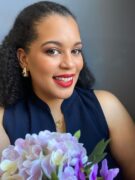
Brionni “Bri” Nwosu is a writer who believes in the power of community, connection, and living with intention. Born and raised in Atlanta, she now lives in Nashville with her husband and three kids, where she spends her days sneaking naps, perfecting writing tools, and falling into research rabbit holes.
Before turning to fiction, Brionni spent over a decade as an educator, instructional coach, and graduate advisor, training and supporting new teachers across the country. Named after two book characters, she was destined to fall in love with storytelling—a passion that led her to become a 2021 We Need Diverse Books Mentee, where she worked with the acclaimed author Rajani LaRocca.
Her debut novel, The Wondrous Lives and Loves of Nella Carter, is a sweeping, centuries-spanning tale about love, loss, and one woman’s fight to prove that humanity is worth saving, perfect for fans of The Invisible Life of Addie LaRue and A Love Song for Ricki Wilde.
About the Book
The Wondrous Life and Loves of Nella Carter
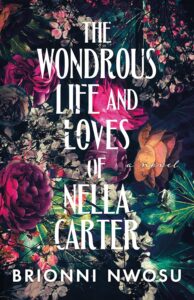 by Brionni Nwosu
Lake Union Publishing December 1, 2025
If Death tasked you with finding proof that humanity deserves saving, what would you offer as evidence?
Spanning three centuries and multiple continents, The Wondrous Life and Loves of Nella Carter follows an enslaved woman who makes a bargain with Death himself to save humankind. In exchange, she must gather evidence of humanity’s goodness throughout history. From the plantations of the American South to the streets of New Orleans, London, and Paris, Nella’s journey becomes a testament to light in dark times—and the enduring power of love, memory, and hope.
BUY HERE
Category: On Writing
Subscribe
If you enjoyed this article, subscribe to receive more just like it.