Sheila Kimble-Haas on Writing Waiting for the Kick
The body in movement changes.
Sometimes in small ways. Sometimes forever.
My profession made movement inevitable. Midwife. Nurse practitioner. Humanitarian aid worker. I have landed in countries across Africa, on Native American reservations, in tiny towns throughout the American West, and north of the Arctic Circle. I have slept in mud huts, government housing, old rentals, cheap hotels, mission compounds, and houses where coyotes screamed all night outside the windows.
Each time I arrive somewhere new, the ritual begins.
I start digging through reusable grocery bags and worn cardboard boxes. Underwear stuffed inside shoes. Family pictures wrapped in T-shirts. A stethoscope tangled in phone chargers. One earring. Half a bottle of ibuprofen.
“Where is my denim jacket?”
“I know I had one.”
I search through piles of my own life, convinced I packed something carefully, only to realize I may have left it hanging on the back of a chair in another state, another country, another version of myself.
Objects disappear.
They always do.
I have bought the same winter coat at least ten times in my life.
But somehow, the diaries survive.
Stacks of them.
They followed me across continents without discussion. Dusty notebooks packed into plastic bins and overstuffed bags. Pages written when I was grieving, hopeful, exhausted, lonely, overwhelmed, excited, angry, restless.
Words written quickly before they disappeared.
Years after returning home, I opened one of those notebooks.
And suddenly I was back.
Not just in South Sudan. Back in grief. Back in uncertainty. Back in the woman I had been before I understood what any of it meant.
Like everyone who has lived through something unusual, I had often heard the same thing.
“You should write a book.”
What no one tells you is that writing a book is not an act of remembering.
It is an act of excavation.
I thought I was organizing stories from my past. Instead, I found myself digging through layers of myself I had carefully packed away and carried for years.
At first, the manuscript was chaos. Fragments. Memories. Scenes without transitions. Grief tangled together with medicine, fear, absurdity, loneliness, and moments of unexpected joy.
Then came the harder part.
My editor kept pushing me toward places I preferred to avoid.
She wanted less reporting and more truth.
Less explanation and more vulnerability.
Again and again, she asked me to stop standing outside my own story and step back into it.
Some days I resisted.
I had spent decades learning how to function during emergencies. In medicine, distance can be useful. You assess. You intervene. You move forward.
Writing demanded the opposite.
It required me to stay.
To sit with moments I had rushed through the first time.
To examine losses I thought I had already understood.
To admit things I would have preferred to leave unnamed.
I deleted pages I loved. I rewrote chapters I thought were finished. I met younger versions of myself on the page and realized they were both wiser and more foolish than I remembered.
Sometimes I laughed.
Sometimes I closed the laptop and walked away.
What surprised me most was not what I remembered.
It was what I discovered.
The story was never really about Africa.
It was not about humanitarian work.
It was not even about becoming a widow.
It was about transformation.
About the way grief dismantles a life and quietly rebuilds it.
About how movement changes us long before we notice.
About how we can spend years crossing oceans trying to outrun ourselves, only to discover that the answers have been traveling with us all along.
The national staff I worked beside in South Sudan taught me more than they probably realize. Men and women waking before dawn in crushing heat, ironing their clothes, shining their shoes, and showing up with dignity and humor despite circumstances that would flatten many people.
And the patients.
Women dancing during labor. Entire communities gathering around suffering instead of hiding it away. Babies passed from arm to arm. Laughter in places where there should have only been despair.
I thought I was the teacher.
I was not.
That may have been the real story hiding underneath all those boxes and diaries and years of movement.
Not that I traveled the world.
Not that I survived grief.
But that somewhere between all the packing and unpacking, all the arrivals and departures, I had unknowingly been carrying evidence of myself the entire time.
And one day, sitting on the floor surrounded by dusty notebooks, digging and reading and digging again, I realized something.
It was all there.
—
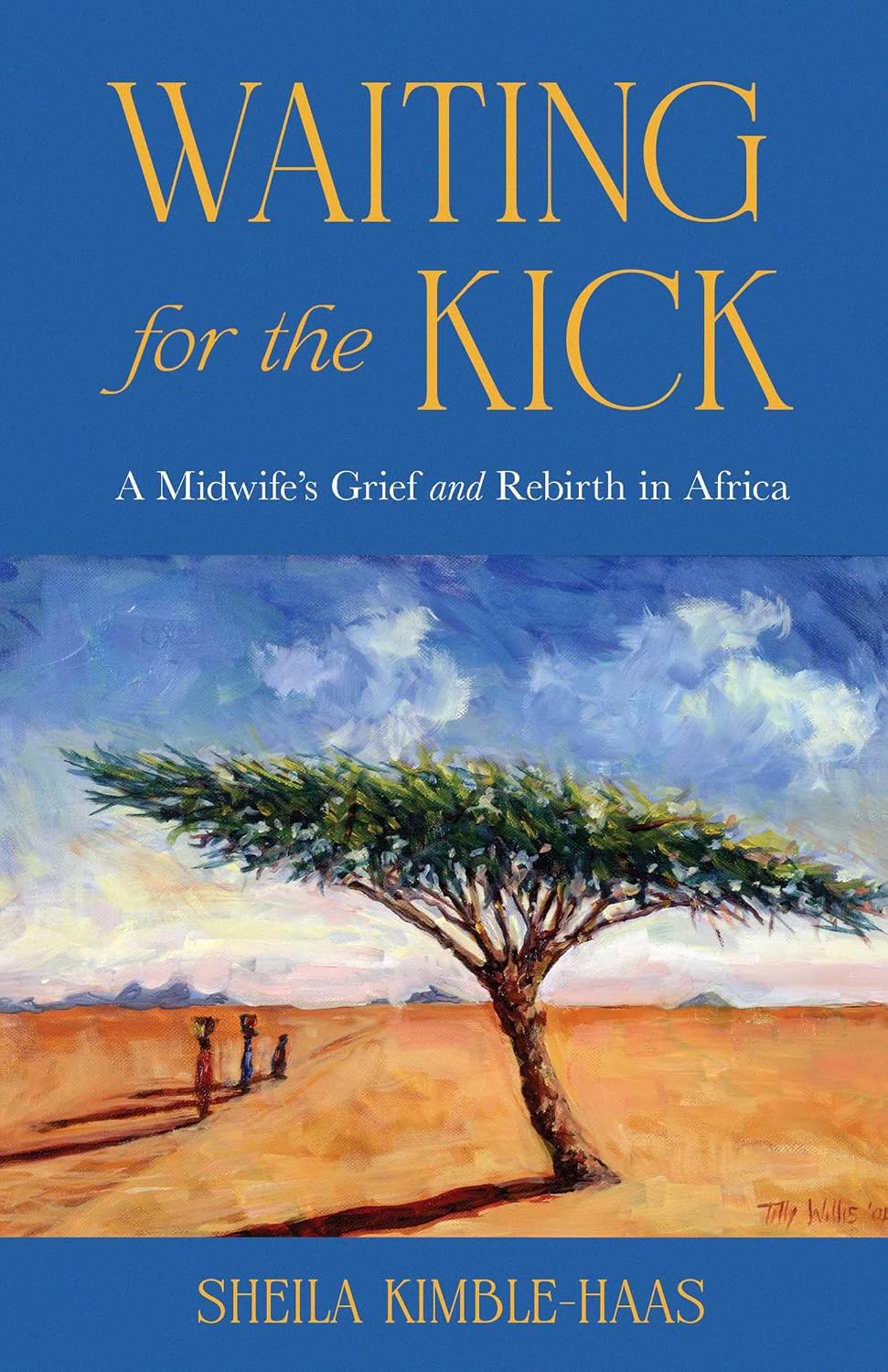
Waiting for the Kick
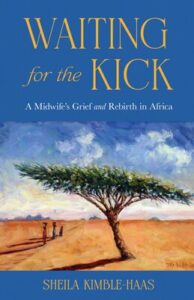 After heartbreak in Pennsylvania, a forty-five-year-old widow journeys to Sudan’s war zone, where a chaotic maternity ward teaches her a new kind of strength—and becomes her path to healing.
When Sheila’s husband died, grief didn’t just visit—it swallowed her whole. She didn’t want casseroles or kind words. She wanted out.
Broken and carrying a battered rucksack, she joined a humanitarian mission in war-torn South Sudan, where gunfire drove her under delivery-room tables and days blurred as she triaged mothers and children ravaged by tropical disease. But even the pulse of the frantic mission could not strip away her sorrow until she heard the ululation of the Sudanese women: a fierce, haunting cry, to celebrate life, to exorcise sorrow, and to rip the past from the body to make space for the now.
Waiting for the Kick: A Midwife’s Grief and Rebirth in Africa recounts Sheila Kimble Haas’s journey from a home thick with loss in America to the edge of the world, where she delivers babies in mud-walled clinics, navigates tribal customs and civil unrest, and stands shoulder-to-shoulder with women whose strength redefined survival.
This powerful memoir of loss, reckoning, and unexpected transformation is both a tribute to the unbreakable spirit of women and the story of a midwife who discovered that healing begins not in comfort, but in surrender.
BUY HERE
Sheila Kimble-Haas, a nurse practitioner and midwife trained at the University of Pennsylvania, has spent her career caring for marginalized communities—from Native American reservations to Arctic villages to African nations through humanitarian work. After more than ten years in France, she returned to New Mexico, where the desert’s stark beauty, a community of friends, and enough solitude inspired her to put her stories on the page. But her restless spirit is calling her back to France, carrying the desert’s lessons and a renewed hunger for the journey ahead.
Category: On Writing
Subscribe
If you enjoyed this article, subscribe to receive more just like it.