How Writing a Memoir Changed My Writing Practice By Hilary Plattner
When I was ready to start writing my memoir about my mother and her suicide, I set out all of her papers that I had saved over the years. I had a lot of letters she’d written, several sets she wrote to different people, including her mother and my future father. I also had a file of papers marked ‘Personal’ that she’d collected, mostly from the years right before the Vietnam War, when she worked as a Foreign Service secretary in Saigon.
Using my bed as a large work surface, I spread out the papers, putting everything in chronological order; looking for connections and overlaps between the different documents; making a list of questions about my mother.
Many steps helped bring me to the point of being ready to write that book, including a lifetime of lived experience. In addition to learning to follow many common writing practices, such as turning off my phone and setting aside a regular time and place to write every day, I also started keeping a daily journal. I stopped using my journal as a place to write about my feelings and worries. Instead, I developed a specific method of journaling that I learned and adapted from a book by Lynda Barry, titled Syllabus.
For this journalling activity, I limited myself to writing a single page within ten or fifteen minutes. On my daily page, I wrote a numbered list of six to ten things I remembered doing over the past twenty-four hours, with details. Underneath this, I listed a roughly equal number of things I remembered seeing in the same period, again with details. At the top of the page, I also wrote one or two things I could hear in my current setting, or that I remembered hearing over the last day. Writing in my journal in this focused way provided me with a simple first step, a way to start writing each day.
I also developed a handful of other quirky personal writing habits that ended up helping me immensely while I was writing my memoir. First, I knew I didn’t yet have the right title, so I gave the computer file for my project a generic name, like Mother Story, hoping that later I would come up with something better. On page two of the manuscript, with that general title in mind, I started keeping a short list of ideas for other possible titles.
When I opened my computer file to start writing, if I had time, I would pause to glance at this list of working titles. If I had a new idea, I would add it to my list; or sometimes I removed an idea if I no longer liked it. Thinking momentarily about my title helped me focus on the question: What is this book really about? I also kept silly titles on my list.
This included personal favorites, such as This Book Sucks! While that title or subtitle idea might not work for everyone, for me, it served as a reminder to focus on getting the work done and not worry as much about whether my writing was any good or if my book would ever interest anyone other than myself. When I was almost done with the project, I asked for title suggestions from a few of my first readers, and that was how I found the final book title, The Momma Puzzle.
Another writing practice that I developed while working on my memoir was collecting a list of personal reminders or suggestions about my writing practice that I kept at the back of my journal. Whenever I needed a boost to get started writing, or to keep writing, I could glance at my list. During the months that I worked on the book, I kept adding ideas to my writing reminders. Eventually, I collected a list of about ten personal favorites. Instead of sharing them all here, I will list my favorite: Just get one tiny bit done on this writing project today.
A book can seem like an overwhelmingly large project, especially when most of it is still unwritten. This first reminder helped me remember I did not have to get the whole job done at once. If I began by focusing on getting one small part done, that would be enough to get started working.
One thing I learned about myself while writing the book was that I had a habit of constantly feeling I hadn’t done enough, no matter if I worked for two hours or eight, or if I wrote a thousand words or a hundred each day. By remembering that one mantra, no matter how much I accomplished, I could feel satisfied, which also helped me to start work the next day.
One more—perhaps atypical—practice I stumbled onto while writing my memoir was deliberately choosing not to read any other memoirs, especially any that felt too famous or too similar. I worried I might feel intimidated or be too influenced by others’ stories to find my own way of telling my story. For me, that meant not reading any other well-known memoirs about suicide. Since finishing writing and revising The Momma Puzzle, I have been enjoying reading other suicide memoirs though, along with many other memoirs in general, from famous titles to newer and lesser-known ones.
Adopting these practices has helped me learn to stay focused when I’m writing. Overall, I am more persistent and determined, and I take myself more seriously as a writer now. At the same time, I’m able to approach my writing projects with a more relaxed, light-hearted, and optimistic attitude. Completing and publishing my first book has also helped.
—
Hilary Plattner has an MFA in fiction writing from Columbia University and has taught writing at The New School. Her memoir, THE MOMMA PUZZLE (Apprentice House Press, 2 June 2026) was shortlisted for the Santa Fe Writers Project Literary Awards and named a Finalist for the Wandering Aengus and Trail to Table Book Awards. She lives with her family in Brooklyn, New York.
THE MOMMA PUZZLE
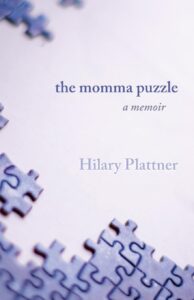 In February 1968, Hilary Plattner’s mother died by suicide. It was the height of the Vietnam war and Hilary was six years old. Years later, in an attempt to understand the mystery of her mother’s death, she studies the items her mother left behind: photographs and a file of papers from the 1950s when Momma worked as a Foreign Service secretary in Saigon. Hilary pores over letters written to her future father, her grandmother, and to her mother’s best friend.
She dreams of burning the pile of documents in a bonfire, and simply being done with it all. But she continues her investigation and eventually discovers an important piece of the puzzle: her mother’s medical records from a psychiatric hospital. Ultimately, she forms an image of who Momma was–and finds a way to release herself from the hold of her family history.
BUY HERE
Category: On Writing
Subscribe
If you enjoyed this article, subscribe to receive more just like it.