How Writing Healed My Mother Wound
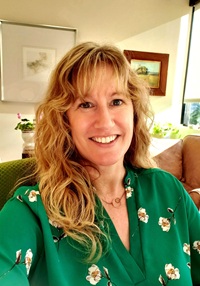
By Dr. Suzanne Manser
 I’ve never been a person who journals. Even though I’m a therapist and I recommend journaling and absolutely believe in its power, I’ve always personally found it a little … irritating.
And then my mom died and I found myself compelled to write. On the weekends, I journaled for 8-10 hours at a time, hunched on a couch in the basement, my journal on my knees or on the table in front of me, writing almost without pause. I wrote down the pain of my childhood, pain that had leaked into the rest of my life.
I wrote down memory after memory after memory of my mother’s disregard. I wrote down things she said and didn’t say. I recorded interactions we had from as young as age five. It all came gushing out over the span of five months.
Along with the memories came the feelings. I was angry. I was angry with my mom for every instance of disregard, every instance of dismissing my needs, my perspective, my feelings. My mom – an alcoholic and a narcissist – could not make room for me, and I hated her for it.
The anger and hate splattered across every page of my journals. I did not hold back. Feelings and memories came pouring out with the same intensity they had gone in. It was as if I was age six, ten, fifteen. I was back in my childhood, re-living wound after open, festering wound. I wrote all of it down, just as I was feeling it.
After a couple of months, I started to notice something: I was feeling valid. I was validating myself.
After decades of feeling invalid and inferior because my mom would not validate so much of me, I was learning to validate myself. Everything I was writing, my mom would have dismissed as “wrong.” She would have disregarded every memory and every feeling, had I been telling them to her. She would have said each memory was wrong, that none of it had happened. My feelings were an indication of me being too emotional, too much. That’s how it had always been.
But my mom wasn’t there anymore. She could not dismiss the words I was writing. As I realized this, I was even more emboldened to own my words, my experiences, my self. These things did happen! I did feel this way, over and over and over, and it did matter! I mattered because I said so.
Finally, at age 48, I no longer needed my mother’s validation! Writing did what years of therapy had not.
Then I did something even braver. I turned all of that journaling into a memoir, and I published it. But that’s not the bravest part. Before I published it, I told my dad that I had written a book about my childhood, and I gave him the manuscript to read.
My heart was in my throat as I told him about the book and handed him the manuscript. My husband said he’s never heard me sound so nervous! I had laid myself bare, and I had laid my mom bare as well. The truth was on every page.
More than five months went by before my dad brought up the book. Did I mention that we have him over for dinner every week? And that my book and the companion guided journal were published during this span of time? And that my family made a toast to me about it, with him in the room? No word from my dad.
Guess what? I was okay. I had validated myself. There was nothing my dad could say (or not say) that was going to make me doubt or question anything I had written. I suspected my dad was angry that I had aired our dirty laundry and publicly painted my mom in realistic colors. I suspected he disbelieved some of my experiences and minimized my feelings.
Though he did, eventually, write me a brief email in response to the book, I don’t know if he was angry, if he didn’t believe my words, or if he thought my feelings were ridiculous. And it doesn’t matter. I don’t need him to believe me or validate me. It would be nice if he did, but it is no longer relevant.
Writing my story changed my life. Writing down the truth about my childhood, all the nitty-gritty bits I’d never spoken out loud, changed me. It gave me the power I had given to my mom. It gave me the power to validate myself.
As I wrote, I was not asking for permission. I was not double-checking with anyone. I was not whispering.
I was directly, boldly, stating what happened and how it impacted me.
Once my book was published, I returned to not journaling. But I still write my truth; now it’s in the form of articles and social media posts. I am still not asking for permission nor double-checking with anyone. I am empowered and valid all on my own.
To read more from Suzanne:
https://substack.com/@drsuzannemanser
—
Bio
Dr. Suzanne Manser is a Harvard-trained psychologist and author of I Hate You (A Love Letter to My Mother): Healing Paper Cuts, Mother Wounds, and Intergenerational Pain. Her primary focus is working with patients in her private practice, where she specializes in treating folks with eating disorders and anxiety. When not working, Suzanne can usually be found with her husband and two kids. She writes in the cracks and crevices in between!
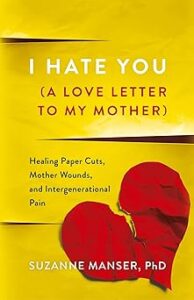 Through the dual lenses of the child who lived it and the therapist healing from it, this intimate memoir traces the devastating impact of intergenerational trauma, ultimately showing us how to transcend our own lineages and transform our lives.
Suzanne spent most of her life hating her narcissistic mother and trying not to. Now a Harvard-trained psychologist, she grew up desperate to be seen, taken seriously, and chosen over her mother’s next drink. Every day felt like a battle for her existence, and she always lost. Each loss was a paper cut, painful and invisible. The cuts evolved into a festering wound that engulfed her and shaped who she became.
Trying to be worthy, lost behind her perfect, people-pleasing smile, Suzanne hid sexual abuse, bullying, a violent boyfriend, and most of herself. And then she made a decision that changed everything. Slowly, she learned how to create a life centered on her, not on her shame or the pain of being her mother’s child.
After her mom died, Suzanne was able to see how their shared lineage of pain had robbed her of the mom she needed and nearly robbed her of herself. She discovered the brute-and brutal-power of the wounds her mother passed down, and she finally understood why she had never been enough.
Suzanne’s story bears witness to any child who was disregarded and lights the path to healing. The psychological wisdom she weaves throughout her story shows us how our parents hurt us, how that hurt shapes us, and how we can reshape ourselves. Her experience-based description of the mother wound validates not only her pain, but ours. This is so much more than a memoir – it’s a guidebook to becoming an active creator in your life, living with less pain and much, much more fulfillment.
I Hate You (A Love Letter to My Mother) is a love letter to all of us. It was written for anyone on their own journey of understanding and changing their relationships with their parents and themselves.
BUY HERE
Category: On Writing
Subscribe
If you enjoyed this article, subscribe to receive more just like it.