On Writing Scabmuggers
By Yvonne Martinez
“Someday Mija, you’ll learn the difference between a whore and a working woman.”
The words my sex worker grandmother told me that shaped my life.
It was 1950’s Salt Lake, I was seven years old, and she had just come back from organizing a labor action. Salt Lake tavern owners brought in “scabs” to cut into the tavern sex trade my grandmother and her sex worker sisters relied on for their work.
“I cut my own deals in that tavern,” I remember her telling my mother. “Every girl in there does. Now Frank’s bringing his girls in. He makes the deals, gives them a cut, and lets them drink all the beer they want. Bitches were just giving it away.”
When talking to Frank didn’t work, my grandmother and her sisters picked peak times when the tavern was full of customers to instigate fights that sent chairs flying, shattered glassware and mirrors, and decimated beer inventory. It worked. They ran off the scabs. They protected their work.
My grandmother was a “Scabmugger.” As historian Ardis Cameron writes, Scabmuggers were turn of the century multiethnic women strikers who gathered in women’s spaces to create what we would now call “flash mobs” to patrol picket lines and deter scabs.
They acted as spies, intercepting mail, befriending militiamen to gather intel to share with strike leaders, and shamed “scab” priests. They helped each other avoid getting arrested by crowding police vans when a striker was being arrested, and demanding that all be arrested. Among them they hid pipes, ten-pins and scissors, making it impossible to prove who used the weapons. They made a way out of no way, with cudgels hidden in their corsets.
The proud granddaughter of a sex worker organizer, I became a labor negotiator/organizer. In 1994, when I was mid-career, I was awarded a prestigious fellowship to attend the Harvard Trade Union Program, an executive program for trade union leaders from around the world.
My book, SCABMUGGERS, is based on the true story of how I became a Scabmugger at Harvard.
As soon as courses at Harvard began, our classmate Ana (a white woman) found herself being stalked by a black male classmate. Word quickly got out to the rest of the cohort. But, not wanting to get anyone kicked out, Ana refused to name names. She was not a snitch.
When the program director insisted there was nothing she could do to intervene if no one named the perpetrator, the class became engulfed in a campaign to protect Ana. The contentiousness of the issue split our class of thirty (twenty-four men and six women) into two camps. My camp became Scabmuggers. Some of the men joined us to fight the harassment; some of the women joined the harassers.
Gendered class dynamics were shaped and mis-shaped by race. The conflict became a fight for power mirroring the heartbreaking history of the labor movement, with lessons for our current politics.
At Harvard, my group of Scabmuggers outnumbered and fought off a Trumpian-style bully, and won. We became Scabmuggers to fight him and his allies against every kind of bigoted and sexist abuse.
When I came home after my stint at the Harvard Trade Union Program, I wrote down what happened to us there, because I thought no one would believe it. I submitted it for my master’s project. My Cornell professor praised it and encouraged me to send it out, but I had to get back to work. I worked until I retired.
Then Trump got elected–and it all came back. Friends who had read my story couldn’t believe that such brutes existed. Based on my experience, not only did I know they existed, but I also I knew how to beat them.
Michelle Goldberg of the LA Times reports neighborhood groups led by women are mounting resistance in response to ICE raids. They have become Scabmuggers. With bullhorns, they organize block watches to alert the neighborhood when ICE is visible. They “woman” tables where there are piles of orange whistles to blow if someone sees something suspicious, and beaded friendship bracelets with the phone numbers of local immigrant rights groups.
“When the volunteers get word of a raid, they rush over to make a commotion. One volunteer said: ‘They don’t want noise, and we bring the thunder.’”
Just like our Scabmugger foremothers, they create chaos to deflect and obstruct to protect the targeted.
The full meaning of my grandmothers’ words has become clearer to me over time. There is a difference between a woman who sells herself out or sells herself short, and a woman who–with her sisters and brothers–stands her ground and fights back with whatever it takes, including her modern-day cudgel in her corset.
—
Yvonne Martinez is the author of Shondaland endorsed “Someday Mija, You’ll Learn the Difference Between A Whore and A Working Woman.” Her new book, “Scabmuggers”, released in September 2025.
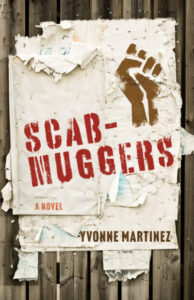 For anyone interested in the intersection of feminism and politics comes this inspiring, based-on-a-true-story tale of fighting back against sexism in the labor movement, set against the backdrop of Harvard in the 1990s.
As soon as courses at Harvard begin, Ana, a White female, finds herself being stalked by Aaron, a Black male classmate. Word quickly gets out to the rest of the cohort—but not wanting to get anyone kicked out, Ana refuses to name names. With their program director insisting there’s nothing she can do to intervene if no one will name the perpetrator, the class becomes engulfed in a campaign to protect Ana that splits the group into two camps. Some of the men join the women to fight the harassment; some of the women join the harassers. In short order, the conflict becomes a fight for power that divides along race, sex, LGBTQ, and class lines—mirroring the heartbreaking history of the labor movement, and serving as a precursor to our current political landscape.
A galvanizing behind-the-scenes look at the labor movement of the 1990s, Scabmuggers is ultimately a triumphant tale of women’s empowerment. Ana and her friends may be outnumbered—but they won’t go down without a fight.
BUY HERE
Category: Contemporary Women Writers, On Writing
Subscribe
If you enjoyed this article, subscribe to receive more just like it.