The Inspiration Behind Rules for Mothers by Julie Swendsen Young
I was twelve when my stay-at-home, farmwife mother took a parttime clerical job in our small, very rural county. The decision for her to get a job wasn’t spoken of in front of my sisters and me, but it was likely for financial reasons. Our tiny subsistence farm provided all the food we needed but there were needs that required cash, not the least of which was coal to heat the furnace in minus twenty-degree North Dakota winters. My oldest sister was on the cusp of finishing high school, and my parents were determined that she – that all four of us – would go to college. Non-farm income was needed.
I share this because I recall my mother buying two dresses to wear for this job. Not housedresses, her standard attire, but what we called “good dresses.” I have clear memories of Mom wearing those two dresses for many weeks until expanding her wardrobe, and happily driving out of the farmyard to her job in town. She appeared transformed. She glowed. She had agency. She, who had not planned to be a farmwife, but to be a journalist. She was a hardworking farmwife and attentive mother, but those roles did not fill her. There is some of my mother in my novel’s protagonist.
An author at a local book festival last week noted that had her novel been published five years ago, as was her initial plan, it would have been less compelling than its May 2026 publication. The plot involves reproduction rights, she explained, and with the overturning of Roe v Wade in 2022, the book’s message is now more urgent and may result in more attention, more sales. Accidental timing, she said, what a difference it can make.
I feel the same about my debut novel, published in April 2026. I finished the manuscript in 2019 but was unsuccessful in finding an agent/publisher, so tucked the project away and got busy with other writing. The pandemic and other priorities arose, then when I shopped the manuscript again last year, voila! It’s published! As I walked through phases of production over the past nine months (much like a pregnancy), I became distinctly aware of glaring, national conversations about traditional gender roles, the manosphere, trad wives, and pronatalism. With the exception of gender roles, Rules for Mothers doesn’t directly address these topics, but it’s not a stretch to say they’re more relevant to the plot now than if the book had been published six years ago. Accidental timing!
Rules for Mothers, set in the early 1980’s, is about a young mother who has lost her sense of self under the 24/7 needs of her career-driven husband and four small children. She longs to be defined as a person that is not “wife” or “mother,” roles she at which she is very good. She needs more. Doesn’t she realize how enviable she is, her husband asks, to be at home with the kids, to have a provider who loves her?
That plot in 2019 may have been interesting, but in 2026 it offers greater potential for passionate responses and animated conversations, which I as an author invite. The tradwife, i.e., traditional wife, movement hit social media soon after 2020, spreading an ideology of clear gender roles for men and women, with women ideally at home to raise children, tend to home duties, and bend to their husband’s will in matters of social, financial, and political power. It often runs parallel to religious affiliation, particularly Christian conservatism, that speak to males having dominion in their homes and females satisfied with their responsibilities of home and children. (In some cases, many children.)
I agree with those who point out that “trad wife” is no different from “stay at home” mother, with the noted exception of those trad wives who are “influencers.” I also agree that choosing that path over an occupation outside the home should always be a choice, no different than motherhood and reproductive health should be choices. America’s first wave of feminism was established in the mid-1800’s on Elizabeth Cady Stanton’s insistence that a woman’s first duty was to herself. She advocated that marriage and motherhood were impediments to individual liberties, even as she celebrated the births of her many children and was a devoted mother. Neither was she opposed to marriage, but she voiced opposition to certain constrictions that accompanied it, for example that married women could not hold property.
The protagonist in Rules for Mothers did not set out to be a traditional wife. Indeed, she did not stop to think about the decisions she was making that resulted in it. But when she finds herself bowing to the chores of homemaking and child rearing to the point of exhaustion and futility, she decides she will no longer bow. She is desperate for agency, for an identity that is not wife or mother.
—
RULES FOR MOTHERS
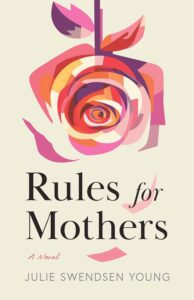 #1 Amazon Best Seller
A provocative exploration of purpose under the weight of motherhood
Elly Sparrow’s four small children are clean and cute, and her workaholic husband is a good provider, but she often feels as if her life has been whittled down to two defining titles: mother and wife. She yearns for something more, but what?
When her marriage begins to crumble and her husband moves out, Elly must navigate the challenges of single motherhood while confronting deeper turmoil within herself. As she balances the demands of everyday life, she embarks on a transformative—and at times daring—journey to redefine her purpose and learn to live on her own terms.
Set in the 1980s, Rules for Mothers is a poignant depiction of the enduring complexities of gender roles, motherhood, and mental health. Elly’s struggles and discoveries paint a picture of the importance of self-fulfillment and the battle women must wage to build a life that works for them—rather than one that is rooted in the needs of others.
BUY HERE
—
Julie Swendsen Young grew up picking wildflowers and herding cows on the North Dakota prairie. After college she moved to Portland, Oregon, where she raised a family, earned a Master of Social Work (MSW), and became a clinical social worker. She is a citizen lobbyist for early childhood investments and maternal health. Her short fiction and creative nonfiction stories have been published in print and online magazines, including Surging Tide and The Timberline Review. Rules for Mothers is her first novel.
Find out more about Julie on her website https://www.julieswendsenyoung.com/
Category: Contemporary Women Writers, How To and Tips
Subscribe
If you enjoyed this article, subscribe to receive more just like it.