Origin Story: From Fact to Fiction in How Long a Shadow by Cheryl A. Ossola
In any family history, secrets, murky half-truths, and even full-out fictions spiff up the stories one generation hands down to the next. How much we know about those truths and lies depends on how doggedly we dig—and how determined the truth-holders are to hide what’s real. In my family’s case, relatives banished to the shadows, a tragic death, and a lie about our origins—all truths submerged for more than 80 years—seeded my novel How Long a Shadow.
My father, the son of Italian immigrants, grew up knowing little about his own father, who had committed suicide at age 36, leaving behind a wife and two very young sons. By the time my father had moved to northern Virginia and had children of his own, he was asking questions. He’d likely asked those same questions as a child, as a teen, as a young Marine returned from war. Any answers he got, though, he kept to himself.
It turned out that my father’s family was as deceptive as the hills surrounding their adopted home of Barre, Vermont, where vast reservoirs of granite lay invisible for millennia. Once discovered, the stone turned out to be both beautiful and lethal, its mix of feldspar and sparkling mica capable of shredding lungs. In a century of Barre’s granite-industry history, despite strike after strike demanding better workplace conditions, thousands of men died from “stonecutter’s silicosis,” called mal d’america by the Italian immigrants. Caused by breathing the cutting dust, the illness led inevitably to long suffering and a painful death, which some men preempted with suicide. It’s possible that was the reason for my stonecutter grandfather’s death. More important than his motivation, though—at least, apparently, to my grandmother—was the fact of his suicide. That was the real secret, the real shame.
For decades, the “official” reason for my grandfather’s death was a car crash. That a car was involved is the only truth here, because the real story, from start to finish, goes like this: one night my grandfather drove to a sparsely populated area and shot himself in the head.
At the time of my grandfather’s death the family was living in East L.A. My grandmother, a widow at 31, packed up her children and moved back to Barre to live with her widowed mother, who would care for the children while my grandmother worked. They, plus a few other relatives—my great-aunt and her family, my father’s brother—were the sum total of our Barre clan. Or so I thought.
In 2009, one of my Barre cousins messaged me about a photo he’d seen in a book, of one Joseph (Giuseppe) D. Ossola and his family—surely relatives of mine, my cousin wrote. “No, they can’t be,” I replied. “I’ve never heard of them.”
Curious, I did some genealogical digging and was stunned to find dozens of unknown-to-me Ossola relatives, among them Joseph, one of a slew of my great-grandfather’s half-siblings. He left stonecutting behind to become a prominent businessman, dabbling in hotels, movie theaters and skating rinks, shoe sales and tomato sauce. There’s even a street in Barre named Ossola Place, near the site of that long-gone theater.
Despite many visits to Barre, I had never seen that street. My father had never mentioned it. Why not? As kids, wouldn’t my brother and I have been thrilled to see a street sign with our surname on it? My father had to have known about it; the street existed in the early 1900s. It was there when he was a boy because it’s still there now.
My parents, my grandmother, my great-aunt, my uncle—they all knew about these “hidden” relatives. My parents had even invited some of them to their wedding, I discovered years later.
The lies were racking up: my grandfather’s suicide, the relatives kept under wraps, even my grandfather’s hometown in Italy. I’d been told that he was from Domodossola, in Piedmont. It wasn’t until I found long-lost documents belonging to my grandmother that I discovered the truth: my grandfather was born in Viggiù, a quarrying town in northern Lombardy that sent many of its sculptors to Barre. My Ossola ancestors had emigrated from a handful of small towns in that region, a stone’s throw from Switzerland.
The reasons for these evasions and lies will remain unknown because anyone who could reveal them is long dead. But as I learned more about Barre’s volatile labor-movement history and the Italian stonecutters who’d brought their socialist ideals to America, I came up with a theory about my “missing” relatives. In America, all of the Ossola men had worked in the granite industry. When Joseph walked away from it in the late 1800s, he became the sole capitalist in a family of socialists. In a town divided by politics, he created a rift that led each side of the family to erase the other’s existence. Or so I speculated.
How Long a Shadow began as a story about a young immigrant woman chasing the personal freedoms she thought America promised. Over the course of many drafts, that premise didn’t change. But as my knowledge about Barre and my family grew, so did my imagined world. Joseph became the model for Vittorio, a businessman; his midwife sister led me to choose midwifery as an occupation for my intrepid young protagonist, Rosina, who vowed to marry for love or not at all. Together, those few real people, plus the obvious divide in my family and boatloads of research—about the granite industry, the labor movement, mal d’america, midwifery, suffrage—formed a fact-based setting for Rosina’s fictitious struggle for autonomy.
What emerged from that striated bedrock of fiction and fact is a story that illustrates the role of immigrants in bringing about change, whether on a grand scale, through idealistic determination, or on an intimate one, through empathy and compassion. I hope it would have pleased my father to learn that his family’s immigrant experience helped me to sculpt a story relevant to today’s volatile political climate. A story that could have been his own.
—
Cheryl A. Ossola, a second-generation Italian American, is a descendant of the stonecutters who shaped Barre, Vermont’s, granite industry, on which her forthcoming novel How Long a Shadow (Cynren Press, 2026) is based. Her fiction and poetry explore Italian heritage, art, family, and the immigrant experience. She is the author of the novel The Wild Impossibility (2019), and her work has appeared in Fourteen Hills, Writer’s Digest, Switchback, VIA: Voices in Italian Americana, and Eastern Iowa Review: Best Prose Poetry 2025. A former editor and freelance writer with an MFA from the University of San Francisco, she writes Italicus: a writer’s life in Italy from a hilltop town in Umbria.
HOW LONG A SHADOW
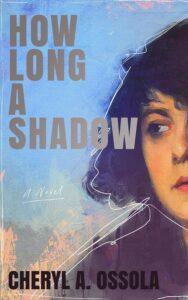 Set in 1903 Barre, Vermont, How Long a Shadow is a richly researched historical novel rooted in the immigrant labor movement of the American granite industry. As mal d’ america devastates stonecutters and union strikes divide the town, twenty-year-old Rosina Bottinelli seeks a life beyond the narrow expectations of marriage. Apprenticing as a midwife, she confronts the physical and moral stakes of women’ s work while a growing political rift between her unionist father and his capitalist brother threatens to fracture her family. Against a backdrop of labor unrest, public health crisis, and early suffrage activism, Rosina must decide where she stands— and what it will cost her to step out of the shadows and shape her own future.
Category: Contemporary Women Writers, On Writing
Subscribe
If you enjoyed this article, subscribe to receive more just like it.