Author’s Note: From Surviving to Thriving
By Shigeko Ito
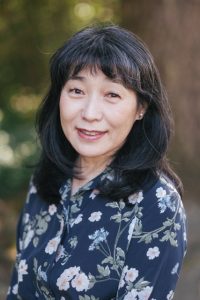 In the midst of an unexpectedly tumultuous middle-aged motherhood, I stumbled upon creative writing—a lifeline that helped me gradually emerge from a dark tunnel of stress, anxiety, and depression. Putting pen to paper allowed me to delve into the past, uncovering the root cause of my struggles. Little did I know that unhealed childhood trauma was jeopardizing not only personal happiness but also relationships with my husband and son.
I grew up in a disconnected, emotionally hollow Japanese family, feeling abandoned, unseen, and unheard. I immigrated to America in my early twenties to pursue higher education and escape from my dysfunctional family and the rigid Japanese society that had landed me in a mental hospital at age 17.
Before motherhood, my writing was rooted in academia, where I conducted ethnographic research for my PhD in Education. When I became a mother soon after earning my degree, I chose to become a stay-at-home mom, despite knowing it might derail the academic career and research I’d once envisioned. It was a decision made with hope to break a generational cycle of childhood emotional neglect.
Although I felt well-prepared and excited, motherhood proved far more challenging than anticipated. Difficulties with breastfeeding and concerns over my milk supply dominated the early weeks and months. Chronic sleep deprivation and fatigue magnified a sense of isolation that accompanied being a newly transplanted and first-time mother. And even with my husband’s best intentions to help me, his support was limited due to his demanding work schedule.
As time passed, the challenges evolved from physical to mental to emotional. Constant worries about my child’s welfare consumed me and left me overwhelmed and burned out. Without a guiding compass, I blindly navigated the uncertain terrain of motherhood, grappling with feelings of loneliness and inadequacy. Preoccupied with others’ needs, I failed to even recognize my delayed postpartum depression, the result of years of self-neglect. When I finally sought help, albeit reluctantly, it was frustrating to keep shopping for a good fit with a therapist whom I could stick with long enough to see any tangible results.
What added to my despondency was the sense of lost identity, lamenting that my academic training went to waste and would never be utilized, stripping me of my once hard-earned self-confidence. I felt as if I were nothing.
The tide began to turn when I developed an interest in creative writing and attended my first weeklong retreat in British Columbia when my child was ten. The method, called Freefall Writing, was designed to teach us how to write from the larger Self, bypassing the Ego and the inner Censor.
For the first couple of days, I felt utterly lost, wrestling with my monstrous Inner Critic who kept saying, “Who do you think you are to be able to write?” By mid-week, overwhelmed and on the verge of giving up, I opened up about my childhood stories to the small group of caring and empathetic participants. Their heartfelt reactions and kind words made me feel truly seen, heard, and validated for the first time. It felt as if I were enveloped in the loving and nurturing maternal energy that I had craved but never received. Suddenly, I had an epiphany: the root cause of my burnout wasn’t solely the demands of motherhood, but also my unhealed childhood trauma.
The remainder of the retreat was nothing short of magical and cathartic. It reaffirmed the profoundly transformative and healing power of shared experiences and connections through storytelling and helped me find my authentic voice and regain my sense of self. Without this powerful introduction to creative writing, I might never have written a single word, let alone an entire book.
Although switching from academic to creative writing was initially quite challenging, as I progressed in my book writing journey, I began to see how my ethnographic research background, far from being wasted, had uniquely prepared me for this new creative endeavor. Skills such as keen observation, meticulous documentation, analysis, and the ability to weave complex narratives from diverse data all helped create the bedrock of my memoir writing. Above all, this training instilled in me perseverance.
I didn’t embark on my memoir project with literary ambition; it stemmed from a simple desire to understand myself better. Over time, this personal quest evolved into a mission—sharing my experiences and fostering a sense of community to help others feel less alone. I now see myself as a conduit for wisdom garnered from my life journey. Ultimately, my goal is to uplift by delivering messages of hope and healing through the transformative power of storytelling.
About the Author:
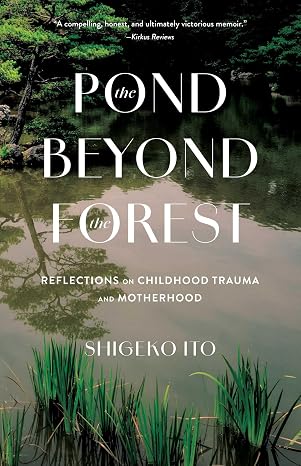
Shigeko Ito grew up in Japan and immigrated to the US in her early twenties. She holds a PhD in Education from Stanford University, specializing in early childhood development and education. A writer and mental health advocate residing in Seattle, her memoir, The Pond Beyond the Forest: Reflections on Childhood Trauma and Motherhood, is set to be published on October 7, 2025. In this work, she explores the long-term effects of childhood attachment trauma on adult life, particularly in motherhood. She aims to raise awareness about this often-overlooked condition and inspire healing journeys for readers facing similar struggles.
Author Website & Social Media Handles:
Website: shigekoito.com
LinkedIn: https://www.linkedin.com/in/shigekoito-memoir/
Facebook/Author Page: https://www.facebook.com/shigekoitomemoir/
Facebook/Personal: https://www.facebook.com/ShigekoChakoIto/
Instagram: @shigekochakoito
Bluesky: @shigekoito.bsky.social
Twitter/X: @ShigekoChakoIto
THE POND BEYOND THE FOREST
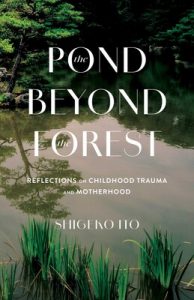 For fans of Stephanie Foo’s What My Bones Know, a memoir of a middle-aged Japanese immigrant mother’s struggle to raise her teenage son and save her marriage when she finds herself triggered by memories of her own childhood trauma as he enters adolescence.
At age twenty-two, Shigeko Ito immigrated to America to escape Japan’s rigid society and a neglectful childhood home that landed her in a mental hospital at seventeen. She thrived in her new, healthier environment and thought her traumatic past was all behind her.
Until it wasn’t.
Motherhood, she realized, was far more challenging than she could have ever imagined. But it was her son’s high school years that proved to be particularly daunting, and that was when her past reemerged—in the form of intense flashbacks to her childhood trauma and tumultuous teenage years. With the stream of daily stresses compounded by menopausal irritability, Shigeko often found herself regressing into a bunker-like mentality with childish coping mechanisms, a pattern that threatened to undo her most prized achievement: her happy family.
In The Pond Beyond the Forest, Shigeko faces her past head-on, taking the reader along on her quest to uncover the root causes of her lifelong struggles—a journey that leads to deeper self-awareness, understanding, and acceptance, and ultimately saves her family and marriage.
BUY HERE
Category: On Writing
Subscribe
If you enjoyed this article, subscribe to receive more just like it.