My Alternative to an MFA as a Debut Writer by Robin Rosenbluth
 When I decided to write a memoir about the transformative year I spent in Northern Kenya, living with the semi-nomadic Samburu and Rendille tribes, I had little experience writing creative nonfiction. After almost 10 years, I completed my first draft of Living with Strangers, which covered my childhood and teenage years in foster care, as well as the year I lived in Kenya. I wanted to write this memoir to show the common bonds we can form with people from diverse cultures. I also wanted to educate readers about the broken US foster care system and share a story from my time as a foster teen that shows how we can find our way.
I always loved writing, but I knew I had limited experience with creative non-fiction. I’d kept a journal throughout my teen years and travels abroad. A journal does not tell a story with an arc; it was a way to describe what happened to me and make sense of my feelings. I also wrote throughout my work life as a fundraiser, but I wrote straightforward documents, such as proposals and business letters. While I knew I could write for business, writing a memoir was different in many ways because it follows a storyline, just as a work of fiction does. I did not have that practice under my belt.
As I began my memoir, I considered enrolling in an MFA program to learn the craft and complete a manuscript. I’d read that many people finish their books as their final projects. I knew I had a lot to learn, but I’ve always valued experiential learning. After all, that’s what I did at Friends World College, where students studied abroad independently in at least two cultures, interned with local people, and learned that there is much to gain from people of different cultures.
Instead of plunking down the cost of an advanced degree, I thought I’d use my money to reach out to experts in the field, select and pay for memoir classes, find peers in similar situations, and, in a sense, design my own study program, just as I had in college.
The first thing I did was join a peer writing group, where I shared rough drafts of each chapter. Getting feedback from others helped me refine my writing. I also signed up for online classes focused on memoirs. I paid for a session with a professional editor for a small group of women, where we received feedback from the editor and other participants. From that group, I found two women who agreed to meet weekly. Over the course of three years, we’ve helped each other finish chapters we were proud of.
When I had completed the manuscript, I hired an editor/publisher to review it. She suggested I revise my use of childhood flashbacks and instead alternate full chapters about my childhood, covering my mother’s death when I was eight, my placement in foster care, how I managed to get into college, and my arrival in Kenya, organizing the chapters around similar themes. I had a lot more writing and rewriting to do. My writing group was a terrific help. I received constructive feedback that improved my work; I also learned as much by providing feedback to other writers.
Throughout the years I was writing, I also took memoir seminars at Columbia and NYU and participated in Facebook groups that brought together writers, published authors, agents, and publishers. I joined organizations where aspiring authors Zoomed to connect with others working to complete their books. I read craft books and Substack posts by authors with more experience than mine.
As I understood more about the craft of memoir writing, I wanted to pay it forward. In February 2023, I launched a Substack called My Jagged Journey as a debut writer to share what I was learning. Researching and writing each blog post helped clarify what I needed to know. In a sense, it was like taking an exam or writing a class essay on craft, including voice, tense choice, dialogue, and related topics.
Then I began searching for an agent and, in turn, a publisher. I learned about query letters and joined author organizations to find agents who specialized in memoir. Over the course of a year, I received multiple rejections but found one agent who read and liked my book. However, she said, “I don’t think I can sell a memoir.” Most memoirs published in 2025 were written by celebrities. A friend had published with She Writes Press (SWP), an acclaimed hybrid publisher, so I used the money I’d saved by not enrolling in an MFA program to publish the book.
My SWP project manager provided the names of a developmental editor and a copy editor; their suggestions were helpful in shaping the book into what it could be, perhaps what a faculty advisor might do for me if I were enrolled in an MFA. SWP offered guidance on crafting taglines (mine became “Living with Strangers: Healing a Wounded Heart in a Distant Land”). SWP proofread the print-ready copy, designed the front and back covers, arranged printing, and liaised with Simon & Schuster for worldwide distribution. SWP also hosted gatherings for its authors, who shared their knowledge with one another.
Last but not least, I hired a publicist to spread the word about my book in the press, work
with podcasters, and help plan public events. Her firm paid for a social media consultant to guide me on the best ways to post and to plan a social media campaign. She also helped create promotional materials. In many ways, it is like paying for a personal tutor. As we email and talk every other week, I feel like I am paying for a practical course in book publicity.
Had I enrolled in an MFA program, I’d have had a master’s thesis to present, and the culmination would likely have been a completed manuscript. Through my self-designed “course of study,” I now have a book: Living with Strangers: Healing a Wounded Heart in a Distant Land. Instead of receiving feedback from professors, I get it from friends, family, and people I’d never met. I receive what might be considered the equivalent of grades through reviews, blurbs, comments, likes, and accolades on social media as I post excerpts. When I read in public, people show interest in my book.
As my publication date nears on October 27, 2026, I feel I’ve put my money to good use and gained valuable knowledge. I believe this extraordinary experience of writing a book is every bit as valuable as an MFA.
—
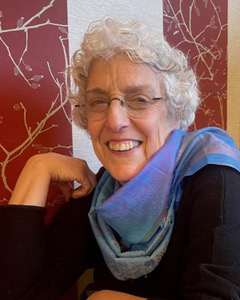
Robin Rosenbluth is a former foster teen who now advocates for finding permanent homes for older foster youth. She has worked in the nonprofit sector in New York, raising funds for museums, women’s organizations, healthcare, and environmental causes, and teaches fundraising at New York University. She has studied memoir and the craft of writing with many renowned authors and writes a Substack, My Jagged Journey as a Debut Writer. Robin and her wife have raised two children. She lives in Brooklyn, New York. Learn more at robinrosenbluth.com, (23) Robin Rosenbluth | LinkedIn, (3) Robin Rosenbluth | Substack, Instagram
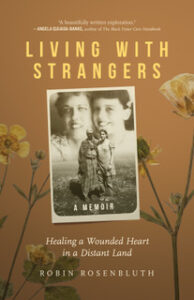 A debut memoirist’s hopeful and brave coming-of-age story of surviving a turbulent youth—neglected first by her father, then as a teen in foster care—and going on to find a sense of belonging and a new lease on life in a semi-nomadic Kenyan community.
Eager to leave her life as a foster child behind, Robin Rosenbluth travels to a remote village in northern Kenya called Songa in 1973. As a white college student, she arrives in a desert-like environment to teach elementary school to Samburu and Rendille children. While befriending the residents, she learns to live in a mud hut, survive without modern conveniences, skin a cow, and kill a chicken for dinner.
Robin weaves stories about the challenges she faced growing up—her mother’s early death, her father’s abandonment, and her years in foster care—with her account of her time in Songa. As the only Jewish resident in a village influenced by Christian missionaries, she strives to fit in: adapting to the intense heat, endless insects, and close encounters with wild animals. Over time, she develops close friendships with a local teacher and a woman who becomes her surrogate mother, participates in local customs, and makes a place for herself in Songa.
Offering vivid insight into why a love-starved nineteen-year-old from New York City would choose to relocate to the other side of the world, Living with Strangers is a poignant chronicle of one young woman’s search for a place to belong.
PREORDER HERE
Category: On Writing
Subscribe
If you enjoyed this article, subscribe to receive more just like it.