Genre Soup: Now with 87 New Flavors
By Lee Bukowski
Welcome to the wonderful and confusing world of fiction genres. From Romantasy to Grip-Lit, it sometimes feels like we authors need a decoder ring to classify our books. There’s Literary Fiction. There’s Upmarket Fiction and Contemporary Fiction. And Women’s Fiction. And Book Club fiction. All those genres. So many genres. And sub-genres. And sub-sub-genres. And . . . well, you get the idea.
Articles about how to classify a fiction novel should come with a bottle of Tylenol. The extra-strength kind.
It’s all fun and games until authors have to figure out the category and genre of their work. Try entering your book into an awards competition or pitching an agent or publisher without clearly stating a genre. You’ll need more Tylenol.
I am fortunate to have made so many wonderful connections with other writers whose support and guidance are invaluable. The conversation about genre comes up again and again. More specifically, as authors pitching our work to agents and publishers, we are often faced with the quandary: Where does my book fit in? It’s a simple question with a complicated answer.
I write women’s fiction—and even though there are several defining characteristics, it is an umbrella genre that can include other genres such as romance, mystery, and drama. And then there’s the question of whether it is Upmarket, Commercial, or Literary Women’s Fiction, depending on if the work is driven by character or plot and how much emphasis is placed on the craft of writing and not just the telling of a character’s story.
In every case, Women’s Fiction is character-driven as opposed to plot-driven. It centers around a protagonist’s (almost always female, though there are male protagonists in Women’s Fiction) journey to obtain self-discovery through overcoming obstacles. Women’s Fiction appeals to a wide audience due to its themes of identity, family, and relationships. These books offer hopeful but not necessarily happily-ever-after endings and focus on emotional stakes over external plot elements. Think ‘just-trying-to-get-through-this-thing-called-life,’ not ‘slaying-fire-breathing-dragons-in-faraway-lands.’
My debut novel A Week of Warm Weather is about a young married woman named Tessa who buried the childhood trauma of being abandoned by her mother. When she finds herself in a toxic marriage, her husband’s choices resurrect that trauma. He manipulates her into believing his career and their happiness depend on her silence about his reckless behavior, and Tessa must ultimately decide which is more costly: keeping his secrets or revealing them.
Though the story centers around Tessa’s emotional journey and personal growth, there are undeniable characteristics of other genres in A Week of Warm Weather. For example, in the first several chapters, while the reader knows that Tessa’s husband Ken engages in mysterious and bizarre behavior, what exactly he is doing is not revealed until well into the novel. Also, weary from lying to her family about Ken’s behavior and whereabouts, Tessa confides in a new friend. It turns out the woman has secrets of her own, and there is a surprising plot twist approximately two-thirds into the book.
Painting Over Cracks, my second novel due to be released within the year, centers around a young woman haunted by a secret she’s kept for years. Beth believes a family of her own is her only path to happiness, but when her husband Danny is killed in a freak car accident, she fears her dream died with him. Craving a fresh start to escape the ghosts of her former life, she quits her job and opens her own café, but the café opens the door to more than Beth bargained for. When a mystery surrounding the accident and glaring financial discrepancies reveal shocking secrets about her husband, she realizes the man she mourns may never have existed.
Painting Over Cracks, even more so than Weather, is filled with elements of the mystery genre as Beth spends much of the novel trying to unravel the secrets her late husband left behind. Besides Beth’s emotional journey—which is the main point of the book—there are several elements of mystery and suspense as Beth seeks to uncover the truth about her husband.
Painting Over Cracks also has elements of the romance genre. Almost a year after the accident that takes her husband’s life, Beth meets a man with whom she eventually begins a romantic relationship. To thicken the plot (pun intended) even more, Beth’s new beau has some skeletons in his closet which culminate in what may be the novel’s major reveal. So, is this book a women’s fiction/mystery/romance?? A romanstery??
Furthermore, because my writing explores deep, sensitive themes and I employ strategies such as symbolism, metaphor, and imagery, it has been characterized as Literary Fiction.
Does your head hurt yet?
Mine too.
And so do the heads of the agents and publishers who are tasked with categorizing these manuscripts in order to decide if the works are right for them. I recently spoke with an author who told me her publisher said of her fourth book, “I really like it, but I don’t know how to market it. I just don’t know where to put it.”
Genre confusion notwithstanding, we authors love what we do, and we’ll keep at it. The book business is ever-evolving, and we’ll do what we must to keep up with nuances and trends. After all, having a book situated in just the right category and genre benefits those whom we treasure the most: our readers.
—
Lee Bukowski is the women’s fiction author of A Week of Warm Weather. In 2016, she left a beloved career teaching seventh grade English to pursue writing full-time. When she’s not writing, she loves reading, traveling, and trying cocktails with clever names. Lee also hosts an author panel videocast on Facebook’s Bookish Road Trip where she chats with authors whose work has a common thread. A Billy Joel superfan, her live concert count is 50 shows. Lee’s second fiction novel, Painting Over Cracks, will be released in 2026.
A WEEK OF WARM WEATHER
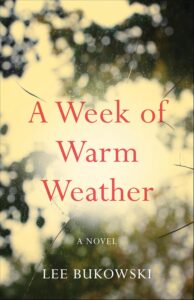 Tessa Cordelia appears to have it all—a loving husband who’s just opened a dental practice, a beautiful baby girl, a big house in the suburbs, and a large, supportive family. But when her husband’s reckless choices resurrect a trauma from her childhood, she must decide which is more costly: keeping his secrets or revealing them. He manipulates Tessa into believing his career and their happiness depend on her silence. She feels like she’s losing her mind. Is her husband’s habit so awful? In many ways, he’s an ideal husband; should she let him have this one thing? Determined to maintain the lie that she’s living the perfect life, Tess lies to everyone she knows—except for CeCe, a woman new to the area whom she’s just befriended. But after confiding in her, Tessa learns that CeCe has an explosive secret of her own, and her world is further upended.
A gripping, nuanced exploration of the havoc addiction can wreak on a family, A Week of Warm Weather is the story of a woman who has to figure out how much she is willing to lose in order to find herself.
BUY HERE
Category: How To and Tips
Subscribe
If you enjoyed this article, subscribe to receive more just like it.