On Writing The House of Cavanaugh
By Polly Dugan
Describing the genesis of my new novel The House of Cavanaugh almost feels like a novel unto itself. For several years, completing it felt like a Sisyphean task, and I often doubted it would ever make its way off my computer and out into the world and into the hands of its readers.
The character of Joan Cavanaugh has been with me for a very long time, since August of 2010, when I returned to working as an instructor at Guide Dogs for the Blind and dedicated my lunch breaks to writing. The story “Legacies,” which appears in my linked story collection, So Much a Part of You, published in 2014, introduces Joan, and was the result of those lunch break writing sessions. This was also the story I workshopped with Steve Almond at the Tin House Summer Workshop in July 2011, from which I got invaluable feedback, from both Steve and my workshop peers.
The idea for this new book arose from the potential at the conclusion of “Legacies.” After they read it, several readers asked me if the main character in that story honored Joan’s dying wish, and when I thought about it—that the conclusion of that story ‘leaves the door ajar’ for what could come next—I recognized there was much more to Joan and her life. I only had to stay in the chair and figure out what that was. This book is very much her story.
Another factor in the book’s development was something I don’t think is uncommon for people to experience in even the healthiest, most committed relationships or marriages, and that is at some point to feel taken for granted by their partner or spouse, and to encounter unexpected admiration or attention from someone outside the relationship. I explored that complication in this novel and took it to an extreme with high stakes and reverberating consequences.
As a result of losing my mother in 2003, eight months after I became a mother, grief and loss are always central and recurrent themes in my work, along with challenging family dynamics, marriage, friendship and secrets. This book has all these elements. I write about what I love to read about in books by my favorite authors who are often influences in my own work.
It took close to ten years to write this book and there were several reasons it took that long to complete. I started writing it in 2014, after finishing my first novel, The Sweetheart Deal, published in 2015, and right away with this project I had challenges deciding point of view, and which characters earned one, and determining how this buried secret comes to light if Joan takes it to her grave—that alone made me feel I’d written myself into a corner, which I admittedly had.
I was also busy raising my family and then the combination of the 2016 election, the Black Lives Matter movement and the Covid pandemic and lockdown all made me feel distracted, unmoored, anxious and powerless. And during that time, it honestly felt frivolous to be working on fiction, making up stories about imaginary people—although I know that’s what readers turn to to escape from real life—I know I do. At that same time, I knew the landscape of the publishing industry was also changing, in part due to those same factors mentioned above, so I was evaluating what the market wanted compared to when I published my first two books, and if the new book I was writing would be able to find its place as the industry was evolving and adapting.
As I was working on this book and periodically talked about the project, I was struck by how many people knew families in similar circumstances. I had already begun working on this novel when I read Dani Shapiro’s wonderful memoir, Inheritance, in 2019, and realized that was the way to go for Joan’s secret coming to light: let the DNA science and technology be the bearer of this unexpected news.
Shapiro’s experience also helped me understand what unforeseen DNA revelations of 23andMe.com and Ancestry.com often elicit: shock, betrayal, and an existential unmooring when people learn what they have believed all their lives is ultimately fiction. I cannot begin to know what ensues for families going through these painful experiences of how complicated those discoveries and their aftermaths are. I hope this book has captured how I imagined this complex reality with authenticity and compassion.
With the help of a friend’s family, I was able to research and create what would have been Anne’s 23andMe half-sibling results with as much accuracy as possible.
Additionally, I owe many thanks to Michelle Wildgen, who provided feedback on multiple drafts, and to Emily Chenoweth, whose mentorship provided a series of guideposts over the years as I continued to try and craft this story into the book I believed it could be. In 2015, Emily’s class Writing a Novel in Eight Weeks, through Literary Arts, one of the pillars of Portland, Oregon’s writing community was the first time I got input from other writers for this novel and learned maybe I should stick with it. During the pandemic Emily’s virtual classes offered prompts that sections of this book are literally the products of; without her prompts, chapters of this book simple would not exist. This type of outside input from writing experts is invaluable, particularly when a writer is feeling stuck in their process.
I’m very grateful for all the support the book has gotten so far, and I hope you and your readers will read and love it too! Thank you for the opportunity to share the story behind this novel!
—
Polly Dugan is the author of the linked story collection, So Much a Part of You, and the novel, The Sweetheart Deal. Her short fiction and essays have appeared in The Dickinson Review, Narrative, Line Zero, ModernLoss.com and Huffpost.com. She is a contributing author to Before and After the Book Deal: A Writer’s Guide to Finishing, Publishing, Promoting, and Surviving Your First Book by Courtney Maum. She is a graduate of Dickinson College and the Denver Publishing Institute, a former employee of Powell’s Books and Guide Dogs for the Blind, a Tin House Summer Workshop alumna and a former submissions reader for Tin House magazine. She lives in Portland and Manzanita, Oregon with her family.
THE HOUSE OF CAVANAUGH
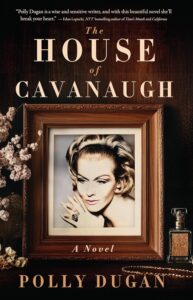 A long-buried secret. A friendship on the brink. A family forever changed.
New York City, 1964. Joan Cavanaugh—a young wife and mother yearning for more falls into a passionate affair with Peter “Hutch” Hutchinson. When the affair ends, she returns to her marriage, raising three daughters with her devoted husband, Graham. For nearly three decades, she keeps her secret locked away, taking the truth of her daughter Anne’s paternity to her grave when she succumbs to cancer in 1989.
Portland, 2014. Carolyn Cavanaugh and Julia Hutchinson are next door neighbors and the closest of friends. But when Carolyn’s father, Graham, visits for Thanksgiving, his path collides with Julia’s parents, Hutch and Alice. The revelation that unfolds following Graham’s trip upends both families, bringing a truth to light that will shake two families to their core.
As decades of deception unravel, bonds are tested, loyalties waver, and the meaning of family is forever redefined.
BUY HERE
Category: On Writing
Subscribe
If you enjoyed this article, subscribe to receive more just like it.