Remember My Name by Zelly Ruskin
 Writing a book is hard. That’s the truth. Finishing it is a tremendous accomplishment. Fact. Taking that personal effort, the words you’ve created and taken great care to string together, and offering them to be viewed by the public? Terrifying. Glorious. Nerve-wracking. Exhausting. Still, we sit back down and subject ourselves to the process all over again. On purpose. Why?
Why, why, why am I doing this? After launching my debut novel and drowning in marketing musts, where would I find the energy and mental space to write something new and even more clever than the first? The self-imposed time pressure to get another book out there before readers forgot they liked my book was unrelenting.
Writing and publishing are not physical sports, but there is a commonality. Most long-distance runners or triathletes don’t enter a race to win. Sure, it’s cool if they do, but more often, the mid-packers in a marathon or an Ironman are competing against themselves. They seek to better their time. To achieve their personal best. Before this analogy goes any further, it’s important to note that this assertion is based on secondhand knowledge. My sport of choice is sitting. But that drive to repeat something you never thought you’d do, something difficult that requires perseverance, is relatable. Ask a debut author. Writing a book, especially the first one, can only get done with a stick-to-it-iveness to get to the finish, cheered on by supporters on the sidelines. You question if you’ve got what it takes to endure, and page by page, you get there. Someone slips a medal around your neck, just for finishing, just for doing the thing. No one cares how long it took you, or whether you’re the best. You did it! Sometimes that’s enough. Sometimes you go the longer distance and keep going until you’re published.
Congratulations! Strangers are going to get a glimpse inside the inner workings of your novel mind, and they’ll have thoughts. That exposure and vulnerability are intimidating. It’s like at the end of the marathon, when your body’s aching, your legs are cramping, and your skin is tight with dried salty sweat, and you might question why you put yourself through the grueling punishment. At the same time that you’re shivering and refueling, you’re thinking about how soon you can restart training and the ways you can improve it. That’s the idea of the second novel setting up camp in your head. Are you seriously going to put yourself through this again?
Yes. A bestselling author recently described the first time they went bungee jumping. Standing on the highest ledge, facing their scariest moment ever, they took the leap of faith. There was sheer fear and bewilderment, but once they landed safely and were untethered, they looked up at the height from which they’d survived and knew they would go back for more.
Their experience captured the emotion and risks of publishing. It’s not the reality of what could go wrong that grips you; it’s the elation of the accomplishment. That taste of facing something frightening, the thrill of the unknown makes you want more.
And riding that high, the debut author picks up their pen or taps out new plots on their digital paper. We want to do it again. Can we? Will our words fall into place as lyrically as the original? What if the new plot is not as interesting or as page-turning? Your words are competing against your words. The hardest part isn’t if we can finish a book. It’s believing in ourselves.
The sense of imposter syndrome you thought you’d shed creeps back in as if saying, “the success of your first book was a fluke. The honeymoon is over. Your readers are going to be disappointed.” But if you don’t get back to that starting line, don’t start that new work in progress marathon, go too slow, all the work you did to build a presence as an author will be lost. Even if you’re the slowest, you’ll medal for finishing the race, but who will remember your name?
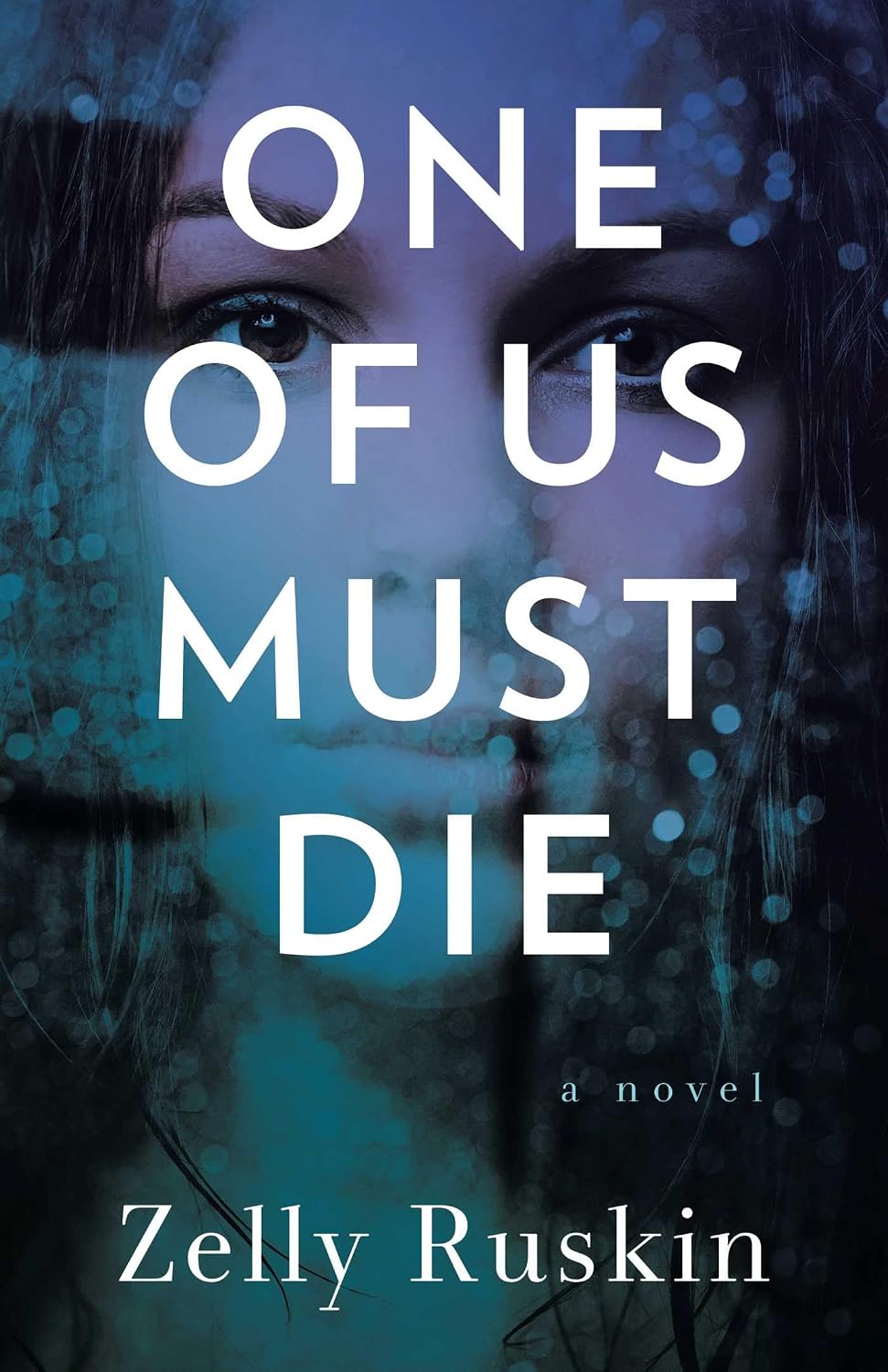
This was perhaps the largest obstacle I struggled with in finishing my sophomore book, One of Us Must Die. With the launch nearing, those doubts are back: is it as good as the first? Dare I hope it’s better? Will it live up to my reader’s expectations? Is it crazy to do this? Am I good enough? And then an unexpected gift dropped in my lap: I heard Harlan Coben, David Baldacci, Meg Gardiner, and Jennifer Hilliard all speak about their battles with imposter syndrome and doubts every time they start a new manuscript. They all agreed that when they start new manuscripts, they have trouble writing and think their careers are dead.
We are not alone. That angst and fear are universal. Are we good enough? Being an author requires endurance, vulnerability, and persistence. Harlan Coben’s words inspired me. He’s trained himself to “embrace the fact [he] sucks,” using it to “fuel” him rather than letting it “paralyze him.” I’m holding on to that creative courage whilst facing my second launch and sweating to get the next manuscript right and out in the world quickly, lest you forget my name. Even if you do, I’ll still be writing and creating, because once you’re past the fear, the ride is exhilarating.
—
Zelly Ruskin is the award-winning author of Not Yours to Keep (She Writes Press, 2024).She writes domestic suspense that explores the secrets families keep—and the resilience that carries them through. A former social worker and adoption consultant, Zelly is also a (sometimes) artist and a passionate volunteer for brain aneurysm awareness. When she’s not devising twisty plots, she’s likely traveling or hiking—where the next idea often finds her. She lives in New York City with her ridiculous doodle, Strudel.
ONE OF US MUST DIE
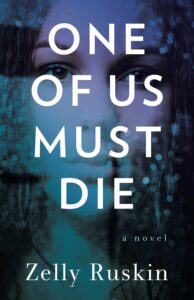 For fans of Kimberly Belle and Apple TV+’s Bad Sisters, a domestic suspense explores the lengths a woman trapped in an unhappy marriage by an ironclad trust fund clause will go to in order to escape her greedy, gaslighting husband.
She married for love. He married for trust. Specifically, her trust fund—the one with the iron-clad “no divorce, no matter the circumstances” clause her mother insisted on.
Sterling (not as good as gold) has always come second to her family’s wealth—but unlike her mother, she’ll do anything to protect her three children. For years, she’s kept up the perfect family illusion to shield them from their manipulative, gaslighting father. But now her husband is becoming more reckless, and her children more exposed. And when her daughter’s fiancé says he wants a marriage just like hers, Sterling knows her charade has gone too far.
To free herself, she must outwit her husband and the legal ties meant to trap her—before it’s too late. Because in this family, there’s only one way out: One of them must die.
BUY HERE
Category: On Writing
Subscribe
If you enjoyed this article, subscribe to receive more just like it.