Turning Personal History into Fiction By Dr Sue Woolfe
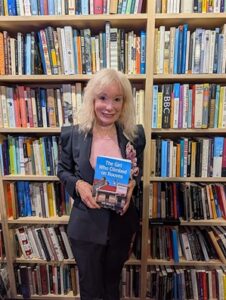 People often ask whether my novels are autobiographical.
The simple answer is no. The events are imagined. The characters are invented. Yet every novel I’ve written has begun with something emotionally true, a question that refused to leave me until I had explored it through fiction.
My latest novel, The Girl Who Climbed on Rooves, began with a question that arrived far too late.
After my mother died, I discovered that the story she’d told me all my life about her childhood wasn’t true. She had claimed to have attended an exclusive convent school. Instead, I discovered she’d spent much of her childhood in one of Australia’s most abusive orphanages.
She had carried that secret with her, her entire life, never telling anyone.
Like many daughters, I thought I knew my mother. I’d heard the stories she’d chosen to tell me, and had assumed they were the whole story. Looking back, though, I realised there had always been gaps. There were moments when her behaviour seemed inexplicable, silences that arrived unexpectedly, emotions that felt too large for whatever had just happened.
Suddenly, upon learning the truth, those mysteries began to make sense.
The tragedy was that I could no longer ask her about them.
The discovery sent me down a path I had never expected to travel. I began reading about Australia’s orphanages, and I quickly realised something that surprised me. Most of the children, including my mother, weren’t actually orphans.
Before the social reforms of the 1970s, before single parent’s pensions, universal healthcare and many of the safety nets we now take for granted, desperate parents often had nowhere else to turn. Poverty, illness, family breakdown or simply being an unmarried mother could result in children being placed in institutions. In Queensland in 1955, of the 2,106 children living in orphanages, only two were actually orphans.
That statistic has never left me.
It completely changed the way I thought about my mother’s childhood and about an entire generation who learned that survival often depended on silence.
If someone close to you was born before the late 1960s and is unusually tight lipped about their childhood, they may be carrying a burden no-one should have had to bear.
Many survivors never spoke about what happened to them. Not to friends. Not to partners. Often, not even to their own children.
Once I understood that, I found myself becoming less concerned in reconstructing my mother’s life than in understanding what silence itself can do to a family.
That was the moment fiction began.
People sometimes imagine that writers simply disguise real people with different names. For me, the process is almost the opposite. Real life provides the emotional spark, but fiction gives me the freedom to ask larger questions than memoir ever could.
How does trauma echo through generations?
What do children absorb without ever being told?
Can creativity become a way of transforming experiences that are too painful to express directly?
Those questions fascinated me far more than the facts of my own family history.
Long before I began writing this novel, I’d spent almost twenty years researching creativity itself. I’ve always wanted to understand not just where stories come from, but what happens inside the brain when we create. I’ve taught the neuroscience of creativity to playwrights, novelists and even student composers, and I’ve published widely on the relationship between creativity, memory and the unconscious mind.
As I was writing this novel, those two strands of my life unexpectedly came together.
I realised I didn’t want my central character to be another novelist. I wanted her to be a composer.
Music seemed the perfect art form through which to explore a mystery that words often fail to capture. A composer transforms emotion into sound just as a novelist transforms it into story. Both begin with fragments of memory, intuition and feeling that exist beneath conscious thought.
So, Frances emerged. She is an internationally celebrated composer whose joyful music enchants audiences around the world. Yet when a determined biographer insists on knowing where her creativity comes from, she’s forced to revisit memories she’d spent a lifetime trying to understand.
Frances is not me, and she’s not my mother.
But she inhabits the emotional territory that grew from the questions my mother’s silence left behind.
That, I think, is one of fiction’s greatest gifts. It allows us to move beyond biography into something more universal. Readers don’t need to share my family’s history for the story to resonate. Instead, they bring their own experiences, their own unanswered questions and their own family mysteries.
Some might recognise a parent who never spoke about their childhood. Others recognise the way grief or fear can ripple across generations without anyone understanding why.
The story becomes something larger than the person who inspired it.
Writing The Girl Who Climbed on Rooves wasn’t an attempt to uncover the definitive truth about my mother’s life. That would have been impossible, and perhaps unfair. Some stories belonged to her alone.
Instead, fiction gave me permission to ask what it might feel like to live with experiences too painful to name. To explore not only trauma, but also the extraordinary resilience of the human mind and its capacity to transform suffering into beauty.
In the end, I don’t think writing solved the mystery of my mother. Some questions remain unanswered. But perhaps that’s what novels are for.
They don’t recover the past. They don’t restore lost conversations or allow us to ask the questions that came too late.
What they can do is transform private history into shared understanding.
It is also where readers begin bringing their own lives to the page. When they tell me they recognise something of their own mother, father or grandparent in my novel, I know the story has ceased to belong solely to me.
It has become what I always hoped it would be.
Not a memoir, but an act of imagination that allows us to recognise ourselves in one another’s silences.
—
About Sue Woolfe
Sue Woolfe is one of Australia’s most distinguished literary voices, internationally published and widely awarded. Her novel Leaning Towards Infinity won the Christina Stead Prize and the Commonwealth Writers’ Prize (regional) and became a long-running bestseller. Alongside her fiction, Woolfe has written influential works on creativity and the brain which explore the relationship between artistic practice and human experience.
—
The Girl Who Climbed on Rooves
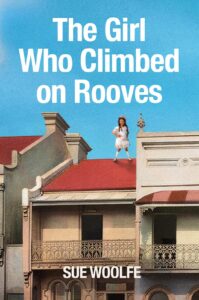 Published by Fair Play Press, April 2026
A wild girl who once climbed on rooves. A secret never spoken. A catastrophe that changed everything.
A would-be biographer demands to know the life story of a well-loved composer of joyful but reflective music. She always evades him, but she confides in us, as she considers the extraordinary story of what made her, and the secrets of her creativity.
‘I didn’t want to stop reading this unique and wonderful book, and afterwards, my heart was ragged. She Woolfe says things that, to me, have not been said before.’
The Girl Who Climbed on Rooves is available now from leading bookstores and online retailers.
Category: On Writing
Subscribe
If you enjoyed this article, subscribe to receive more just like it.