WHEN HAMLETT MET FEARON: Two Playwrights Talk the Talk
 Rodgers had Hammerstein. Lerner had Loewe. Moss had Hart. When we think of great collaborations, we typically imagine two creatives hunkered down in a room and spending more time with each other than with their respective families. Technology, however, has given birth to more inventive devices to pool respective skill sets and resources and spin theatrical plots which might have taken solo acts much longer to invent.
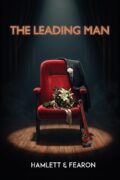
How else could a man and woman with different backgrounds and living 2,000 miles apart not only form a dynamic writing partnership which just finished The Leading Man, a brand new comedy, but also launched an innovative imprint to get future scripts into the hands of readers?
You read it here first. Today’s conversation is all about When Hamlett Met Fearon, an interview by Elena Tchelistcheff.
INTERVIEWER: So who are you guys?
CHRISTINA: Well, I’m a former actress/theatre director with 55 published books, 285 stage plays and squillions of articles and blogs.
GARY: I’m an author, songwriter, audiobook narrator and broadcast producer. The first half of my life was spent on the air as a DJ.
INTERVIEWER: And why did you two decide to become partners?
CHRISTINA: Having worked successfully with a female co-writer for over ten years, I began mulling some new ideas and wondered whether bringing in a male perspective could be helpful in capturing a different, authentic voice, especially in romantic comedies.
GARY: For a novel I’m working on, I needed some insight into the life of a playwright and remembered this prolific gal I had met years ago. After letting me hammer her with questions for over three hours, Christina told me about a new story idea she had and asked if I’d have an interest in developing it together.
CHRISTINA: It was perfect timing for both of us. A win-win.
INTERVIEWER: So, Gary, your creative background is quite different from the world of theater. What attracted you to wanting to be a playwright and working with Christina?
GARY: I’m a huge movie and stage buff and have even dabbled with the odd screenplay. Truthfully, I’d have never invited myself into Christina’s dazzling spotlight, but since she offered…
INTERVIEWER: And what in your own professional background in music and voiceovers has been a help or hindrance in learning the craft?
GARY: Such things as rhythm, pacing, delivery… choosing just the right words… the creative arts are all about communication. Engaging in this new territory makes it all fresh and exciting for me.
CHRISTINA: Speaking of voices, it’s important to really listen to the voices in your head. In your subconscious, these are your own characters telling you what they’d like to do next in order to come to life.
GARY: Once you know their motives inside and out, they start driving the scene for you. When a character suddenly says something that surprises even you, you know you’re in the groove.
CHRISTINA: Exactly! If you ever feel like you’re pushing a rock uphill, it usually means you’re trying to force a character to do something they’d never actually do.
INTERVIEWER: Can you identify something in the finished play that neither of you could have written alone? What made the collaboration possible in that moment?
CHRISTINA: It was definitely a deeper dive into the backstory of each character. Gary would say, “Well, this is a really funny line but why is he saying this? What kind of pain and denial is he dredging up here?”
GARY: I especially like a subplot Christina came up with for a secondary character who ended up becoming one the audience will really love. It only came about when we both remarked how that character’s short scene was one of our favorites.
INTERVIEWER: How do you two decide who writes what?
CHRISTINA: First and foremost, it starts with pretty intense brainstorming. We come up with a concept and then flesh out what kind of characters will people it and the conflicts they’ll encounter to drive the plot forward. Each scene undergoes multiple drafts.
GARY: We’re constantly testing the dynamics—asking ourselves what a scene accomplishes and whether it affects the balance of power between the characters.
CHRISTINA: It’s an equitable distribution of workload with Gary primarily writing the male scenes and me writing the female-centric dialogue.
INTERVIEW: And if it’s a man and woman together?
GARY: I just have the woman do all the talking. Like in real life.
CHRISTINA: (playfully) Oh shut up!
GARY: (laughs) But seriously. We’re always striving for authenticity. We spend a lot of time analyzing character background and motivation, even if they won’t necessarily show up as part of the story.
INTERVIEWER: Your three main characters in The Leading Man are of what people would call “mature” years. What do you think this play says about romance, friendship and relationships in general?
GARY: That every decision we make in life will catch up with us someday. The two male leads have been friends their entire lives because they chose to hold onto each other. Meanwhile, one of them has harbored a forty-year grievance with his ex-wife that’s made him a bitter old man.
CHRISTINA: And yet we see his best friend has always had his back and will never let him fall. We should all be so lucky to have a George.
INTERVIEWER: Unlike a novel where words are often read silently, how do you know what your dialogue will actually sound like when spoken aloud?
CHRISTINA: I have a small cadre of local actors to recruit so Gary and I can do live table reads (never ZOOM!), solicit feedback and get a sense of a script’s realistic pacing. It’s not unlike what I did back in the days when I had my own theatre company and could test material long before it ever went into rehearsal. Best way ever to see if scenes work or not.
GARY: Stage dialogue is an acoustic instrument. Hearing real performers put voice to the characters is invaluable for catching stiff phrasing, awkward transitions, or missing beats.
CHRISTINA: Experience has taught me that actors are never shy about voicing their opinions and ‘owning’ the roles we write for them!
GARY: Christina’s set designs before we even start writing are a huge help, too. A lot like a chess set. It helps to know where all the characters are and how to move them.
CHRISTINA: Not to mention the doors and windows!
INTERVIEWER: As active collaborators, what have you learned about your own writing that you might not have discovered working alone?
GARY: We have such similar voices and weird senses of humor that it’s almost like writing with ourselves! We lose track of who wrote what, which is pretty satisfying because we want that seamless kind of collaboration. Christina often says, “I loved, loved, loved that new line” and I have to remind her she’s the one who actually wrote it. That said, it helps me be the best I can be because of the respect I have for my writing partner. I write better and faster than I would alone because my sense of what she will like is sometimes clearer to me than what I like myself. Two heads really are better than one.
CHRISTINA: Even if one of them is sometimes a cabbage…
GARY: You’re never going to let me forget my pitch for a ventriloquist detective, are you?
CHRISTINA: It’s literally in my office on a sticky note titled “Never Let Gary Pitch at 3 a.m.”
INTERVIEWER: Why did you guys decide to launch your own imprint and website?
CHRISTINA: While we’ll still actively be pitching to publishers, it does take a long time and a lot of money for theatrical productions to launch.
GARY: Not to be a downer but we could both be dead by then…
CHRISTINA: Since readers can enjoy playing our storylines in their heads just as much as seeing them performed on a full stage, it’s a venture which makes our work more immediately accessible. It’s also a fun way for them to do their own “casting.”
GARY: Can Hugh Jackman play me?
CHRISTINA: No.
INTERVIEWER: Any new projects simmering?
CHRISTINA: Squillions!
GARY: Already working on Kiss Me, I’m Irish. It’s a romance with con artists, comedy, cows, canoodling—
CHRISTINA: ‘Canoodling’?
GARY: (points) It says so right here in the script.
INTERVIEWER: And the tagline?
CHRISTINA: As they say in Ireland, “Come live in my heart and pay no rent.”
GARY: Though utilities are extra.
CHRISTINA: This guy really cracks me up.
—
 Former actress and theatre director CHRISTINA HAMLETT is an award-winning novelist and playwright whose credits to date include 55 books, 285 stage plays and squllions of articles and interviews. Along with being a gourmet chef, intrepid traveler and savvy photographer, she teaches distance learning classes in playwriting, screenwriting and cozy mysteries, and is a professional script consultant for stage and screen. Visit Christina at http://www.authorhamlett.com.
 GARY FEARON is a writer, musician and voice artist. A recipient of the Billboard Air Personality of the Year Award, his broadcast work has been recognized by the Associated Press, Radio and Production magazine, and over two dozen MARS awards for commercial production. His voice is heard daily on radio/TV stations across the USA and Canada and numerous audiobooks. Visit Gary at https://garyfearon.com.
Category: Interviews, On Writing
Subscribe
If you enjoyed this article, subscribe to receive more just like it.