13-old Author Maya Ahmed on Australia’s Social Media Ban
by Maya Ahmed
As a 13-year-old author, the social media ban frustrates me
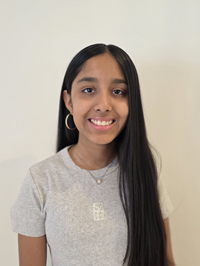 I am 13 years old, and I recently flew to Melbourne to be interviewed on live TV about my novel, Operation R.A.D. I was very nervous, but it was such a cool experience. I also had a book launch at my school that was attended by 200 people. Afterwards several students, and even one of my teachers, told me that they wanted to publish their own book too. It feels great to be inspiring others to follow their dreams.
But the strange thing is that I’m not allowed to post anything about my book on Instagram, because I’m too young. I’m banned from social media for another three whole years!
No posts. No updates. Nothing. I have no way to actually show people what is happening unless they were physically there or happened to hear about it from someone else. It hampers me from being able to seriously kickstart my author career.
So while I was doing things that require confidence, responsibility, and a public voice, I was still being told I couldn’t be trusted with social media. That contradiction is hard to ignore.
There’s a lot of talk right now about the social media ban for under 16s. It’s usually framed as being done for our protection.
And I agree; there are some issues with social media being used to bully young people. No one’s saying it’s perfect.
But instead of teaching young people how to use social media responsibly, the response is to remove access completely. That doesn’t fix the problem. It avoids it. It’s like putting a Band-Aid over a broken arm.
Social media isn’t just scrolling or posting random stuff. It’s how ideas spread. It’s how creators build something. It’s how people share the work they’re proud of. It’s how the art we create gets seen beyond one room, one school, or one moment. It’s how opportunities start.
A lot of the time, if something isn’t online, it barely exists outside of the people who were there in that moment.
If I’m old enough to write a book, publish it, speak on national TV, and stand in front of a room full of people presenting, then shouldn’t I be trusted to use social media properly? Because that’s what this really comes down to: not age or capability. It’s about trust.
Right now, it feels like young people are trusted in controlled environments, like school events or interviews, but we are not trusted when it comes to platforms where we can actually use our own voice. And that’s the difference.
In those controlled spaces, someone else is always there. There are rules, limits, and boundaries set by adults.
On social media, you’re speaking for yourself. You have a direct line of communication with your audience. And that’s exactly why it matters. Because having your own voice means making decisions.
What to share.
What not to share.
How to present yourself.
What you want people to see.
Social media isn’t just about being seen. It’s about choosing how you are seen. It’s about having control over your own story. Taking that away doesn’t protect young people. It just limits them. And it also ignores something important.
I have been fortunate that my publishers, Hembury Books, have been supportive and have been promoting my book on their social media platforms, but this is no substitute for being able to speak for myself.
We’re already creating, leading, and influencing in real life. Those who told me they wanted to publish their own book didn’t need an algorithm to be inspired. But that moment didn’t have to stay small. If I could’ve shared my story on social media, I may have been able to inspire more people, and not just my school peers. It could have reached others. It could have encouraged others. It could have shown others what’s possible in a way that goes beyond one conversation.
That’s the missed opportunity.
But shutting social media down for under 16s doesn’t mean it disappears. It just means we’re left to figure it out later when we’re 17, without guidance. And if anything, that’s more risky.
At 13, I don’t think young people need less opportunity. We need more guidance, more trust, and more space to actually use our voices.
Because right now, the message feels mixed: you can write a book, you can go on TV and you can inspire people. But you can’t post about it. And that doesn’t make any sense.
—
Maya Arianna Ahmed is a thirteen-year old girl from Sydney, Australia. Maya has been an enthusiastic reader of science fiction and mystery novels since the age of ten and often borrows books from her school library. Inspired by her love for the science fiction genre, she has written her first full-length novel, Operation R.A.D.
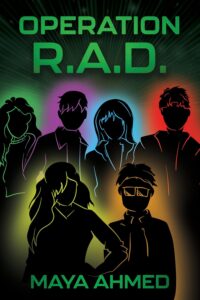 Is a normal teenage life too much to ask for?
For the kids at Ravenwood High, it is.
The year is 1984. In the small town of Ravenwood, everything feels off. People brush it off until one day six teens find something that changes their lives forever.
Addison, a hot-headed misfit. Julianna, a sweetheart too sweet for her own good. Ivory, the invisible shadow of the group. Avery, the calm artist, who just wants to keep himself and his sister out of trouble. Mateo, the loyal one who would do anything for his friends. Randy, the nerdy jerk who never knows when to shut his mouth or when to open it. When fate brings these six oddballs together, a dark secret puts them in extraordinary danger and makes them become extraordinary too.
They all swear they will protect each other, but will they have each other’s backs every time they end up in danger? Will they sacrifice themselves for their group? And most importantly, will they get out of this alive?
Maya Ahmed’s Operation R.A.D. is a mix of science fiction, mystery, drama and the life of a teenager all in one, but raising the stakes.
Will they survive the changes that happen to them in their world?
BUY HERE
Category: On Writing
Subscribe
If you enjoyed this article, subscribe to receive more just like it.